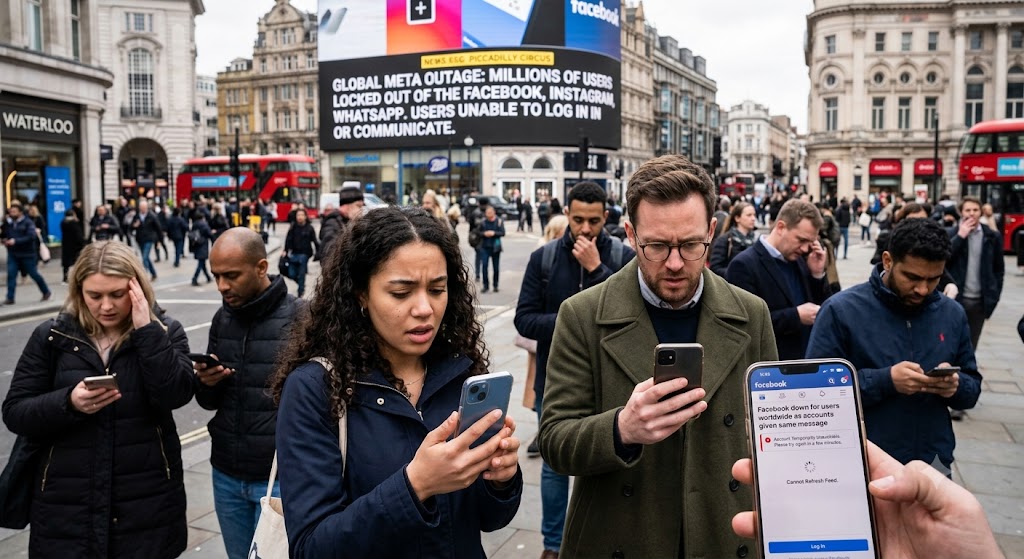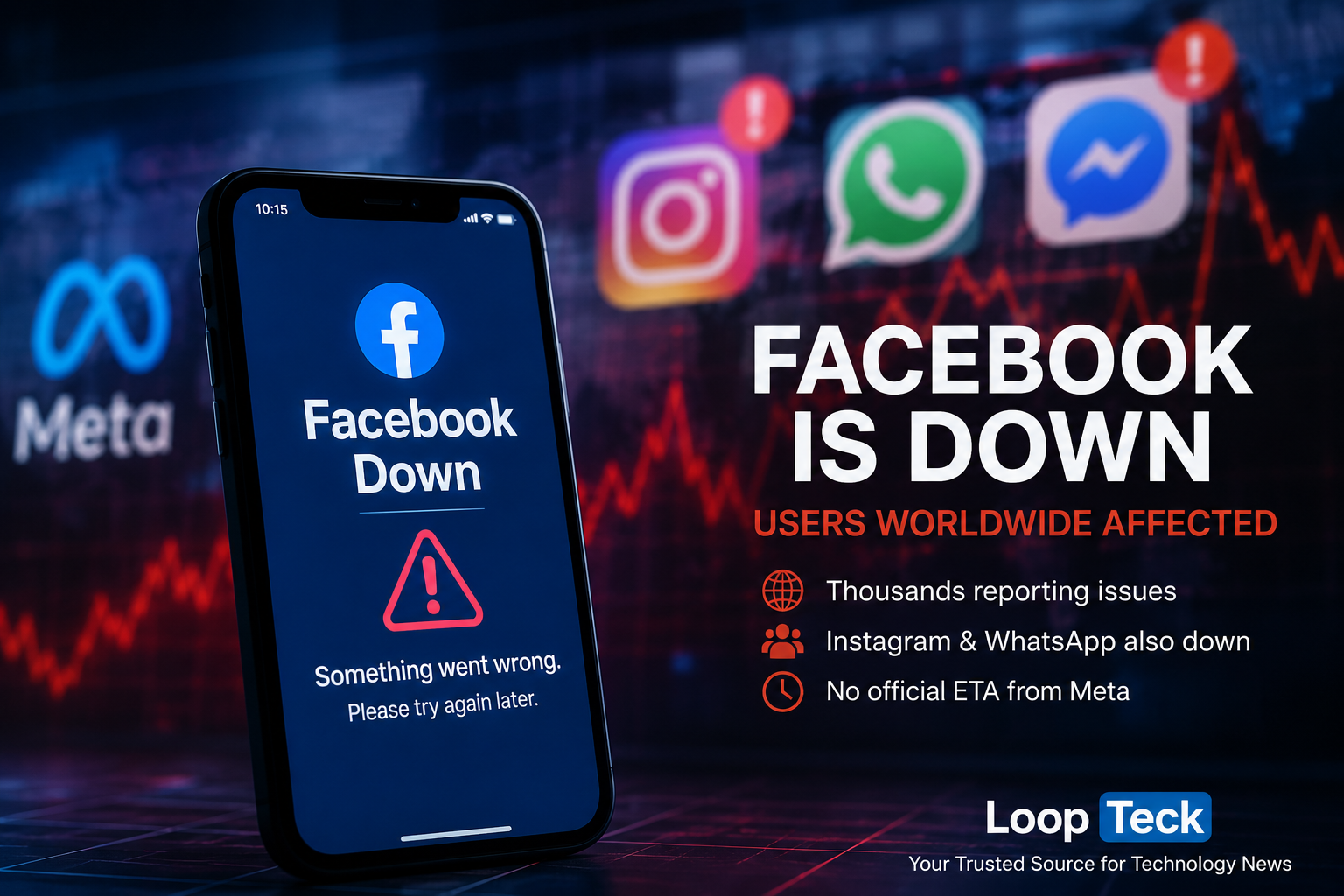

Millions of users were caught off guard as a Facebook outage disrupted access to one of the world’s largest social media platforms, preventing many people from logging into their accounts. The disruption quickly spread beyond Facebook, with additional problems reported across other Meta-owned services, leaving users unable to post, browse content, or communicate normally. While the company worked to identify the cause, the incident highlighted how dependent millions of people have become on a handful of interconnected online platforms.
Facebook Outage Triggers Widespread Login Failures
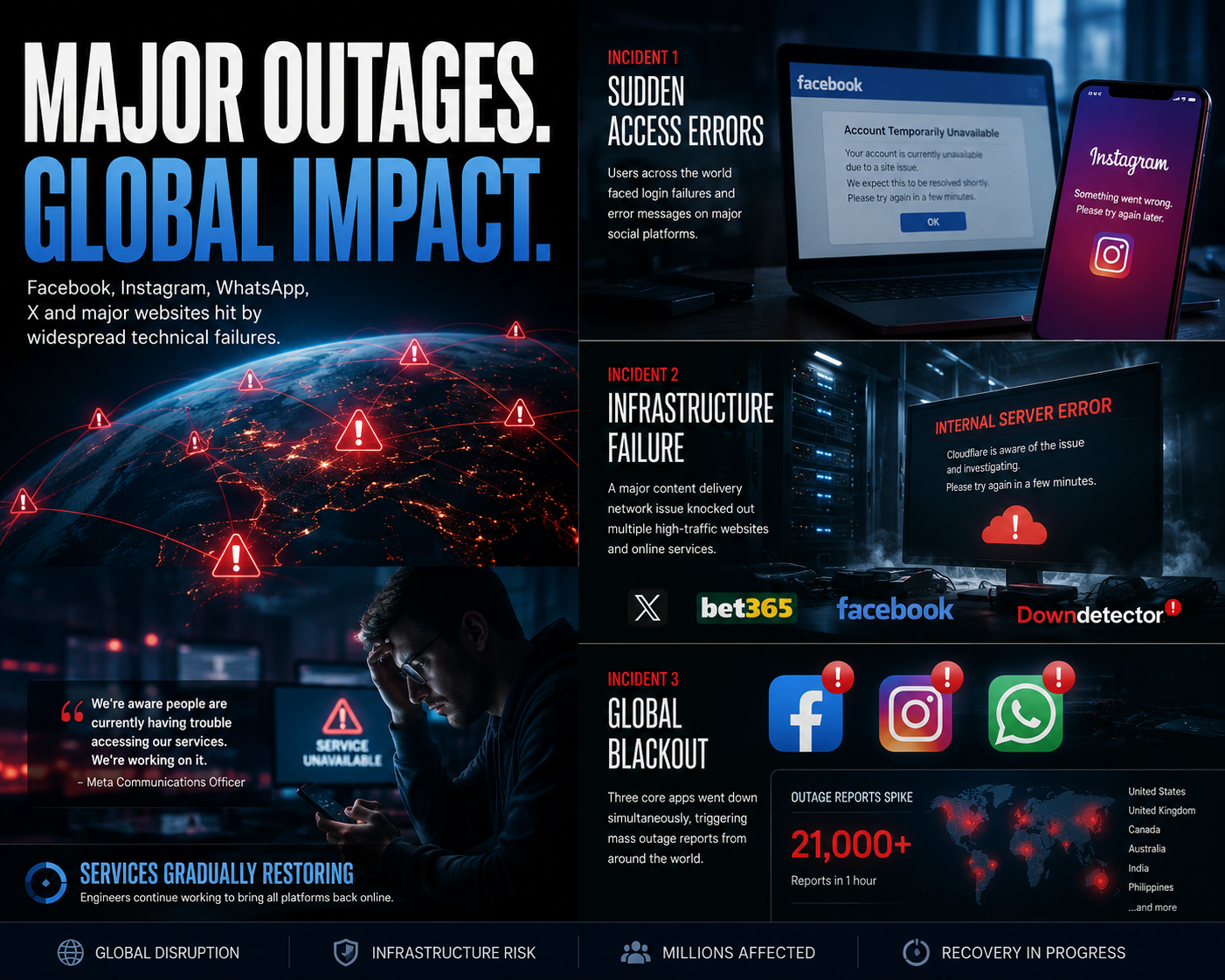
The first wave of disruption centered on Facebook, where desktop users were greeted with an “Account Temporarily Unavailable” message instead of their news feeds. The notification explained that the issue was caused by a site problem and advised users to try again later.
As reports increased, similar issues appeared on Instagram, suggesting the disruption extended beyond a single platform within Meta’s ecosystem. Many affected users were unable to view posts, refresh feeds, or share new content during the outage.
Meta Service Outage Raises Questions About Platform Reliability
The rapid spread of the incident demonstrated how closely Meta’s digital services are connected. Although the company did not immediately provide detailed technical information, simultaneous disruptions across multiple products pointed to a broader backend issue rather than isolated application failures.
For businesses, creators, and everyday users who rely on Meta’s platforms for communication and marketing, even short-lived outages can interrupt workflows and reduce audience engagement.
Cloud Infrastructure Failure Disrupts Major Websites
In a separate incident, a large-scale network disruption affected websites and online services across the internet after a major content delivery network experienced technical problems.
The outage temporarily impacted several high-profile platforms, including social media services, online betting websites, and internet monitoring tools that users typically rely on to confirm service interruptions. The infrastructure provider acknowledged an internal network issue and said engineers were working to restore normal operations.
The event followed another significant cloud infrastructure disruption reported only weeks earlier, highlighting how outages involving critical internet infrastructure can quickly affect organizations worldwide.
Global Service Disruptions Extend Across Multiple Countries
Another widespread Meta service outage affected Facebook, Instagram, and WhatsApp at the same time, generating thousands of outage reports from users in the United States, Canada, the United Kingdom, Australia, India, and the Philippines.
Outage monitoring services recorded a sharp increase in reports within a short period, with users describing inaccessible accounts, connection failures, and repeated error messages across both desktop and mobile devices.
As services gradually recovered, a Meta spokesperson confirmed the company was aware of the disruption and said engineering teams were actively working to restore full functionality.
Why Large-Scale Platform Outages Matter
Modern digital services rely on highly interconnected cloud infrastructure, content delivery networks, authentication systems, and global data centers. When one critical component encounters problems, the impact can quickly cascade across multiple applications and regions.
These incidents serve as a reminder that even the world’s largest technology companies remain vulnerable to unexpected infrastructure failures. For consumers, businesses, and content creators, widespread outages can temporarily interrupt communication, customer support, advertising, and online collaboration.
Conclusion
Although the reported disruptions were eventually addressed, the series of incidents illustrates how dependent the modern internet has become on a relatively small number of technology providers. Whether caused by infrastructure failures or platform-specific technical issues, large-scale outages continue to expose the importance of resilient cloud architecture and rapid incident response.
Loop Teck
Future Technology • AI • Smartphones • Innovation