

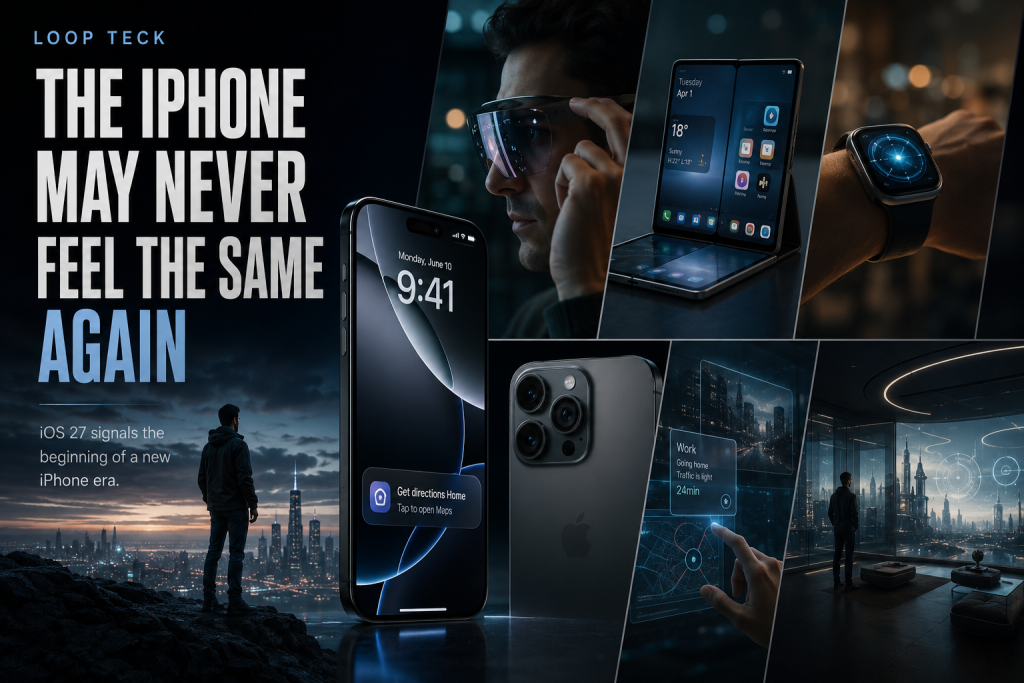
For years, iPhone updates have followed a familiar rhythm. Faster chips. Better cameras. A few polished software tricks. Cleaner animations. Smarter widgets.
Useful upgrades, sure. But revolutionary? Not really.
iOS 27 feels different already.
Not because Apple is suddenly chasing flashy experimentation. Quite the opposite. The company appears to be rebuilding the foundation of the iPhone experience itself — quietly, carefully, and with far bigger implications than most annual updates usually carry.
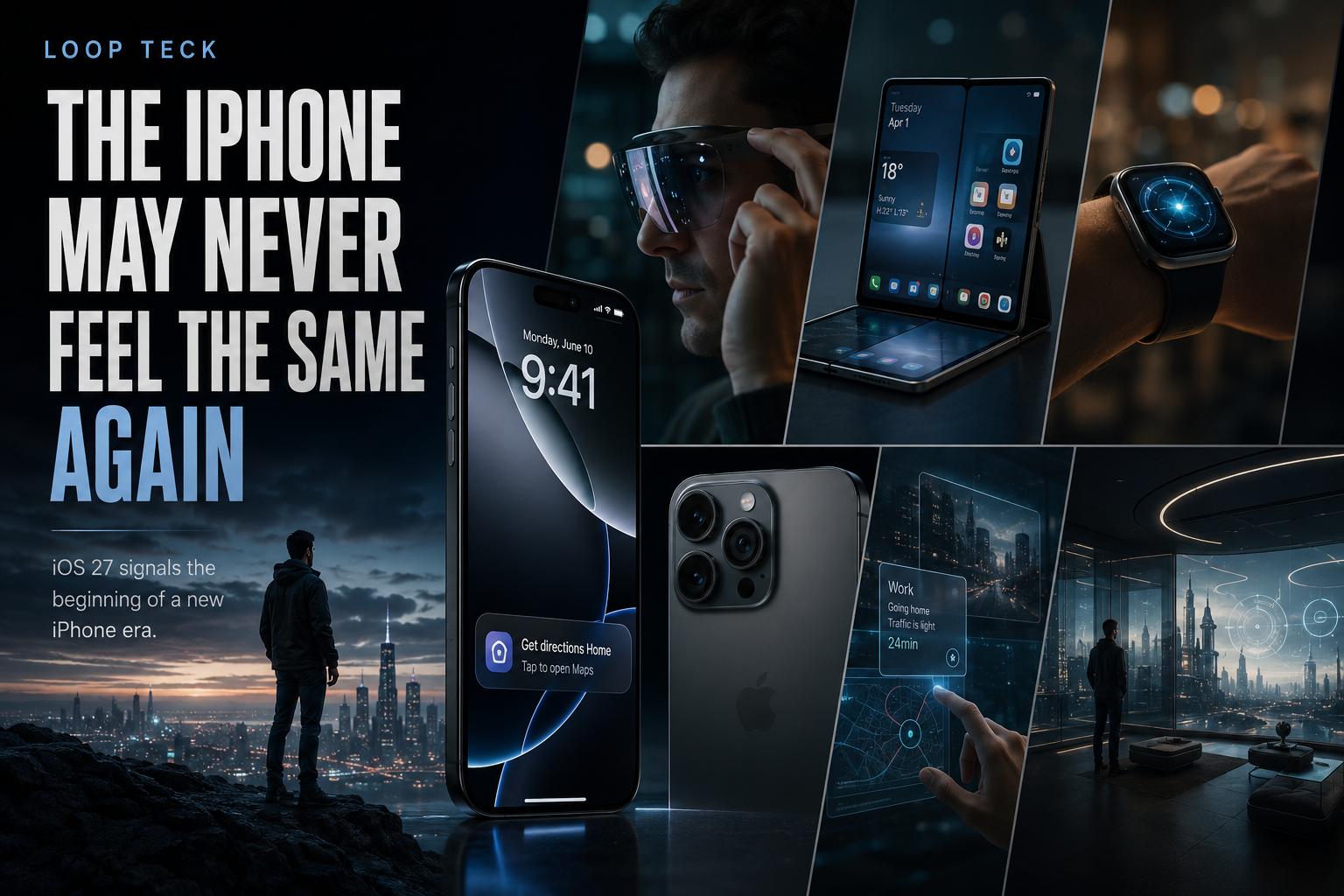
The leaks, developer chatter, and early reports surrounding iOS 27 point toward something more ambitious than another routine software cycle. This isn’t just about new features. It’s about Apple trying to redefine how people interact with their phones in an AI-first era.
And if even half of the rumors materialize at WWDC 2026, the iPhone may never feel the same again.
Siri Is Finally Becoming What Apple Promised Years Ago
Let’s be honest. Siri has fallen behind.
While rivals like Google pushed OpenAI’s conversational AI mainstream and companies raced to integrate generative assistants into everything, Siri often felt stuck in another era — rigid, limited, and frustratingly inconsistent.
Apple knows it.
That’s why iOS 27 reportedly centers around a massive Siri overhaul powered by a deeper version of Apple Intelligence. Multiple reports suggest Apple is rebuilding Siri into something closer to a true AI assistant rather than a voice-controlled command tool.
The rumored changes are substantial:
- Natural conversational interactions
- Better contextual awareness
- On-screen understanding
- Multi-step requests
- AI-generated actions inside apps
- Memory of previous conversations
- Chat-style assistant interfaces
Some leaks even suggest Apple may introduce a standalone Siri experience with a dedicated interface that behaves more like ChatGPT or Gemini.
That matters more than it sounds.
Because the smartphone industry is entering a phase where operating systems themselves are becoming AI layers. Apps may no longer be the center of the experience. The assistant becomes the operating system.
And Apple cannot afford to lose that shift.
Apple’s Biggest Strategic Shift Might Be Letting Other AI Models In
This may end up being the most important part of iOS 27.
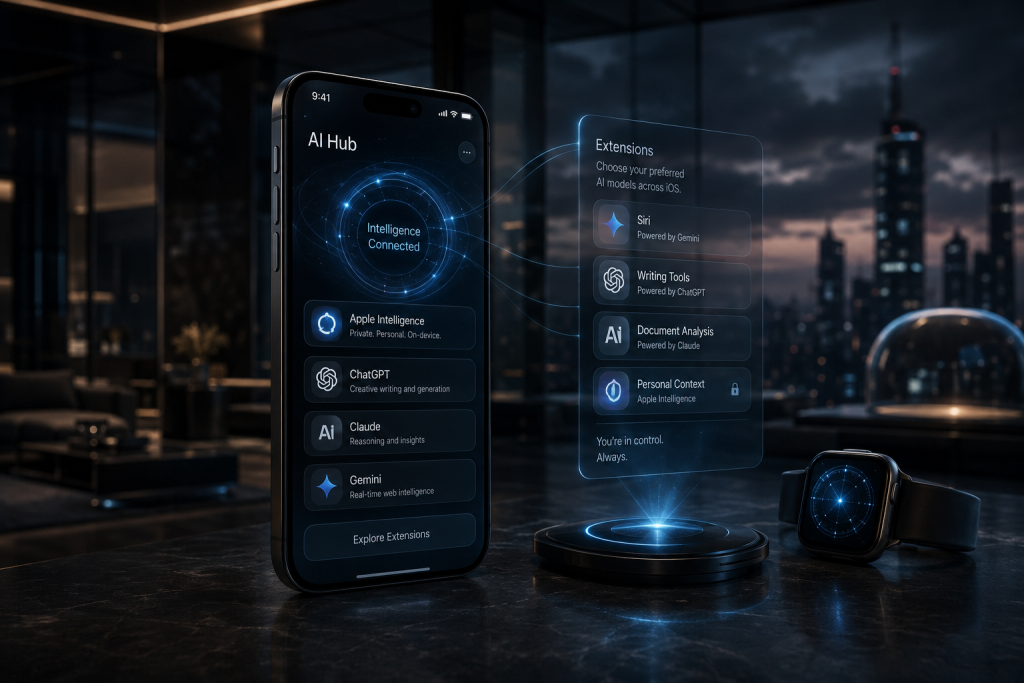
According to recent reports, Apple is preparing an “Extensions” framework that could allow users to choose third-party AI models across iOS features.
That would be a dramatic philosophical change for Apple.
Historically, Apple prefers tight control. Closed systems. Carefully curated experiences. But AI is moving too fast for one company to dominate every category internally.
So instead of fighting every model maker directly, Apple may become the platform layer connecting them all.
Imagine this:
- Siri powered by Gemini for web intelligence
- Claude handling long-form reasoning
- ChatGPT generating content
- Apple Intelligence managing personal context privately on-device
Suddenly the iPhone stops being a phone with AI features.
It becomes an AI hub.
That could fundamentally reshape how users interact with productivity, creativity, search, automation, messaging, and even app navigation across the entire Apple ecosystem.
And honestly, it’s probably Apple’s smartest possible move.
The iPhone Fold Could Push iOS Into an Entirely New Era
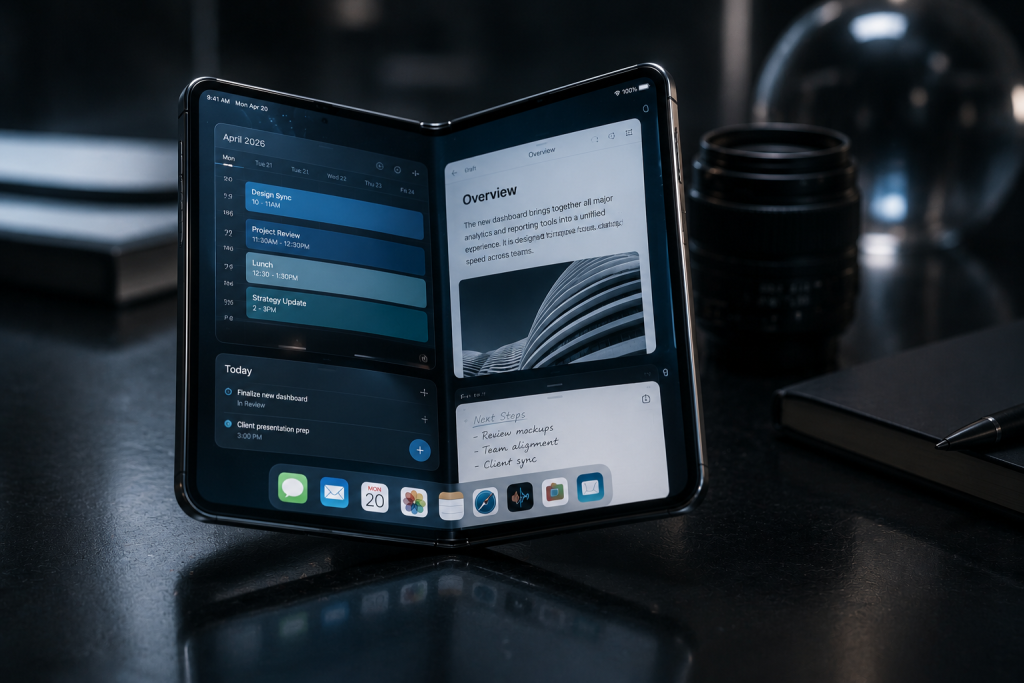
Another major reason iOS 27 matters: Apple’s rumored foldable iPhone.
Leaks suggest Apple has been preparing software adaptations specifically for a foldable device expected sometime around the iOS 27 cycle.
That changes everything from multitasking to app behavior.
For years, iOS stayed relatively conservative compared to Android’s more experimental interface designs. But foldables demand flexibility. Dynamic layouts. Adaptive multitasking. Smarter continuity between screen states.
Reports indicate Apple may introduce:
- More iPad-like multitasking
- Expanded sidebars
- Multi-window workflows
- Adaptive UI scaling
- New gestures for larger displays
This isn’t just about supporting one new product category. It could push Apple to rethink how iOS behaves entirely.
The iPhone has largely remained a single-task-focused device since 2007. Foldables may force the platform to evolve into something much closer to a hybrid between iPhone and iPad.
That’s a massive shift.
iOS 27 May Focus Less on Flash — and More on Fixing Everything
Ironically, one reason iOS 27 could become transformative is because Apple may finally slow down.
Several reports compare the update to the legendary “Snow Leopard” era of macOS — an update remembered less for flashy features and more for stability, refinement, and performance optimization.
That approach makes sense.
Recent iOS releases introduced increasingly complex visual systems, AI layers, and heavier animations. Some users complained about bugs, battery drain, overheating, and inconsistent performance.
Apple appears aware that the iPhone experience risks becoming bloated.
So alongside AI expansion, iOS 27 is reportedly focusing heavily on:
- Performance optimization
- Reduced resource usage
- Better battery efficiency
- Improved thermal management
- Cleaner system behavior
- Stability enhancements
That may sound boring on paper.
In reality, it could be exactly what the iPhone needs.
Because users notice smoothness more than marketing slides do.
Apple Intelligence Is Expanding Beyond Simple AI Tricks
The first wave of AI phones often felt gimmicky. Wallpaper generators. Emoji tools. Tiny productivity shortcuts pretending to be revolutionary.
iOS 27 appears more ambitious.
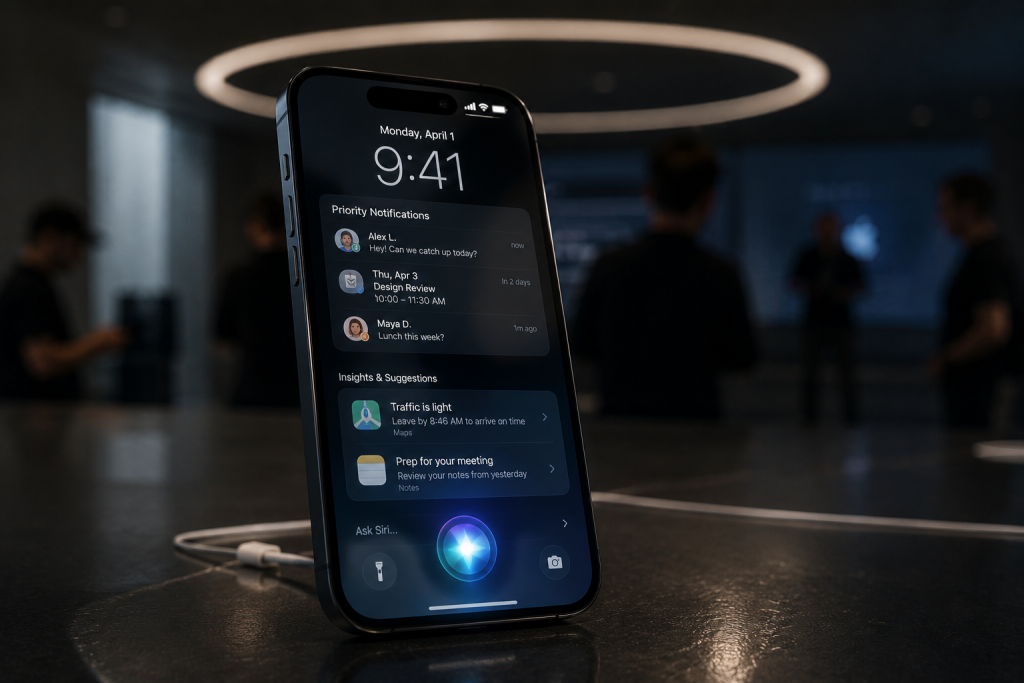
Reports suggest Apple Intelligence will integrate deeper into the operating system itself rather than existing as isolated features.
Some rumored capabilities include:
- AI-generated wallpapers
- Smarter writing tools
- AI-powered calendar scheduling
- Natural-language Shortcuts creation
- Personalized recommendations
- AI health insights
- Context-aware suggestions
- Improved accessibility voice controls
One especially interesting rumor points toward users describing automations in plain language while the system builds the shortcut automatically.
That removes one of Apple’s biggest usability barriers.
Automation tools have traditionally been powerful but intimidating. AI changes that equation completely.
And if Apple gets this right, the iPhone could become dramatically more personalized without requiring technical knowledge from users.
The Real Goal Isn’t AI — It’s Invisible Computing
Here’s the bigger picture most leaks aren’t directly saying.
Apple doesn’t just want smarter software.
It wants software that disappears.
The company’s long-term philosophy has always centered around reducing friction between humans and technology. Touchscreens replaced keyboards. Face ID replaced passwords. AirPods removed cables.
AI is simply the next layer of that vision.
iOS 27 appears designed around reducing effort:
- Fewer taps
- Fewer menus
- Less manual searching
- Less app switching
- More predictive behavior
That’s why this update could become historically important.
If Apple successfully combines privacy-focused AI, natural interaction, foldable adaptability, and deeper contextual intelligence, the iPhone may stop feeling like a collection of apps entirely.
It becomes proactive.
Ambient.
Predictive.
Almost invisible.
And that’s a much bigger transformation than another redesigned Control Center.
Why WWDC 2026 Suddenly Feels Critical
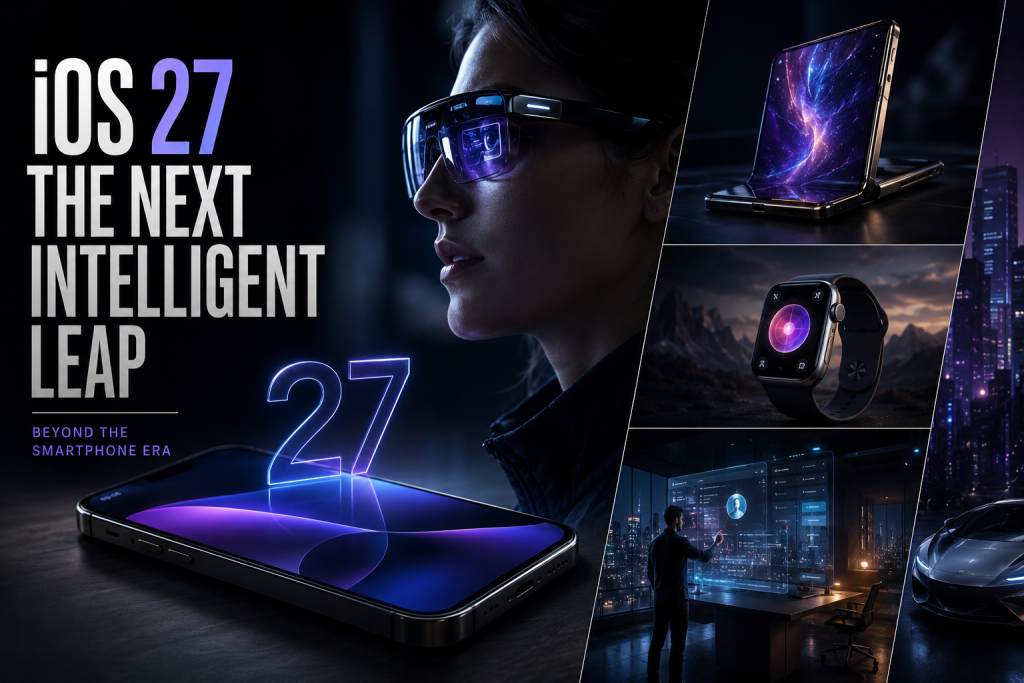
Apple’s upcoming developer conference now carries unusual pressure.
The company is no longer competing only on hardware polish. It’s competing for relevance in the AI era itself. Rivals are moving aggressively. Consumer expectations are shifting rapidly. And the smartphone market has started to feel mature in ways Apple historically hates.
iOS 27 may be Apple’s attempt to reset the narrative.
Not through spectacle.
But through rebuilding the intelligence layer beneath the entire iPhone experience.
That’s why this update matters far beyond a yearly software refresh.
Because if Apple succeeds, the next decade of smartphones may look very different from the last one.
And for the first time in a while, the iPhone genuinely feels like it’s standing at the edge of another major transition.
Frequently Asked Questions
Everything readers are searching about iOS 27, Apple Intelligence, Siri AI, foldable iPhones, and the future of Apple’s ecosystem.
iOS 27 is expected to focus heavily on AI-powered experiences, including a rebuilt Siri, deeper Apple Intelligence integration, smarter automation tools, and improved multitasking. Reports also suggest Apple is optimizing the system for future foldable iPhones, making this update potentially one of the most transformative iOS releases in years.
Many industry reports indicate Apple is rebuilding Siri into a far more conversational AI assistant. Instead of simple voice commands, Siri may gain contextual awareness, memory, app-level intelligence, and natural interactions similar to ChatGPT or Gemini, which could dramatically change how users interact with iPhones daily.
Analysts believe iOS 27 represents Apple’s major response to the AI era. Instead of adding isolated features, Apple appears focused on reshaping the operating system around intelligence, personalization, and predictive computing. That could redefine the long-term future of the iPhone ecosystem.
While Apple has not officially confirmed a foldable iPhone, leaks strongly suggest iOS 27 is being designed with adaptive layouts and enhanced multitasking capabilities. These changes would make sense for larger flexible displays and could signal Apple’s entry into the foldable smartphone market.
Apple Intelligence may expand beyond writing tools and summaries into system-wide AI assistance. Rumors point toward intelligent scheduling, AI-generated shortcuts, contextual recommendations, smarter notifications, and advanced personalization powered directly on-device for improved privacy and performance.
Yes. Multiple reports suggest Apple is prioritizing system optimization alongside AI features. iOS 27 could focus heavily on thermal management, smoother animations, lower resource consumption, and battery efficiency to improve overall iPhone stability and long-term device performance.
Recent reports suggest Apple may open parts of iOS 27 to external AI systems like ChatGPT, Gemini, or Claude through advanced integrations. If true, users could eventually choose different AI models for productivity, search, content generation, and assistant-based tasks across the Apple ecosystem.
A deeply integrated AI system could make iPhones more proactive and predictive. Instead of manually opening apps or navigating menus, users may increasingly rely on natural language, intelligent recommendations, and automated workflows that reduce friction throughout the entire mobile experience.


Loop Teck
Future Technology • AI • Smartphones • Innovation