

For years, the streaming wars revolved around familiar names: Netflix, Disney+, Hulu, Prime Video, HBO Max. Hollywood treated YouTube as something adjacent to entertainment — a chaotic ecosystem of creators, reaction clips, tutorials, podcasts, livestreams, and short-form distractions.
That assumption is collapsing.
Quietly, almost invisibly to casual audiences, YouTube has evolved into something much larger than a video platform. It is becoming the dominant entertainment layer of the internet itself. And increasingly, it’s taking over the living room.
The shift is no longer theoretical.
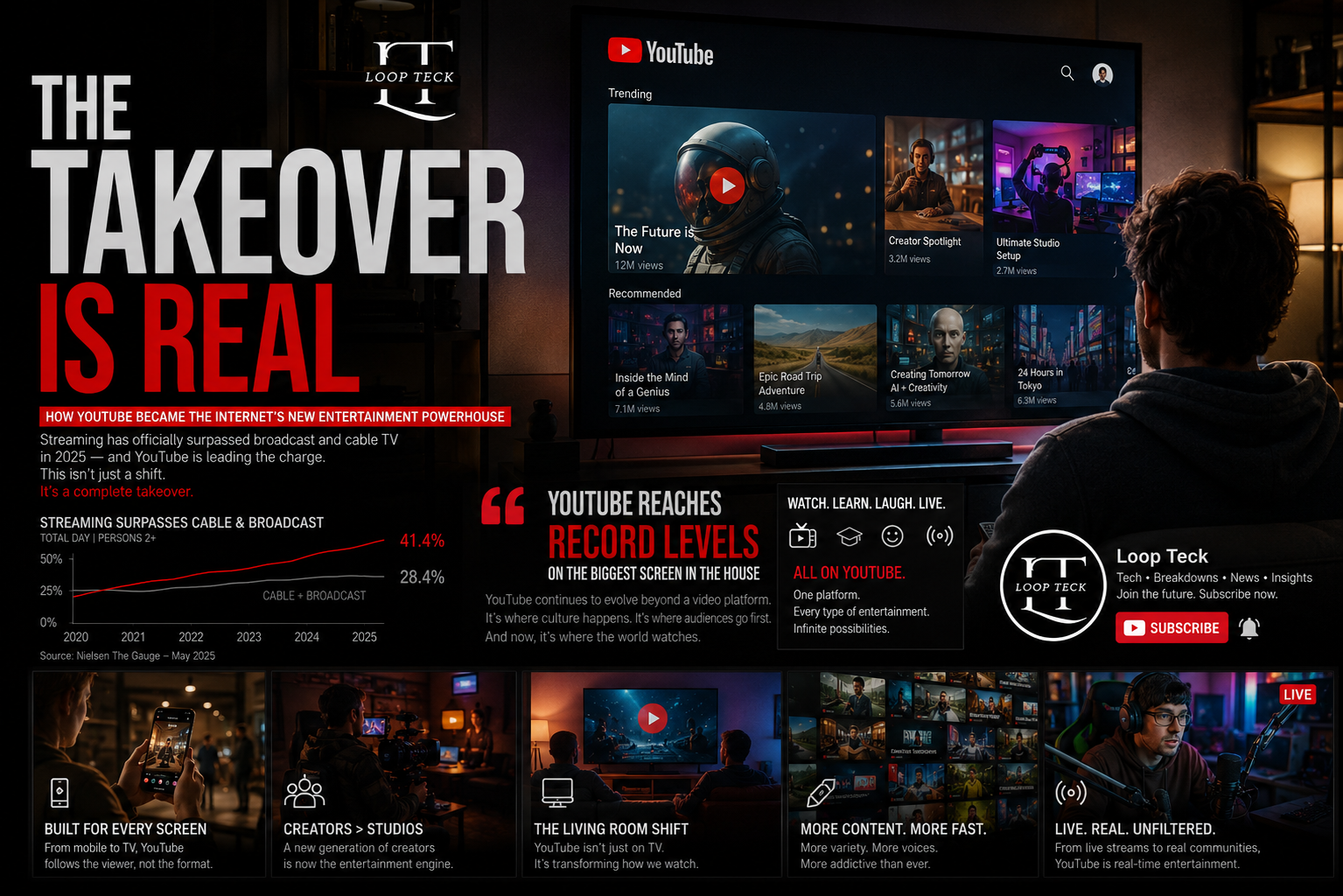
According to Nielsen, streaming officially surpassed combined broadcast and cable television viewing for the first time in history during 2025. But the bigger story hiding inside those numbers was YouTube’s role in driving that transformation. The platform reached record television viewing share levels and continued widening its lead over traditional streaming competitors.
This is the part that many media companies underestimated.
YouTube did not beat television by imitating Netflix.
It beat television by becoming something broader, faster, cheaper, more addictive, and infinitely scalable.
And now the entertainment industry is being forced to adapt around it.
The Living Room Has Become YouTube Territory
The most important thing happening to YouTube right now is not Shorts.
It’s televisions.
For decades, television ownership represented the center of premium entertainment consumption. Whoever controlled the TV screen controlled culture. Netflix understood that early. Disney already owned it. HBO built its empire around it.
Now YouTube is taking that territory.
Internal platform data and multiple industry reports show that TV screens have become one of YouTube’s fastest-growing viewing environments. In the United States, television viewing has already overtaken mobile for YouTube watch time in several usage categories.
That changes everything.
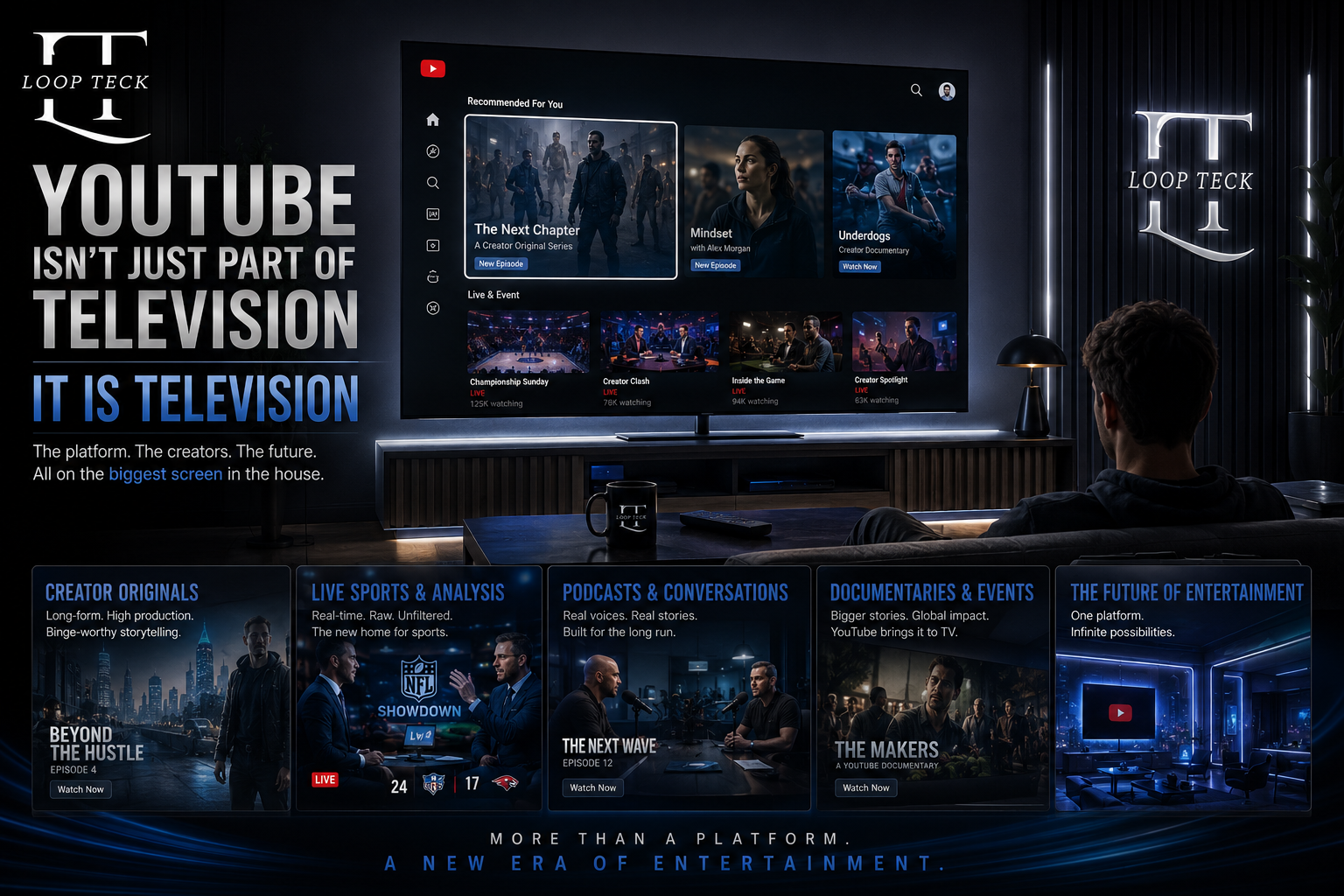
People are no longer opening YouTube just to watch quick clips or search for tutorials. They are leaning back on couches and consuming creator content exactly like traditional television programming.
Only the experience is fundamentally different.
Instead of a handful of studio-controlled channels, viewers now navigate an endless algorithmically personalized feed containing podcasts, documentaries, creator-led game shows, livestreams, commentary, long-form interviews, educational content, sports analysis, and serialized entertainment.
Traditional TV schedules feel rigid beside it.
YouTube, by comparison, feels alive.
The Streaming Industry Accidentally Trained Audiences for YouTube
Ironically, Netflix and the streaming boom helped create the conditions for YouTube’s rise.
Consumers became comfortable with on-demand viewing. They abandoned cable bundles. They normalized binge-watching. They embraced connected TVs. They stopped caring whether content came from a television network or an internet platform.
Then subscription fatigue arrived.
Streaming services became fragmented. Prices increased. Password-sharing crackdowns frustrated users. Ad-supported tiers multiplied. Consumers suddenly found themselves paying for five or six separate subscriptions just to recreate the convenience cable once offered.
YouTube stepped into that exhaustion perfectly.
Most of its content remains free.
Its recommendation engine is brutally effective at retention.
And unlike traditional streaming platforms, YouTube never runs out of fresh programming because creators continuously upload millions of hours of content.
That scale is impossible for Hollywood to compete with directly.
Netflix can spend billions producing scripted series. YouTube creators collectively produce an endless global content machine operating in real time.
That is not merely competition. It is an entirely different economic model.
Creators Are Becoming the New Media Studios
One of the biggest misconceptions about YouTube is that it still revolves around amateur creators filming low-budget videos from bedrooms.
That version of YouTube still exists. But it no longer defines the platform.
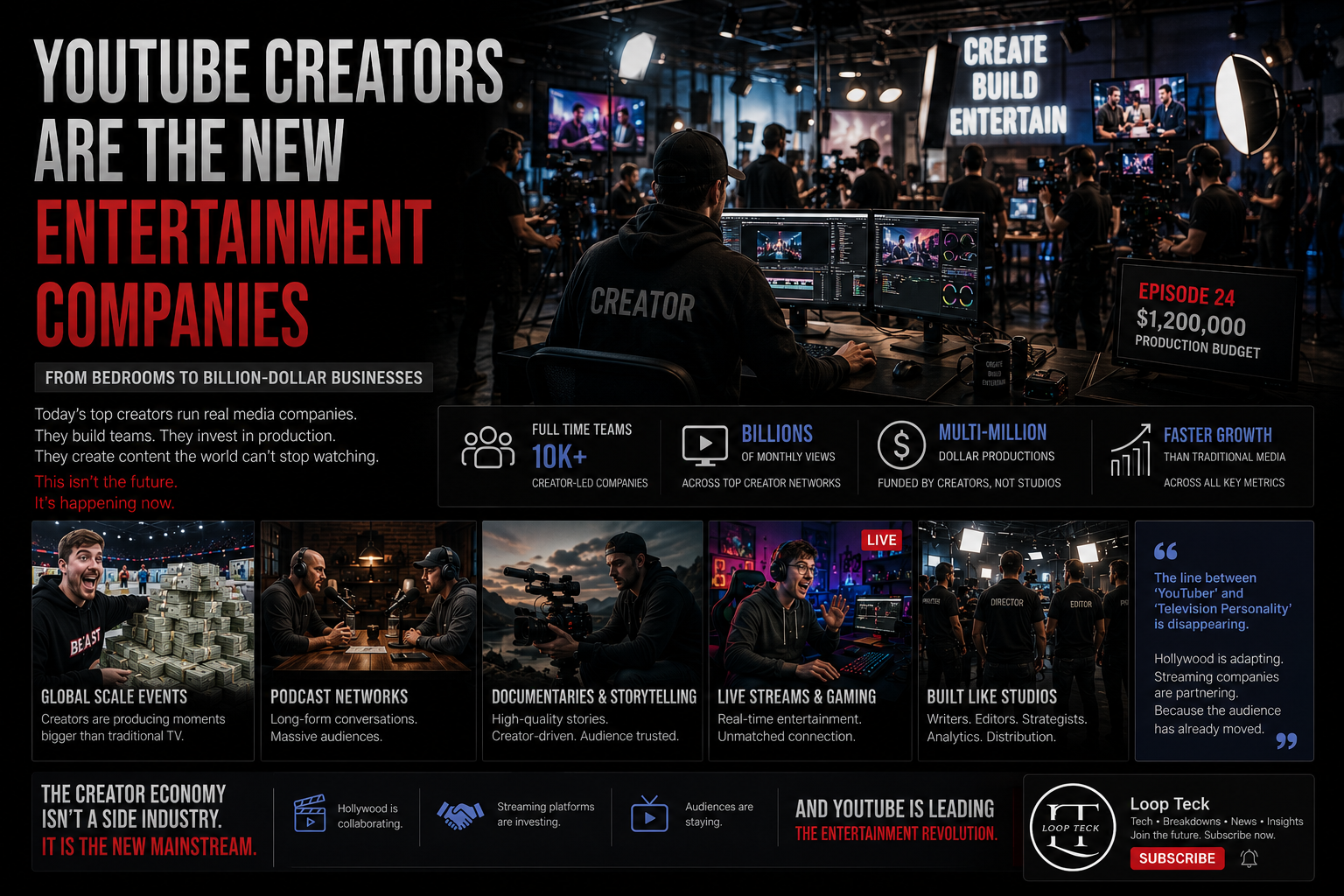
Today’s top creators operate like modern entertainment companies.
Large YouTube channels employ production teams, editors, writers, thumbnail strategists, analytics specialists, sponsorship managers, and distribution coordinators. Some productions rival television-level budgets. Others outperform legacy media in audience engagement despite spending far less.
The creator economy is no longer a side industry.
It is becoming mainstream entertainment infrastructure.
MrBeast helped accelerate that transition by turning YouTube spectacle into global-scale event programming. But he is no longer the exception. Podcast networks, documentary creators, livestream personalities, educational channels, and creator-led studios are all building loyal audiences that traditional television networks increasingly struggle to replicate.
Hollywood has noticed.
Streaming companies are already signing creator partnerships, licensing creator-driven productions, and experimenting with influencer-led entertainment formats because audience attention is migrating faster than executives expected.
The line between “YouTuber” and “television personality” is disappearing.
YouTube Has Something Netflix Still Cannot Replicate
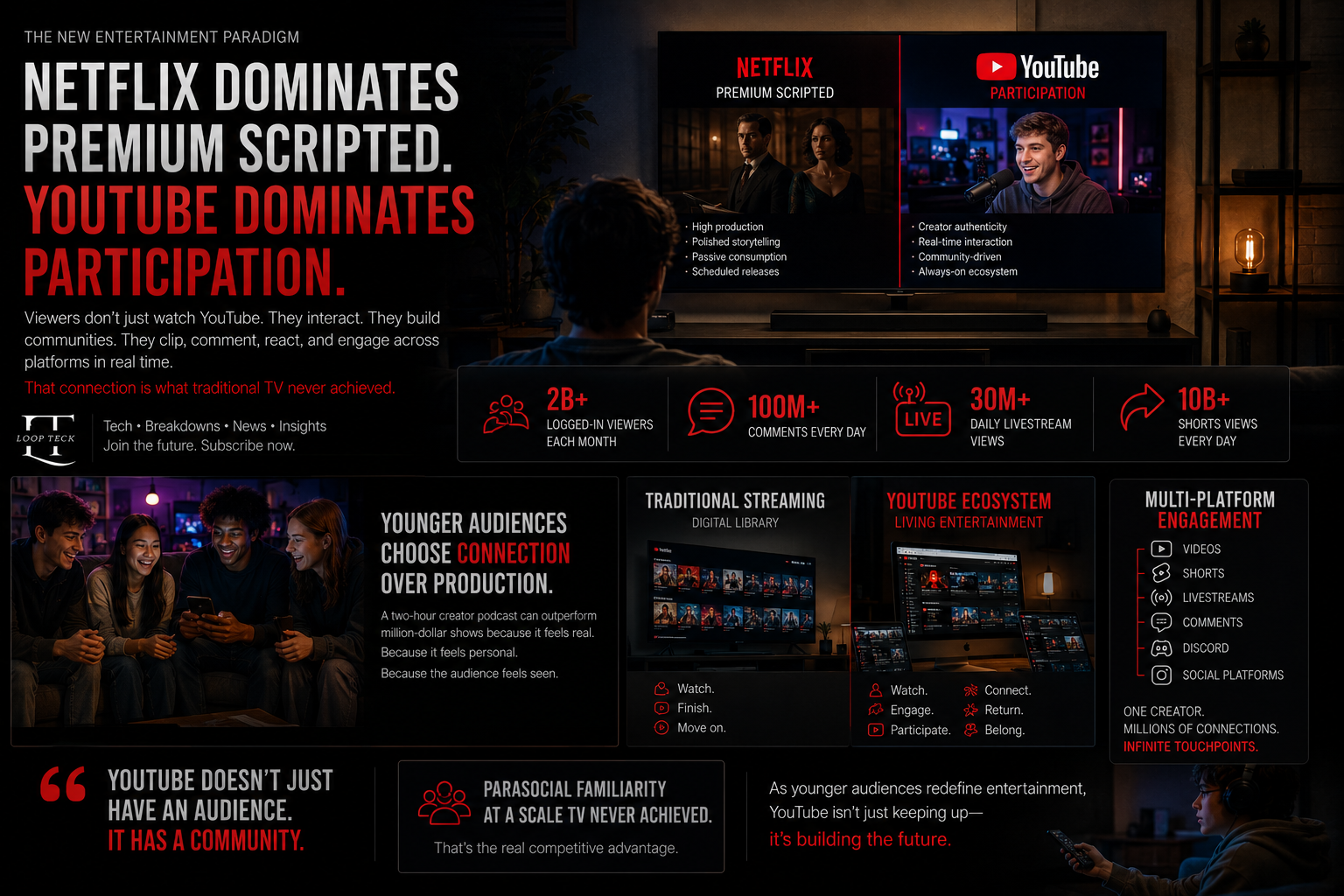
Netflix dominates premium scripted entertainment.
But YouTube dominates participation.
That distinction matters more than most executives realized.
Viewers do not simply consume YouTube content. They interact with it. They build communities around creators. They respond in real time. They clip moments into memes. They engage across Shorts, livestreams, podcasts, comments, Discord servers, and social platforms simultaneously.
The platform creates parasocial familiarity at a scale traditional television never achieved.
That emotional attachment drives astonishing retention.
It also changes how younger audiences define entertainment itself.
For Gen Z and younger viewers especially, creator authenticity often matters more than Hollywood polish. A two-hour creator podcast can outperform expensive scripted productions in engagement simply because audiences feel personally connected to the host.
Traditional streaming platforms still mostly operate like digital movie libraries.
YouTube functions more like a living entertainment ecosystem.
That distinction is becoming increasingly important as younger audiences spend less time with legacy television formats.
Shorts, Podcasts, and Live Content Are Expanding the Empire
Another reason YouTube’s dominance is growing is its ability to absorb multiple entertainment formats simultaneously.
TikTok popularized short-form vertical video.
Spotify pushed podcasts into the mainstream.
Twitch dominates creator livestreaming.
YouTube integrated all three.
Now it benefits from every viewing behavior at once.
Shorts pull users into the platform through rapid discovery. Long-form videos deepen retention. Podcasts increase watch hours dramatically. Livestreams strengthen community loyalty. Television viewing extends the session duration even further.
The ecosystem feeds itself.
Industry reporting also suggests YouTube is aggressively expanding TV-focused interactive experiences, including live engagement tools and creator-centric viewing features designed specifically for connected televisions.
This is no longer a passive video platform strategy.
It is an attempt to redefine modern television itself.
Advertisers Are Following the Attention Shift
Advertising money eventually follows audience behavior.
That migration is accelerating.
Brands increasingly recognize that creator-driven content often delivers stronger engagement than traditional television advertising. YouTube’s targeting infrastructure, audience data, and creator integrations also provide marketing flexibility that broadcast television cannot easily replicate.
Even more important: younger consumers are harder to reach through traditional media.
They spend enormous amounts of time inside YouTube’s ecosystem instead.
This is forcing advertisers, agencies, and entertainment companies to rethink how premium media spending works in the streaming era.
For years, YouTube was categorized as “digital video.”
Now it is increasingly treated as television inventory.
That shift changes how billions of advertising dollars move through the industry.
The Biggest Threat to Hollywood May Not Be Netflix
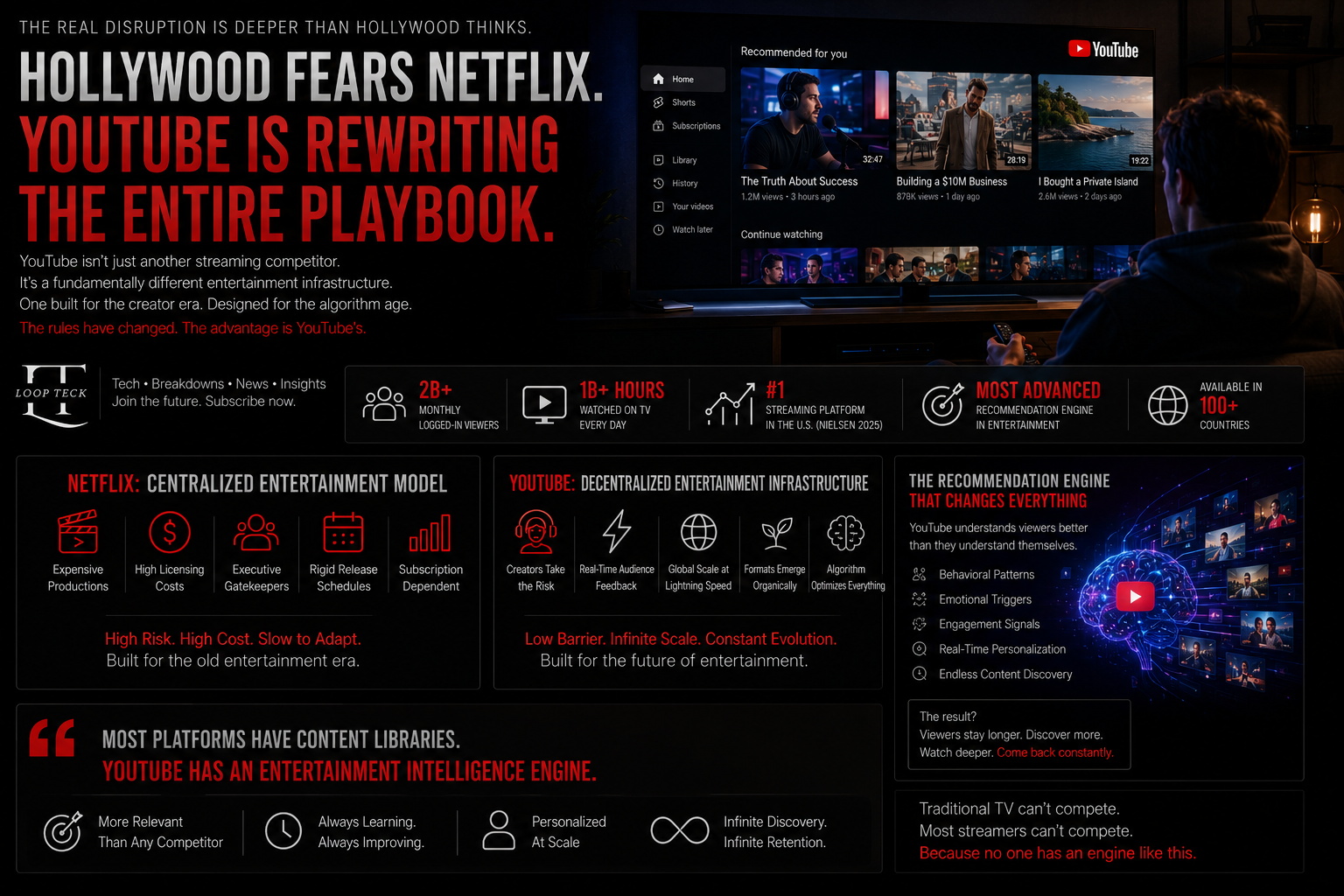
Hollywood spent years worrying about Netflix disruption.
But YouTube may represent a much deeper structural challenge.
Netflix still depends heavily on expensive content licensing, large-scale productions, subscription growth, and centralized programming economics.
YouTube operates more like infrastructure.
Creators assume much of the production risk. Audiences generate algorithmic feedback instantly. Content scales globally at extraordinary speed. New formats emerge organically without executive greenlights.
And unlike streaming competitors, YouTube already owns one of the most powerful recommendation systems ever built.
That recommendation engine has become the real entertainment weapon.
It personalizes viewing habits so effectively that many users no longer consciously choose what to watch. The platform continuously serves increasingly refined content based on behavioral patterns, emotional triggers, and engagement signals.
Traditional television cannot compete with that level of personalization.
Most streaming services cannot either.
The Future of Streaming May Not Look Like Streaming at All
The industry still uses the word “streaming” as if it refers to companies like Netflix, Disney+, or Max.
But YouTube is quietly changing the definition.
The future of entertainment may not revolve around professionally scheduled releases, massive studio franchises, or tightly controlled premium catalogs.
It may revolve around creator ecosystems, algorithmic personalization, interactive communities, and infinitely adaptive content feeds.
That is the environment YouTube already dominates.
And perhaps the clearest sign of the shift is this:
YouTube no longer feels like an internet platform trying to become television.
It feels like television is struggling to become YouTube.
Why YouTube Is
Dominating Streaming
The creator economy, connected TVs, AI-powered recommendations, and endless on-demand content are reshaping modern entertainment faster than Hollywood expected.
YouTube has evolved into a full entertainment ecosystem combining creator-led content, smart TV viewing, podcasts, livestreams, Shorts, and algorithm-driven personalization across billions of users globally.
Netflix relies heavily on premium studio productions and subscriptions, while YouTube scales through creators continuously producing content across multiple entertainment categories in real time.
Connected televisions transformed YouTube into a living-room platform where audiences now watch long-form creator videos, interviews, documentaries, gaming streams, podcasts, and live events.
YouTube combines short-form video, long-form content, creator ecosystems, smart TV integration, algorithmic personalization, and interactive communities into one scalable entertainment infrastructure.


Loop Teck
Future Technology • AI • Smartphones • Innovation