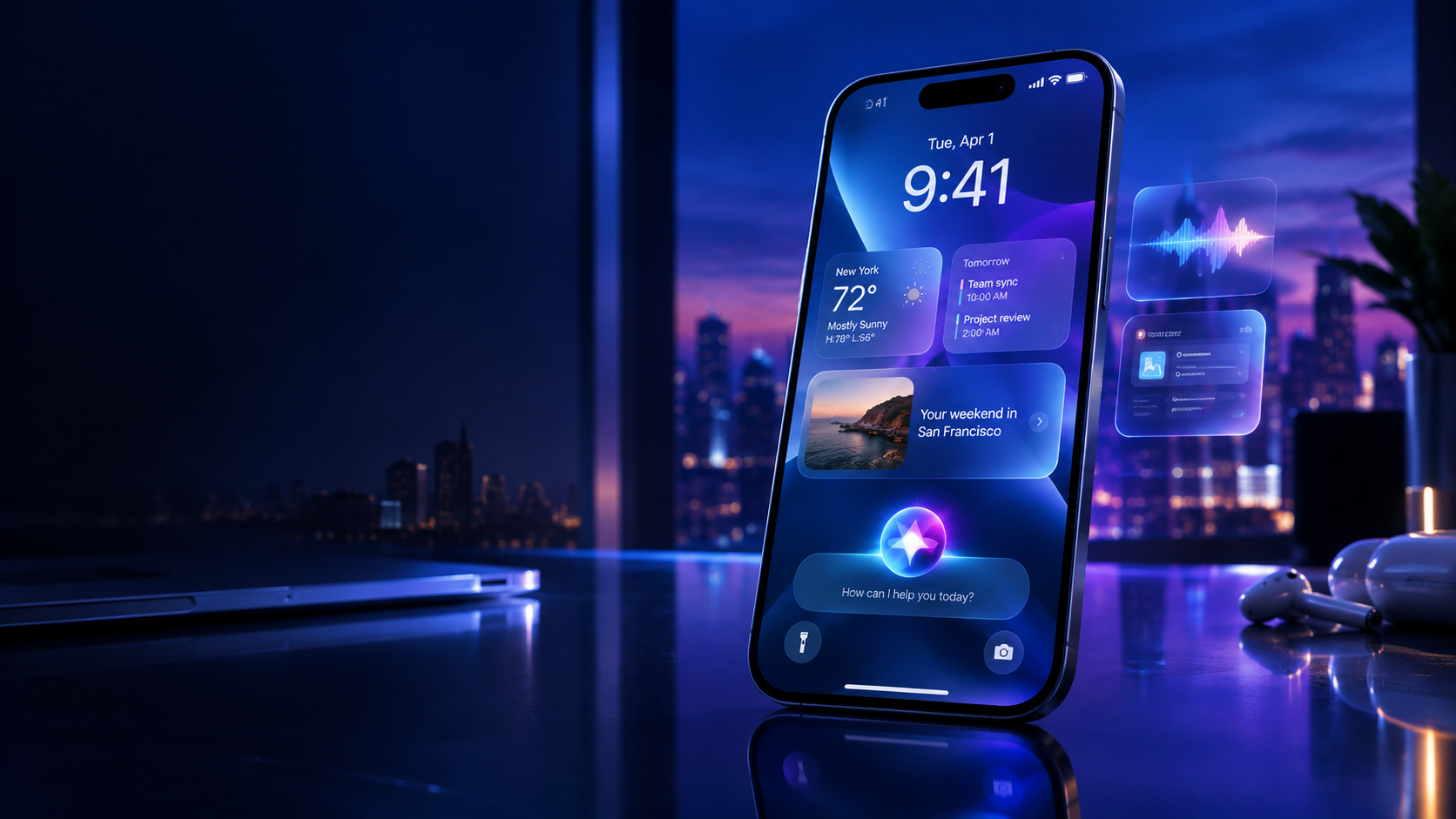


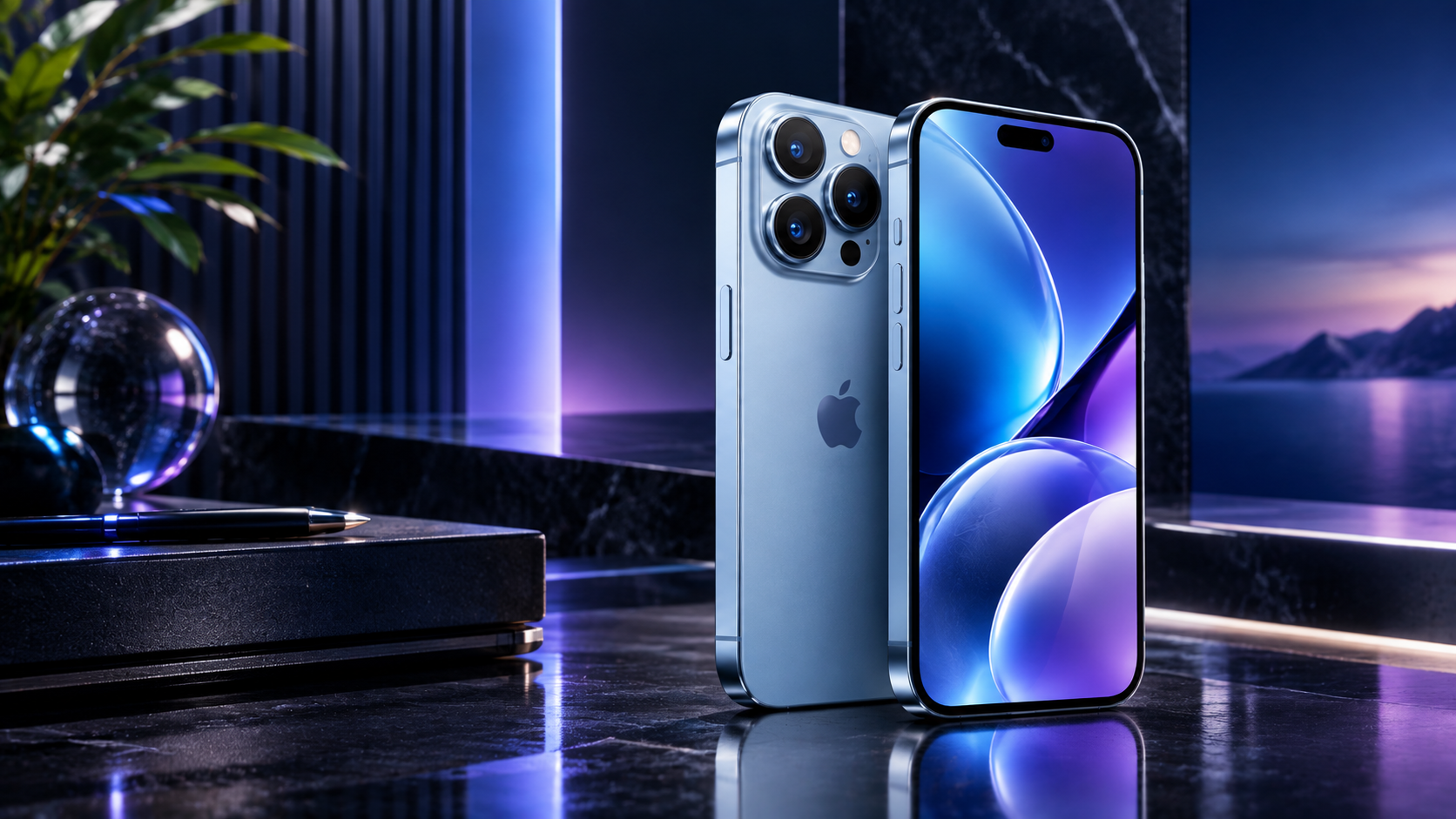
The iPhone 18 Pro takes Apple’s Pro formula and puts it into a smaller body without cutting back on the core hardware. It combines the A20 Pro chip, a 6.3-inch OLED display, a new variable-aperture main camera and strong battery endurance.
The biggest changes are inside. Apple has moved to its first 2nm silicon with the A20 Pro and expanded the camera system with real mechanical aperture control. The phone also introduces Apple’s C2 modem and N1 wireless networking chip.
At $1,199, the iPhone 18 Pro is not inexpensive. But its combination of performance, cameras and battery life makes it a serious option for people who want Pro-level hardware without the larger Pro Max body.
What makes the iPhone 18 Pro different?
A20 Pro
Apple’s first 2nm iPhone silicon pairs six CPU cores with a larger Neural Engine and hardware-accelerated ray tracing.
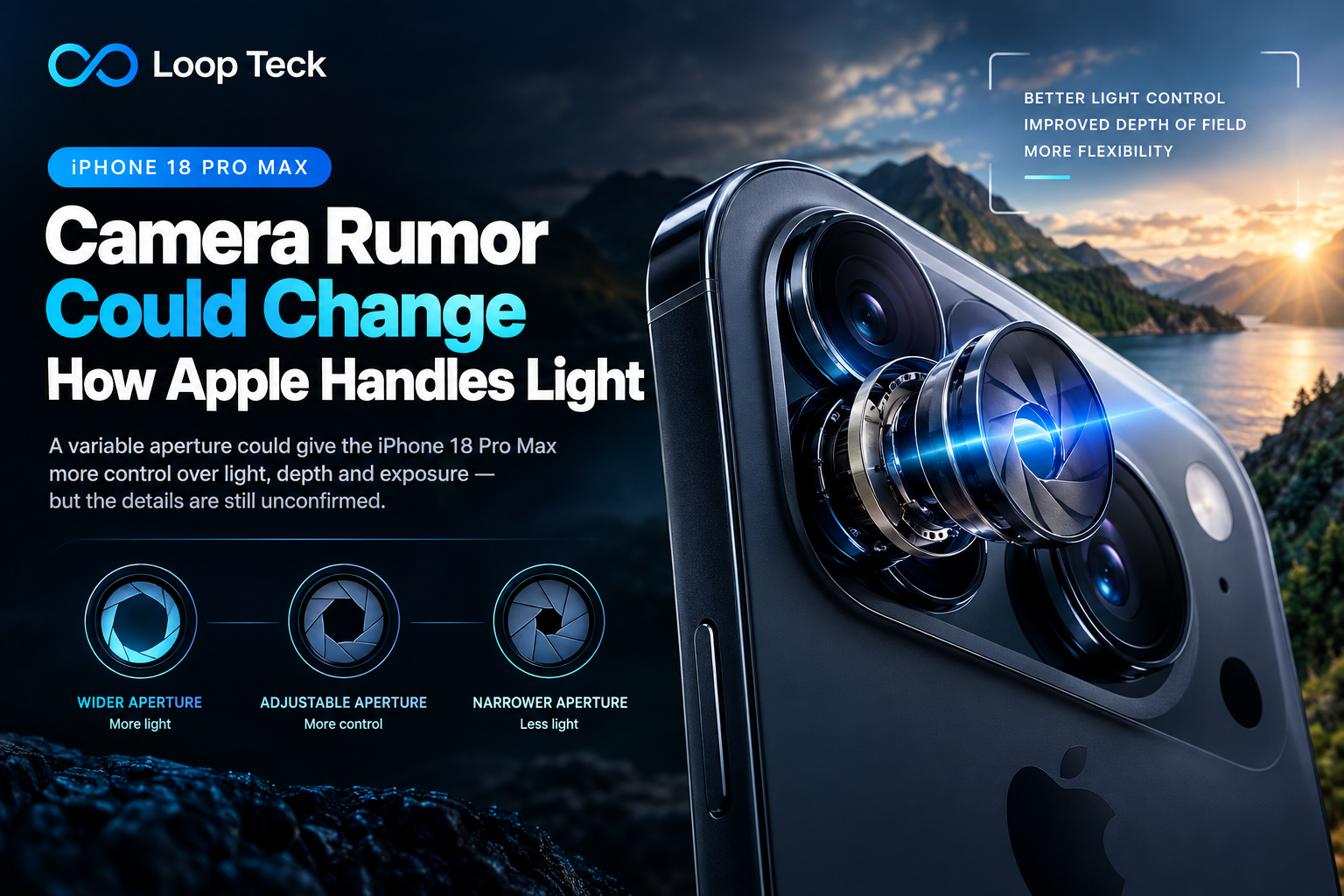
Variable Aperture
The main Fusion camera introduces physical aperture control for more flexibility when capturing images.
Built to Last
3,000 nits
A 6.3-inch OLED panel combines high brightness, 1–120Hz ProMotion and improved outdoor visibility.
At a Glance
Apple iPhone 18 Pro
A compact Pro iPhone with A20 Pro power, variable-aperture photography and strong endurance.
Design: Familiar, compact and easier to handle
The iPhone 18 Pro shares the overall design language of the Pro Max, but its smaller dimensions make the difference in everyday use.
The phone measures 5.91 by 2.83 by 0.34 inches and weighs 7.44 ounces. That makes it slightly heavier than the iPhone 17 Pro, which weighs 7.27 ounces.
The additional weight is likely connected to the larger battery and upgraded cooling hardware described in the review.
For users with smaller hands, however, the compact size remains the bigger story.
The iPhone 18 Pro is also available in several colors, including Deep Black, Silver, Burgundy and Glacier. The Glacier version used for the review has a light blue finish across the rear and camera area.
Build quality and controls
Apple retains the familiar button arrangement.
The power button sits on the right side, while the Camera Control is positioned below it. The left side houses the Action Button and volume controls.
The bottom edge continues to use a centered USB-C port.
The phone also uses an aluminum chassis, Ceramic Shield 2 on the front, Ceramic Shield on the rear and an IP68 rating.
That means the physical design is evolutionary, but the materials and protection remain firmly within Apple’s Pro lineup.
Display: Bright, smooth and easier to see outdoors
The iPhone 18 Pro uses a 6.3-inch OLED display with a resolution of 2,622 by 1,206 pixels and a density of 460 pixels per inch.
The display supports Apple’s 1–120Hz ProMotion technology. That allows the refresh rate to change depending on what is happening on screen.
Apple has also improved outdoor visibility.
The display reaches a claimed 3,000 nits of peak brightness, while the glass has been improved to reduce reflections. The review also notes nearly twice the outdoor contrast compared with the previous generation.
Another visible change is the smaller Dynamic Island.
Apple reduced the physical cutout by about 25%. That creates a little more usable screen area, although iOS 27 can display three Live Activities at once, which can use some of that additional space.
How does it compare with Android displays?
The iPhone 18 Pro is not the highest-spec display on the market.
The Pixel 11 Pro reaches 3,600 nits and has a higher 495ppi density. Samsung’s Galaxy S26 Ultra also offers features such as its Privacy Display.
Those differences matter on paper more than they do for most everyday tasks. Text, photos and animations remain sharp on the iPhone 18 Pro, while the high refresh rate keeps scrolling smooth.
A20 Pro: The iPhone 18 Pro’s biggest performance upgrade
The A20 Pro is arguably the most important hardware change in the iPhone 18 Pro.
Apple’s new chip is its first silicon based on a 2nm architecture. The smaller process allows more transistors to fit into a smaller area.
The A20 Pro uses:
- Six CPU cores
- Two performance cores
- Four efficiency cores
- Seven GPU cores
- Dedicated neural acceleration
- A 32-core Neural Engine
- Hardware-accelerated ray tracing
The Neural Engine configuration is particularly notable. Apple has doubled the number of Neural Engine cores compared with the A19 Pro, from 16 to 32.
That gives the iPhone 18 Pro more dedicated hardware for AI-related workloads.
Storage options
Choose Your iPhone 18 Pro
Four listed storage configurations give buyers different capacity options, starting at 256GB for $1,199.
The review notes that the official RAM configuration was still pending at the time of testing. No RAM figure should therefore be treated as confirmed.
Cooling helps, but heavy workloads still create heat
Apple also redesigned the iPhone 18 Pro’s vapor chamber.
The new chamber is described as twice the size of the one used in the iPhone 17 Pro. Its purpose is to spread heat more evenly during demanding workloads.
That improvement helps, but it does not make the phone completely cool under maximum load.
During graphics and video processing, the iPhone 18 Pro can become noticeably warm. Under an AnTuTu workload, the review measured an external temperature of up to 106 degrees Fahrenheit.
The phone took about 20 minutes to return fully to normal temperature.
For ordinary tasks, this should be far less noticeable. The higher temperatures appeared when the hardware was being pushed hard.
iPhone 18 Pro benchmark performance
The benchmark results show why the A20 Pro is such a major part of this generation.
Geekbench 6
The iPhone 18 Pro recorded:
- 4,787 in single-core
- 12,166 in multi-core
For comparison, the iPhone 17 Pro recorded 3,820 and 9,820 respectively in the same tests.
The Pixel 11 Pro’s Tensor G6 recorded 2,700 in single-core and 3,400 in multi-core in the comparison cited by the review.
Synthetic benchmarks do not represent every real-world workload. They are useful mainly for comparing processor performance under controlled conditions.
In this case, the numbers show a substantial CPU improvement over the previous Pro generation.
3DMark
The iPhone 18 Pro also performed strongly in GPU testing.
In the Wild Life Extreme test, it recorded 8,579 frames at 51.4fps.
The Pixel 11 Pro recorded 3,425 frames at 20.51fps, while the Galaxy S26 Ultra recorded 7,847 frames at 46.99fps.
The smaller iPhone 18 Pro may also benefit from rendering fewer pixels than the Pro Max during this particular test.
AnTuTu
AnTuTu Performance
Peak performance comes with a measurable thermal trade-off.
The cited AnTuTu result rises from 2,446,290 on the iPhone 17 Pro to 3,544,646 on the iPhone 18 Pro.
Performance Has a Cost
The benchmark result shows how aggressively the phone can perform under peak load. That performance was accompanied by a chassis temperature of 106°F during the test.
The cited AnTuTu score represents a substantial increase over the previous generation’s benchmark result.
The higher performance figure was accompanied by a substantial thermal load during the test.
Battery life: One of the iPhone 18 Pro's strongest features
Battery endurance is another major strength of the iPhone 18 Pro.
Apple does not publish the battery’s capacity. Instead, it provides usage estimates.
Apple rates the iPhone 18 Pro for:
- Up to 24 hours of typical usage
- Up to 36 hours of video playback
Those figures are lower than the iPhone 18 Pro Max, which Apple rates for up to 30 hours of usage and 45 hours of video playback.
The smaller Pro model still delivered impressive endurance in testing.
The reviewer’s real-world use extended beyond two days. That included messaging, social media, video streaming, Pokémon Go and CarPlay sessions.
During testing, the iPhone 18 Pro remained at 45% after nearly 15 hours of video streaming.
A final standardized battery benchmark was still pending when the review was published, so that result should not be treated as a completed laboratory measurement.
45W charging makes a difference
Charging is another area where the iPhone 18 Pro receives an upgrade.
Apple claims the phone can reach 50% charge in approximately 15 minutes with a compatible setup.
In testing, the phone reached 49% in 15 minutes using a compatible 45W charger.
It then reduced charging power to 21W and reached a full charge in 64 minutes.
Apple tested the capability using its own 40W Dynamic Power Adapter, while the review notes that a higher-wattage charger is required to achieve similar speeds.
5G and Wi-Fi: Strong wireless performance
The iPhone 18 Pro introduces Apple’s C2 modem and N1 wireless networking chip.
The N1 supports:
- Wi-Fi 7
- Bluetooth 6.0
- Thread
The C2 modem also uses AI-based technology to manage network congestion.
In testing with Google Fi, the iPhone 18 Pro reached 645Mbps download and 20.8Mbps upload indoors.
Outside, it reached 688Mbps download and 19.2Mbps upload.
Wi-Fi performance was also strong.
On a Wi-Fi 6 network, the phone reached 855Mbps download and 40.7Mbps upload next to the router. Outside the home, it reached 653Mbps download and 36.5Mbps upload.
These figures depend heavily on the network, carrier, router and testing environment. They should therefore be viewed as test results rather than guaranteed speeds for every owner.
Speakers: Loud enough to fill a room
The iPhone 18 Pro uses its bottom-firing speaker with the earpiece to create stereo sound.
Music and video playback remain clear at high volume, while vocals retain good clarity.
There is one issue: the speakers can become extremely loud.
The review measured up to 109dB from the main audio output. At that level, the chassis can also vibrate as sound resonates through the phone.
Speakerphone calls reached up to 98dB, while the earpiece remained below 57dB without headphones.
For normal listening, the speakers have more than enough output. Maximum volume is not necessarily the best setting.
Cameras: Variable aperture changes the Pro formula
The camera system is where the iPhone 18 Pro makes one of its most interesting hardware changes.
Apple retains a triple-camera setup with three 48MP-class cameras, including a new variable-aperture main camera.
The main Fusion camera uses an f/1.48 aperture and optical image stabilization.
It is the only camera in the system with a variable aperture.
What does the variable aperture do?
Instead of relying entirely on software to change exposure characteristics, the main lens uses physical blades.
The iPhone 18 Pro offers four aperture settings:
- f/1.48
- f/1.8
- f/2.8
- f/4.0
Users can change the setting while composing a photo.
The preview can show a slight change in brightness as the aperture changes.
This makes the feature more than a software-only camera effect. The physical aperture can influence how much light enters the lens and how the camera behaves when shooting.
The other cameras remain familiar
The ultrawide camera is 48MP with a 13mm-equivalent lens, a 120-degree field of view and an f/2.2 aperture.
The telephoto camera uses a 100mm-equivalent lens with an f/2.8 aperture.
Apple has also expanded its Photographic Styles with additional texture controls.
The result is a camera system that combines familiar hardware with a more flexible main camera.
Image quality and low-light photography
The iPhone 18 Pro produces balanced images with strong contrast and improved nighttime photography.
The wider main-camera aperture contributes to low-light performance.
The review also notes a warmer or slightly yellow color tendency in some images. Samsung’s processing can lean more blue, while Google’s processing often lifts shadows more aggressively.
These differences are largely about image-processing philosophy rather than a simple question of which color profile is correct.
Apple’s approach tends to preserve a natural-looking contrast while keeping the image relatively controlled.
Night photography
Night photography has improved, but Google’s Pixel line remains more aggressive with computational Night Sight processing.
That distinction is important.
The iPhone 18 Pro’s wider aperture gives the hardware more light to work with, while Google’s approach can extract additional visible detail through computational processing.
Both strategies have different visual results.
Manual controls give photographers more flexibility
Variable aperture is only one part of Apple’s expanded camera controls.
The Camera app also provides manual control over settings such as:
- Shutter speed
- White balance
- Aperture
That flexibility can help photographers deliberately control an image rather than relying entirely on automatic processing.
But manual control also creates room for mistakes.
A poorly selected shutter speed can produce an overexposed or extremely dark photograph. The additional controls are therefore most useful when the photographer understands what each setting changes.
Zoom and video capabilities
The iPhone 18 Pro offers up to 4x optical zoom.
Apple also supports up to 8x optical-quality zoom by combining information from multiple camera lenses.
The review found that this approach produced usable results without relying as heavily on aggressive computational reconstruction.
The front camera receives a significant change as well.
Apple uses an 18MP Center Stage camera with a square sensor that is twice the size of the previous generation. It supports wider framing options, making it easier to include additional people or more of the surrounding scene.
Video recording remains equally capable.
The iPhone 18 Pro can record 4K video at 120fps and supports Dolby Vision and Apple Log.
Those formats make the phone suitable for users who want to take footage into a professional editing workflow.
iOS 27: A quieter approach to AI
The iPhone 18 Pro ships with iOS 27, which adds several software changes beyond the new hardware.
The update includes improvements to:
- Parental controls
- Satellite-based messaging
- Call screening
- Siri
Siri is particularly relevant to the iPhone 18 Pro experience.
Apple’s updated assistant can handle secondary tasks, such as adding an event to a calendar or creating a reminder from a conversation.
At the time of the review, the refreshed agentic Siri experience was still in beta and available only in English.
That limitation matters because it means the feature should not be treated as a fully mature replacement for every traditional assistant task.
Is the iPhone 18 Pro a major upgrade?
The answer depends heavily on which iPhone you currently own.
The iPhone 18 Pro introduces several meaningful hardware changes:
- A20 Pro 2nm silicon
- Larger Neural Engine
- Improved thermal management
- Variable-aperture main camera
- Expanded manual camera controls
- New C2 modem
- N1 wireless chip
- Wi-Fi 7
- Faster charging
- Improved battery endurance
- Smaller Dynamic Island
- iOS 27
However, not every improvement will be equally important to every owner.
Someone upgrading from an older Pro model will notice the performance, camera and battery improvements more clearly than someone coming from the iPhone 17 Pro.
The iPhone 17 Pro already receives iOS 27, so several software improvements are not exclusive to the iPhone 18 Pro.
iPhone 18 Pro vs. iPhone 18 Pro Max
The iPhone 18 Pro and Pro Max share most of their important hardware.
Both use the A20 Pro processor and the same core camera system, including the variable-aperture main camera.
The biggest difference is physical size.
The Pro Max offers:
- A larger display
- Longer battery life
- A larger chassis
Apple rates the Pro Max for up to 30 hours of typical usage and 45 hours of video playback, compared with 24 hours and 36 hours for the smaller Pro.
That leaves the iPhone 18 Pro with a straightforward role in Apple’s lineup.
It is the option for people who want much of the Pro Max experience without carrying the larger phone.
Final Verdict: Who should buy the iPhone 18 Pro?
The iPhone 18 Pro brings together three major strengths: performance, battery endurance and camera flexibility.
The A20 Pro gives it a substantial performance foundation, while the 2nm architecture and expanded Neural Engine mark a significant change in Apple’s silicon strategy.
The camera system is equally important.
The physical variable aperture is a genuine hardware feature, not simply a software effect. Combined with manual shutter speed and white-balance controls, it gives photography enthusiasts more control over how their images are captured.
Battery life is another standout.
The phone lasted more than two days in demanding real-world use during the review, while charging reached 49% in 15 minutes with compatible hardware.
There are compromises.
The iPhone 18 Pro can become warm during extreme workloads, and the Pro Max remains the better choice for users who prioritize maximum battery life and a larger display.
At $1,199, the iPhone 18 Pro also sits firmly in premium territory.
But for someone who wants a compact iPhone with high-end performance, a capable camera system and strong endurance, the iPhone 18 Pro delivers a well-rounded Pro experience without requiring the larger Pro Max body.
iPhone 18 Pro FAQ
From the A20 Pro chip and variable-aperture camera to battery life, charging and iOS 27, find the answers behind Apple's latest Pro iPhone.
The iPhone 18 Pro starts at $1,199 with 256GB of storage.
The iPhone 18 Pro uses Apple's A20 Pro chip. It is Apple's first silicon built on a 2nm architecture.
The chip includes a six-core CPU, seven-core GPU, hardware-accelerated ray tracing and a 32-core Neural Engine.
Yes. The iPhone 18 Pro introduces a physical variable aperture on its 48MP main Fusion camera.
The system provides four aperture settings: f/1.48, f/1.8, f/2.8 and f/4.0.
Apple rates the iPhone 18 Pro for up to 24 hours of typical usage and up to 36 hours of video playback.
In real-world testing described in the review, the phone lasted more than two days under a demanding mixture of messaging, social media, gaming and video streaming.
The iPhone 18 Pro supports fast charging and reached 49% in 15 minutes during the reviewer's testing with a compatible 45W charger.
The phone reached a full charge in approximately 64 minutes in that test.
The iPhone 18 Pro has a 6.3-inch OLED display with a resolution of 2,622 × 1,206 pixels.
Its peak brightness reaches 3,000 nits, while ProMotion supports refresh rates from 1Hz to 120Hz.
Yes. The iPhone 18 Pro's N1 wireless networking chip supports Wi-Fi 7, along with Bluetooth 6.0 and Thread.
In the review's Wi-Fi testing, the phone reached 855Mbps download and 40.7Mbps upload next to the router on a Wi-Fi 6 network.
The A20 Pro delivers a significant performance increase over the iPhone 17 Pro in the benchmark results cited in the review.
The iPhone 18 Pro scored 4,787 single-core and 12,166 multi-core in Geekbench 6.
Yes. The iPhone 18 Pro can record 4K video at 120fps.
It also supports Dolby Vision and Apple Log, giving users additional flexibility when editing footage in professional video software.
The iPhone 18 Pro ships with iOS 27.
The software includes improvements to parental controls, satellite messaging, call screening and Siri. The updated contextual Siri experience described in the review was still in beta and limited to English.
Yes. The iPhone 18 Pro is the smaller model while retaining most of the Pro Max's core hardware.
Both models use the A20 Pro chip and the same core camera system. The Pro Max primarily differentiates itself with its larger display and longer battery life.
The iPhone 18 Pro is designed for users who want high-end performance, strong battery endurance and advanced camera controls without moving to the larger Pro Max body.
Its combination of the A20 Pro chip, variable-aperture camera, manual controls and compact Pro design makes it particularly relevant to performance-focused users and photography enthusiasts.


Loop Teck
✓Technology, AI, smartphones & the future of innovation.