

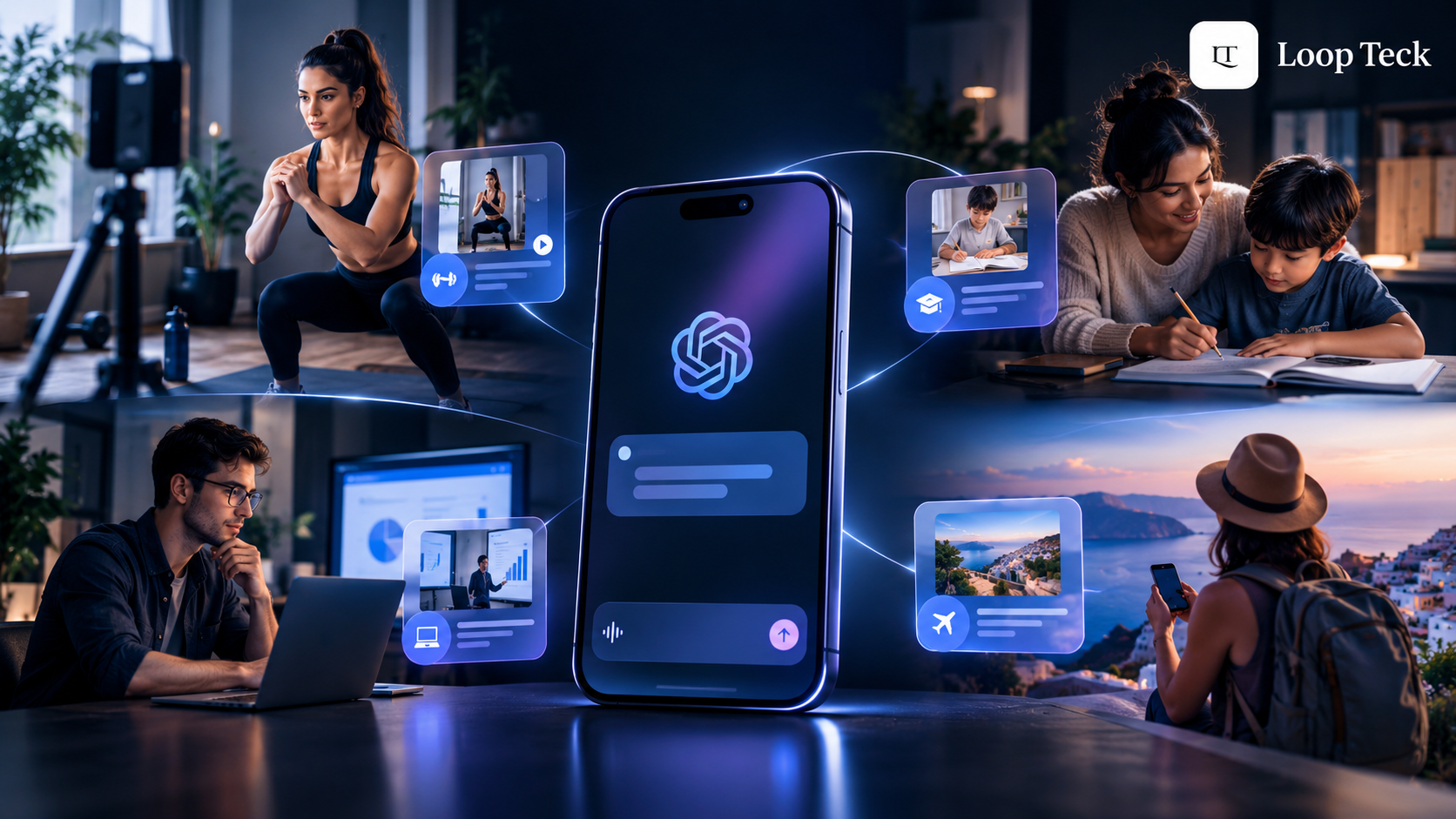
It combines the core development with a clear consumer question. It also reflects the reporting without claiming that every influencer recommendation is paid or controlled by OpenAI.
OpenAI influencer marketing is moving well beyond the technology crowd.
Business Insider reported on September 23, 2026, that OpenAI has expanded its creator strategy across areas including parenting, fitness, education, travel, shopping, careers and productivity. The company is using sponsored content to show specific ways people can use ChatGPT in everyday situations rather than focusing only on models, benchmarks and technical features.
The scale is also growing. Data from influencer marketing platform HypeAuditor, cited by Business Insider, showed Instagram posts using #chatgpt_partner or #chatgptpartner rising from 61 in June to 122 in July and 141 in August 2026. Business Insider said it reviewed dozens of sponsored posts and spoke with six creators and managers who had worked with OpenAI.
That changes the way ChatGPT is being marketed.
Instead of waiting for users to discover a new AI feature, OpenAI is increasingly placing ChatGPT inside familiar parts of everyday life. A workout, a school assignment, a presentation or even a word-search puzzle can become the demonstration.
OpenAI influencer marketing is moving outside the tech bubble
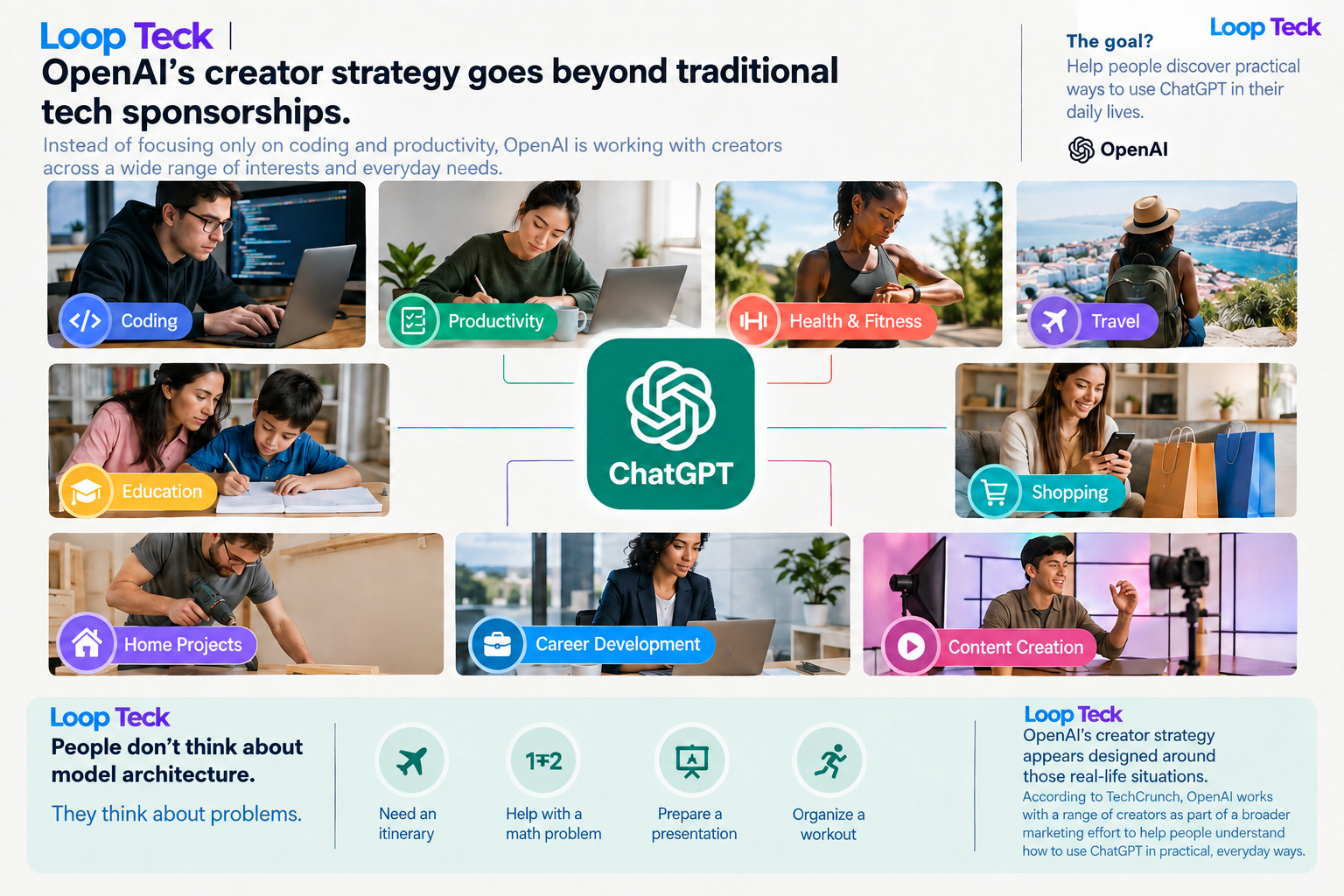
OpenAI’s latest creator strategy is broader than traditional technology sponsorships.
Business Insider found that OpenAI is working with creators who reach audiences interested in coding and productivity. However, the campaign also extends into health, travel, education, shopping, home projects, career development and content creation.
That range matters because most people do not approach artificial intelligence by thinking about model architecture.
They think about problems.
Someone planning a trip wants an itinerary. A parent wants help explaining a math problem. A small-business owner needs a presentation. A runner may want help organizing a workout.
OpenAI’s creator strategy appears designed around those situations.
The company told TechCrunch in August that it works with a range of creators as part of a broader marketing effort intended to help people understand practical ways to use ChatGPT.
The marketing message is becoming more personal
Business Insider reported that one campaign pitch encouraged creators to demonstrate how AI could support work that is “good for the world,” while a talent manager described the appeal in simpler terms: making ChatGPT feel useful and engaging in ordinary life.
That approach is different from a conventional product launch.
A technical announcement explains what changed.
An influencer post shows what someone might actually do with it.
Sponsored ChatGPT posts more than doubled from June to August
The campaign didn’t just grow. It accelerated.
Explore the reported Instagram post counts from June through August 2026. Select a month to see how the number changed and what the data actually tells us.
According to HypeAuditor data cited by Business Insider, posts using #chatgpt_partner or #chatgptpartner rose from 61 in June to 141 in August 2026.
That’s an increase of 80 posts across the two-month period.
Tap a month to see the reported count, change and context.
June 2026
Can you spot the biggest jump?
These figures are based on Instagram posts carrying #chatgpt_partner or #chatgptpartner. They are a snapshot of identified posts, not a complete count of every OpenAI creator campaign.
The figures also do not mean that OpenAI worked with 141 different influencers in August.
OpenAI is selling use cases, not just AI features
One of the most revealing parts of the strategy is the shift from feature-based promotion to use-case marketing.
Business Insider reported that a recent back-to-school partnership featured Martha Dove, a mother of five, showing how she used ChatGPT to help her children with math homework. The sponsored content highlighted ChatGPT’s Study Mode and teen-safety features.
The message is straightforward: AI does not have to look like a futuristic technology demo.
It can look like homework.
The same pattern appeared in other categories. Business Insider reported that OpenAI showed interest in fitness creators because health and running questions are already common ChatGPT use cases.
That makes influencer marketing particularly useful.
Creators already have audiences organized around specific interests. OpenAI can therefore introduce ChatGPT through an activity those viewers already understand.
The strategy also reaches entertainment audiences
The approach is not limited to educational or professional creators.
Business Insider reported that The Shade Room, which has more than 28 million Instagram followers according to the publication, shared a sponsored ChatGPT post featuring a word-search puzzle generated with ChatGPT.
That is a very different demonstration from showing how an AI model writes code.
It is also easier to consume.
A casual social-media user does not need to understand large language models to see how an AI tool can generate a puzzle.
OpenAI appears to be targeting repeat usage, not just first-time trials
Trying ChatGPT is one thing. Opening it again is another.
Explore how the same AI assistant can become connected to different everyday routines — and why OpenAI’s creator strategy appears focused on building repeat usage.
Because the competitive question changes after someone has already discovered generative AI.
The challenge becomes: Which assistant will they return to when the next problem appears?
Pick a routine
See how ChatGPT can become associated with a specific activity.
ChatGPT helps turn the user’s goal into a more structured running routine.
Tomorrow’s run
The next workout creates another reason to open the assistant.
The assistant people remember
The technology can remain the same while the reason to open it changes. Fitness, work, parenting and travel can each create a different return trigger.
OpenAI is building a larger creator operation
The campaign also appears to have become more organized internally.
Business Insider reported that OpenAI has hired people with experience at major social platforms, including Instagram, Facebook, TikTok and Snapchat. The company also brought in Charles Porch, Instagram’s longtime partnerships executive, in 2026.
TechCrunch separately reported that Porch joined OpenAI as its first vice president of global creative partnerships. Before joining OpenAI, he worked at Instagram.
OpenAI has also worked with influencer marketing agency Viral Nation, according to Business Insider.
That points to something larger than occasional product sponsorships.
The company is building infrastructure around the creator economy.
Why that matters for the AI industry
Influencers already play a major role in how people discover software, consumer products and online services.
AI companies have a particular reason to use that channel.
Generative AI can still be difficult to explain with traditional advertising.
A creator can demonstrate the workflow in seconds.
That lowers the barrier between a complicated technology and a practical example.
OpenAI is not alone in pursuing this approach. TechCrunch reported that Anthropic and Microsoft have also organized influencer-related activities around their AI products.
That suggests creator partnerships are becoming part of the broader competition between AI companies.
OpenAI’s influencer strategy has already faced backlash
The creator push has not been universally well received.
In August, TechCrunch reported that OpenAI hosted creators at a luxury retreat in upstate New York called “Summer Club.” The event included dinners, wellness activities, workshops and opportunities to learn more about OpenAI products.
Some creators faced criticism in their comment sections after posting about the trip.
TechCrunch reported that viewers questioned whether influencers were too closely aligned with OpenAI and raised concerns about AI’s environmental impact. One creator appeared to remove a video about the event while keeping other posts that did not explicitly identify the trip.
OpenAI defended the event as education-led.
A company spokesperson told TechCrunch that the purpose included giving creators hands-on experience with OpenAI products so they could demonstrate practical uses to their followers.
That distinction matters.
A creator partnership does not automatically mean an influencer has abandoned independent judgment. At the same time, audiences are entitled to know when a commercial relationship exists.
How to recognize sponsored ChatGPT content
The growing volume of creator marketing makes disclosure more important.
In the United States, the Federal Trade Commission says influencers should clearly disclose material connections with brands. That can include payments, employment relationships, free products, discounts or other benefits.
The FTC also says disclosures should be difficult to miss.
They should appear with the endorsement itself rather than being buried at the end of a caption or hidden behind a “more” button. The agency also warns that unclear abbreviations or disclosure text mixed into long strings of hashtags can fail to communicate the relationship effectively.
For ChatGPT-related posts, viewers may encounter recognizable partnership labels such as:
#chatgpt_partner
#chatgptpartner
Those tags can be useful clues that a post is part of a formal OpenAI creator campaign. However, the FTC’s broader guidance is about clear disclosure of the underlying material relationship, not simply the presence of one particular hashtag.
What users should check before trusting a recommendation
Look for a clear indication that the content is sponsored or part of a brand partnership.
Then consider the context.
A creator demonstrating one useful ChatGPT workflow may be showing a legitimate use case. That does not automatically establish that every ChatGPT capability works equally well, or that the creator’s experience represents the typical user’s experience.
Sponsored content can demonstrate a product.
It should not replace independent evaluation.
The bigger shift is from “AI tool” to “daily habit”
OpenAI’s creator strategy reflects a broader change in consumer AI.
The first wave of AI marketing focused heavily on what models could do.
Now the competition is increasingly about where AI fits into a person’s routine.
That can mean writing an email, organizing a trip, understanding schoolwork, planning a project or generating something for entertainment.
The individual task may look small.
The strategic goal is much larger.
OpenAI appears to be trying to make ChatGPT the first AI product people think of when one of those problems appears. Business Insider’s reporting supports that interpretation, particularly through its interviews with creators and talent managers about repeat use and everyday applications.
The result is a marketing model that feels less like a traditional software advertisement and more like a recommendation embedded into someone’s existing lifestyle.
That can be powerful.
It also makes transparency more important.
Practical Takeaway
OpenAI influencer marketing is expanding from the technology niche into everyday consumer categories.
The evidence is visible in the rising number of sponsored Instagram posts tracked by HypeAuditor and in the range of creators and use cases described by Business Insider. OpenAI has also invested in creator partnerships as an organizational function, while its activities have attracted both engagement and criticism.
For users, the important distinction is not whether an influencer uses ChatGPT.
It is whether the recommendation is independent, sponsored or part of a broader commercial relationship.
The FTC’s guidance makes that distinction especially relevant in the U.S. market. Clear disclosure gives audiences the context they need before deciding how much weight to place on an endorsement.
For OpenAI, the strategy signals a broader ambition.
ChatGPT is no longer being marketed only as an AI chatbot to people interested in artificial intelligence. It is increasingly being presented as a tool for the ordinary moments that fill a person’s day.
The next stage of the AI competition may therefore be fought not only through better models, faster responses or new features, but through which assistant becomes the one people instinctively open first.
OpenAI & ChatGPT Influencer Marketing FAQ
Everything you need to know about OpenAI’s creator partnerships, sponsored ChatGPT posts, disclosure requirements and the company’s push to make ChatGPT part of everyday life.
Yes, OpenAI is using paid creator partnerships to promote ChatGPT. Business Insider reported that OpenAI has expanded sponsored creator campaigns across Instagram and other platforms.
The campaigns extend beyond traditional technology creators and include influencers focused on parenting, fitness, education, travel, shopping, careers and productivity.
HypeAuditor data cited by Business Insider counted 61 Instagram posts in June, 122 in July and 141 in August 2026 using #chatgpt_partner or #chatgptpartner.
These figures are a snapshot of posts using those specific hashtags. They should not be interpreted as a complete count of every OpenAI creator partnership.
The strategy focuses on real-world use cases rather than only technical AI demonstrations.
A fitness creator can demonstrate ChatGPT in a workout-related scenario. A parent can show how it can help explain homework. A professional can demonstrate how it fits into workplace tasks.
This places ChatGPT inside activities people already understand instead of asking audiences to learn about AI technology first.
Reported creator campaigns span far beyond the technology niche.
The common thread is practical use. Creators can introduce ChatGPT through activities their existing audiences already care about.
Start by checking the caption and surrounding post information for an explicit sponsorship or partnership disclosure.
#chatgpt_partner
#chatgptpartner
These hashtags can be useful indicators, but disclosure is not limited to specific hashtags. The key issue is whether the creator clearly communicates a material relationship with the company.
The Federal Trade Commission says influencers should disclose material connections with brands they endorse.
Those relationships can include payments, employment arrangements, free products or other benefits.
A disclosure should be difficult to miss and easy for the audience to understand.
That means sponsorship information should not be buried where viewers are unlikely to notice it.
No. The reported campaigns concern identified sponsorships and creator relationships.
A person can discuss or recommend ChatGPT independently without having a commercial relationship with OpenAI.
The useful distinction is whether the creator has a material relationship that should be disclosed.
The reported marketing strategy focuses on repeat usage. Instead of presenting ChatGPT only as an AI technology product, creators demonstrate how it can fit into familiar daily activities.
That can include homework, workouts, travel planning, professional tasks, shopping research and entertainment.
The broader strategy is to make ChatGPT a recognizable option whenever someone needs help with a practical problem.
No matching questions
Try another search term such as ChatGPT, influencer, sponsorship, FTC or OpenAI.
More than a chatbot. Now a creator-powered brand.
The next phase of AI competition may depend not only on better models, but also on where and how often people use them.


Loop Teck
✓Technology, AI, smartphones & the future of innovation.