

Think about the last time your smartphone genuinely surprised you.
Maybe it was the jump to an edge-to-edge display. Maybe it was Face ID, a camera capable of replacing a DSLR for casual photography, or the first time mobile payments felt effortless. Those moments fundamentally changed how we interacted with technology.
Now compare that with the latest flagship launches.
The cameras are better. The chips are faster. The screens are brighter. Battery life has improved. Yet most people upgrade their phones, transfer their data, and continue using them exactly as they did before.
That isn’t a criticism of today’s smartphones. It’s a sign that the category has matured.
For nearly twenty years, smartphones have served as the digital center of modern life. They’ve replaced cameras, GPS units, portable gaming consoles, MP3 players, notebooks, and even our wallets. But history shows that every dominant technology eventually reaches a point where refinement replaces revolution.
The biggest companies in Silicon Valley are preparing for that next revolution right now.
Rather than asking how to build a better smartphone, companies like Apple, Google, Meta, Samsung, OpenAI, and countless startups are exploring something much more ambitious: a future where the smartphone is no longer the primary way people interact with technology.
That future isn’t decades away.
In many ways, it’s already beginning.
Smartphones Have Reached Their Peak
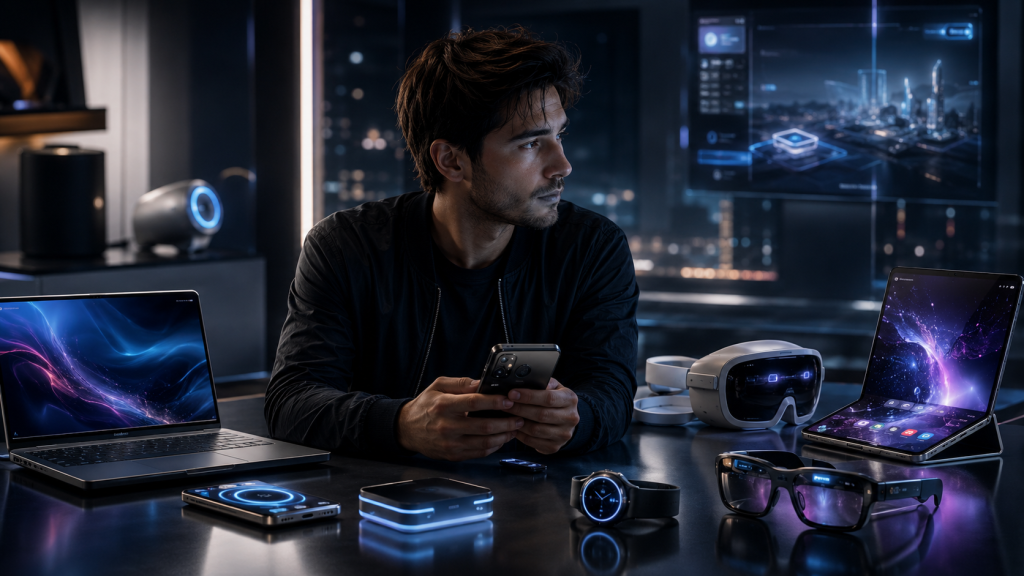
The smartphone industry has entered an era of diminishing returns.
That’s not because manufacturers have run out of ideas—quite the opposite. Modern smartphones are extraordinary pieces of engineering. Processors rival laptop performance, cameras use advanced computational photography, displays refresh at 120Hz or higher, and batteries routinely last an entire day.
The problem is that these improvements are becoming increasingly difficult for the average user to notice.
Five years ago, buying a new phone often felt transformative.
Today, it feels comfortable.
Consumers are responding by holding onto their devices longer than ever. A flagship phone purchased today will likely receive years of software updates, maintain strong performance, and continue taking excellent photos well into the future.
When an industry reaches that level of maturity, innovation doesn’t stop—it shifts.
We’ve seen this before.
Desktop computers gave way to laptops. Laptops became companions to smartphones. Now, smartphones are preparing to share the spotlight with a completely new generation of intelligent devices.
Artificial Intelligence Is Becoming the New Interface
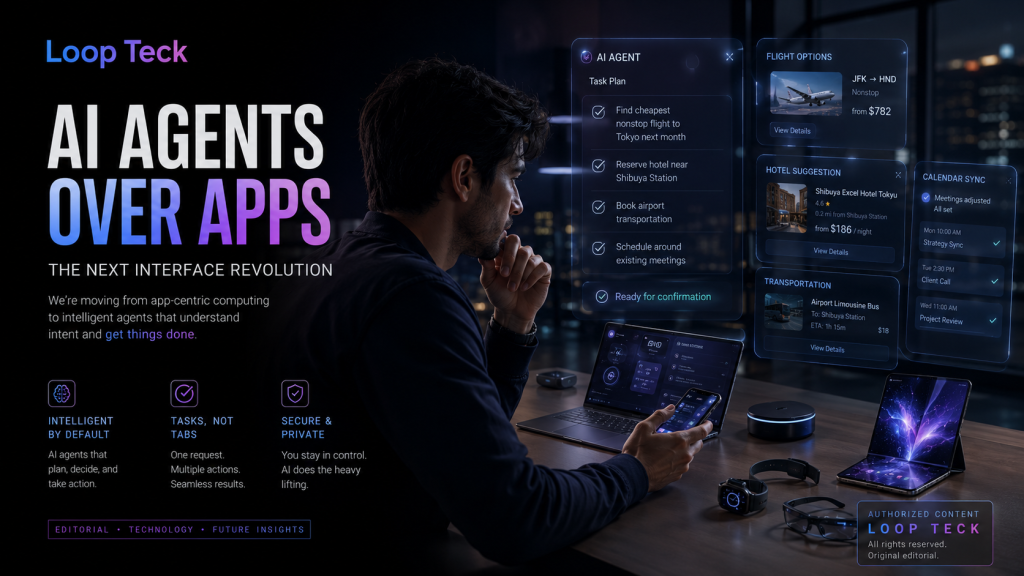
For years, we’ve organized our digital lives around apps.
Need to order dinner? Open one app.
Book a hotel? Open another.
Reply to work emails? Launch something else.
Every task begins with finding the right application.
Artificial intelligence is changing that model.
The next wave of computing revolves around intent rather than navigation. Instead of opening multiple apps, users simply explain what they want to accomplish, and an AI agent handles the rest.
Imagine telling your device:
“Find the cheapest nonstop flight to Tokyo next month, reserve a hotel within walking distance of Shibuya Station, book airport transportation, and schedule everything around my existing meetings.”
No switching between airline websites.
No copying reservation numbers.
No juggling calendars.
A capable AI agent could complete every step automatically while asking only for confirmation before making purchases.
This represents one of the biggest interface changes since the touchscreen.
We’re moving away from app-centric computing and toward agentic AI—systems that don’t just answer questions but actively perform tasks on a user’s behalf.
The smartphone won’t disappear overnight. But its role is changing from something we constantly operate into something that quietly coordinates intelligent services in the background.
The Era of Ambient Computing Has Begun
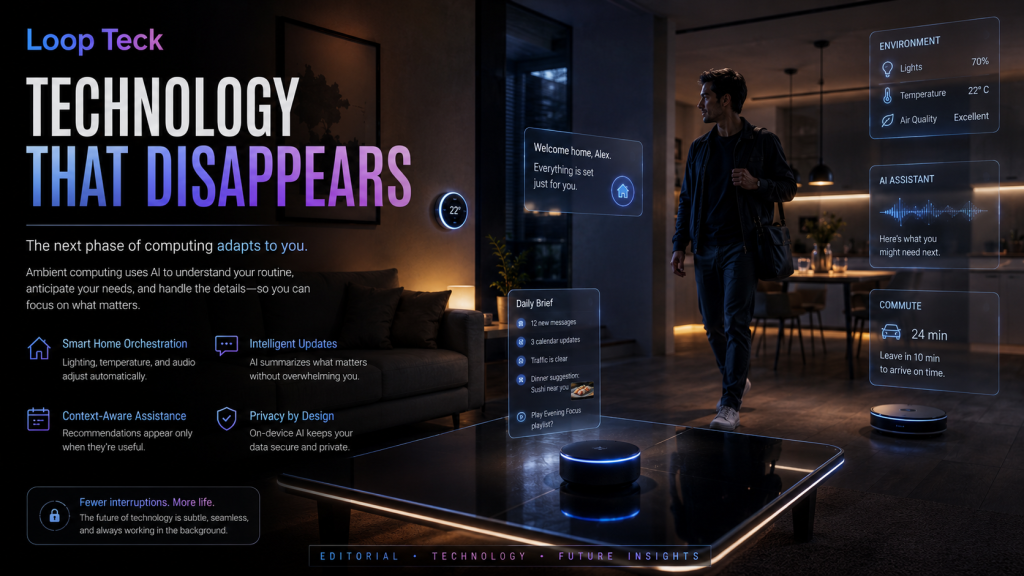
For decades, technology demanded our attention.
We unlocked our phones dozens—sometimes hundreds—of times every day. Notifications interrupted conversations. Screens competed for our focus from morning until bedtime.
The next phase of computing aims to reverse that relationship.
Instead of forcing people to adapt to technology, ambient computing allows technology to adapt to people.
Imagine arriving home after work.
The lights automatically adjust to your preferred brightness. Your thermostat has already cooled the room because it detected your commute. Your favorite playlist starts softly in the background. A digital assistant summarizes your unread messages while dinner recommendations appear only if you haven’t already planned your evening.
No one asked for those actions.
The system understood the context.
That’s the promise of ambient computing: technology that fades into the background instead of demanding constant interaction.
Artificial intelligence makes this possible by continuously interpreting location, routines, calendars, connected devices, and user preferences.
The goal isn’t more screens.
It’s fewer interruptions.
Ironically, the smartest technology of the next decade may be the technology you barely notice.
Smart Glasses Could Finally Have Their Moment
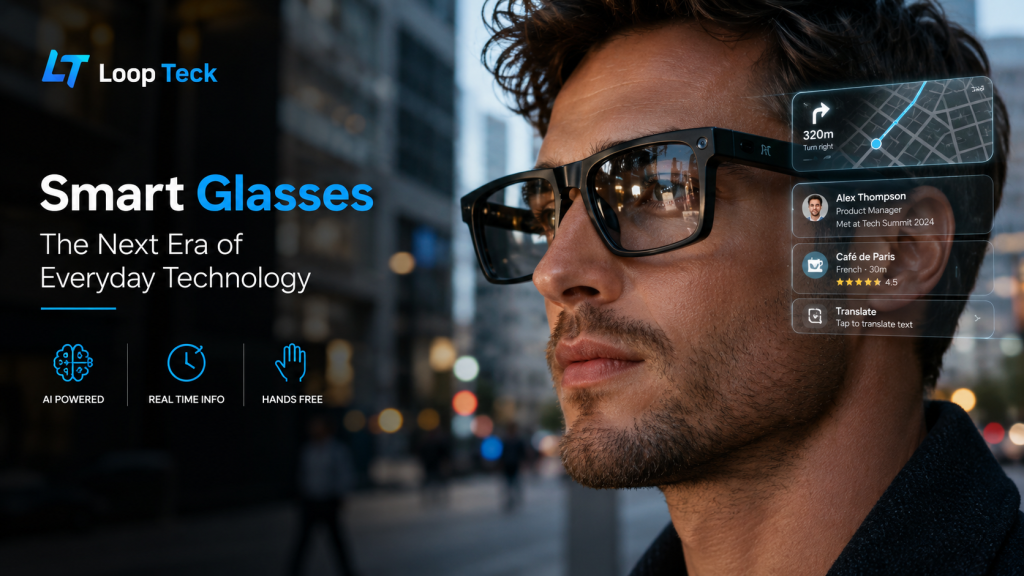
Wearable technology has spent years searching for its defining product.
Smartwatches succeeded by extending the smartphone experience. Fitness trackers helped millions monitor their health. Wireless earbuds transformed how people listen to music.
Smart glasses, however, have struggled to find their place.
That may finally be changing.
Advances in artificial intelligence, lightweight optics, battery efficiency, and miniature processors are creating opportunities that simply didn’t exist a decade ago.
Instead of replacing your phone immediately, smart glasses are more likely to reduce how often you need to reach for it.
Picture walking through an unfamiliar city.
Navigation directions appear naturally within your field of view instead of forcing you to stare at a map. A restaurant menu instantly translates into your language. Someone introduces themselves at a conference, and your AI quietly reminds you where you met them last year and which company they work for.
These experiences don’t require pulling a device from your pocket.
The information simply appears when it’s useful—and disappears when it isn’t.
That’s a fundamentally different philosophy from today’s smartphone notifications.
Technology becomes contextual rather than distracting.
If developers can solve challenges around battery life, privacy, and display quality, smart glasses could become the first truly viable successor to many everyday smartphone interactions.
Foldables Are Only the First Step
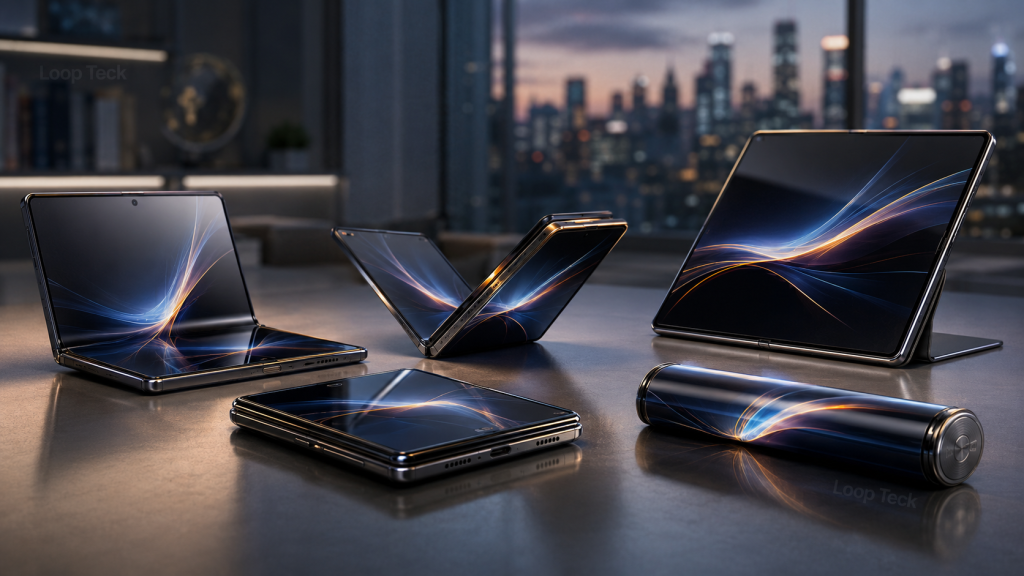
When foldable phones first appeared, many dismissed them as expensive experiments.
Today, they’re beginning to look like an early preview of something much larger.
Flexible displays challenge one of the oldest assumptions in consumer electronics—that devices must have a fixed shape.
Imagine a phone that unfolds into a tablet for work, rolls into a compact cylinder for travel, or expands into a laptop-sized display whenever additional space is needed.
Researchers are already exploring stretchable screens, self-healing display materials, and adaptable form factors that change depending on how they’re being used.
These innovations don’t signal the end of smartphones.
They signal the beginning of devices that are no longer limited by rigid hardware.
For the first time in years, hardware design itself is becoming exciting again.
Wearable AI Will Know You Better Than Your Smartphone Ever Could
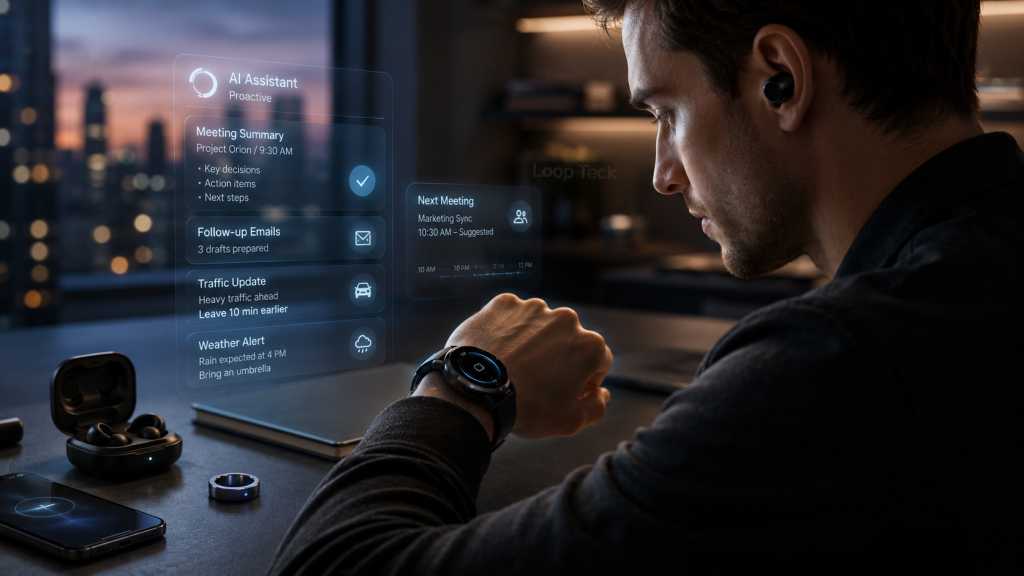
If the smartphone defined the last decade, wearable AI could define the next.
Today’s wearables—smartwatches, wireless earbuds, and smart rings—already collect an astonishing amount of information. They monitor heart rate, sleep quality, physical activity, stress levels, and even blood oxygen. But most of that data remains passive. It tells you what happened after the fact.
The next generation of wearable AI is expected to become far more proactive.
Imagine finishing a meeting and, before you even sit down, your AI assistant has already summarized the discussion, drafted follow-up emails, identified unanswered questions, and suggested the next available meeting time for everyone involved.
Or consider your morning commute. Your wearable notices unusually heavy traffic, recognizes an earlier appointment, and automatically recommends leaving ten minutes sooner. If bad weather is expected later in the day, it reminds you to bring an umbrella—not because you asked, but because it understands your routine.
This is where personal technology is headed.
Instead of waiting for commands, devices will increasingly anticipate needs.
The most valuable assistant won’t necessarily be the one with the biggest screen. It will be the one that understands your habits, preferences, schedule, and priorities well enough to help before you realize you need it.
That’s a profound shift in how we think about personal computing.
Brain-Computer Interfaces Could Rewrite the Rules of Computing
Few technologies generate as much fascination—and skepticism—as brain-computer interfaces.
The idea sounds like science fiction: controlling digital devices with your thoughts. Yet researchers have spent years developing systems capable of translating neural activity into computer commands.
Today, the technology is primarily focused on healthcare. Brain-computer interfaces are helping people with paralysis communicate, operate computers, and regain a level of independence that would have been unimaginable just a decade ago.
Those medical breakthroughs remain the industry’s top priority.
Consumer applications, however, are beginning to enter the conversation.
Imagine composing a message without touching a keyboard. Picture navigating an augmented reality interface using eye movement and subtle neural signals rather than gestures. In the distant future, interacting with AI could feel almost instantaneous, eliminating many of the physical barriers that define computing today.
That future isn’t arriving next year, and significant technical, ethical, and privacy challenges remain. But progress is accelerating.
Just as touchscreen phones once seemed futuristic, brain-computer interfaces may eventually become another natural evolution in the way humans interact with technology.
The App Economy Is Giving Way to the Agent Economy
For nearly two decades, the smartphone app has been the foundation of the digital economy.
Whether you wanted to stream music, order groceries, edit photos, or manage your finances, there was an app for it. Entire companies—and entire industries—were built around that simple idea.
Artificial intelligence is beginning to challenge that model.
Instead of learning dozens of interfaces, remembering passwords, and jumping between services, users are increasingly interacting with intelligent agents capable of coordinating multiple platforms simultaneously.
The distinction may seem subtle, but its implications are enormous.
Today’s assistant answers your question.
Tomorrow’s assistant completes your task.
It can compare flights, negotiate schedules, summarize documents, draft reports, organize photos, purchase event tickets, and monitor subscriptions—all from a single conversation.
The interface becomes less important than the outcome.
In many ways, this represents the biggest shift in software design since the launch of the smartphone itself.
The Smartphone Isn’t Dying—It’s Evolving Into Something Bigger
The phrase “death of the smartphone” makes for an eye-catching headline, but reality is more nuanced.
History rarely works through sudden replacement.
Desktop computers still exist. Laptops didn’t eliminate desktops, and tablets didn’t eliminate laptops. Instead, each new category found its place within a broader ecosystem.
The same will likely happen with smartphones.
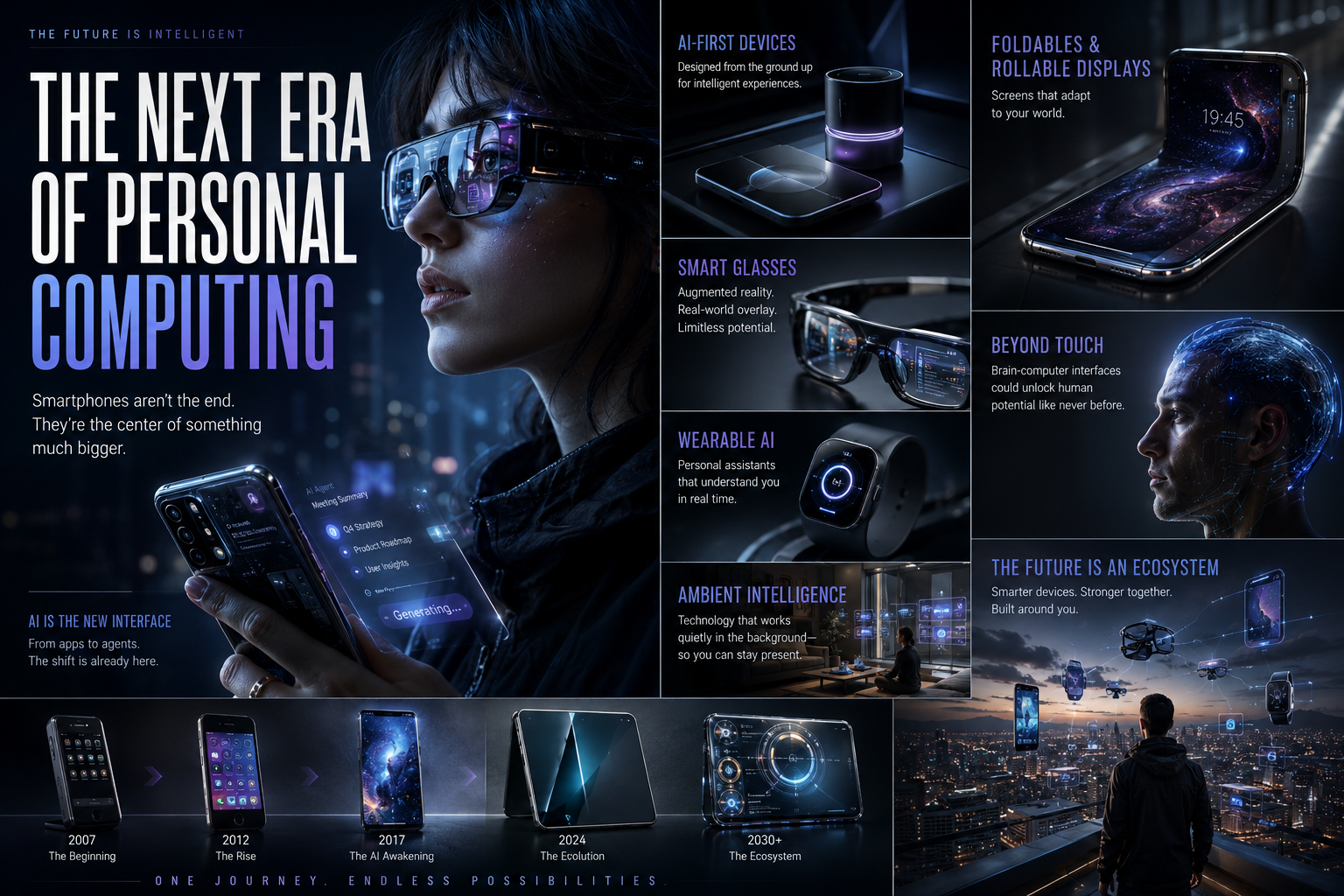
Rather than disappearing, they are expected to become the central hub connecting an expanding network of intelligent devices.
Your phone may stay in your pocket while smart glasses display information, earbuds translate conversations in real time, your smartwatch monitors your health, and AI agents quietly manage appointments, purchases, and communications behind the scenes.
Ironically, the smartphone’s future may involve being used less often—not because it’s obsolete, but because other devices handle many of its responsibilities more naturally.
In that world, intelligence matters far more than the display.
What the Next Decade Could Look Like
Predicting technology is always risky. Revolutionary ideas sometimes fail spectacularly, while seemingly ordinary products reshape entire industries.
Still, several trends are becoming increasingly difficult to ignore.
Artificial intelligence is evolving from a feature into the foundation of personal computing. Wearables continue to become more capable. Mixed reality hardware is steadily improving. Flexible displays are pushing beyond traditional smartphone designs, while researchers continue making progress in neural interfaces and advanced human-computer interaction.
By the early 2030s, a typical personal technology setup may look very different from today’s.
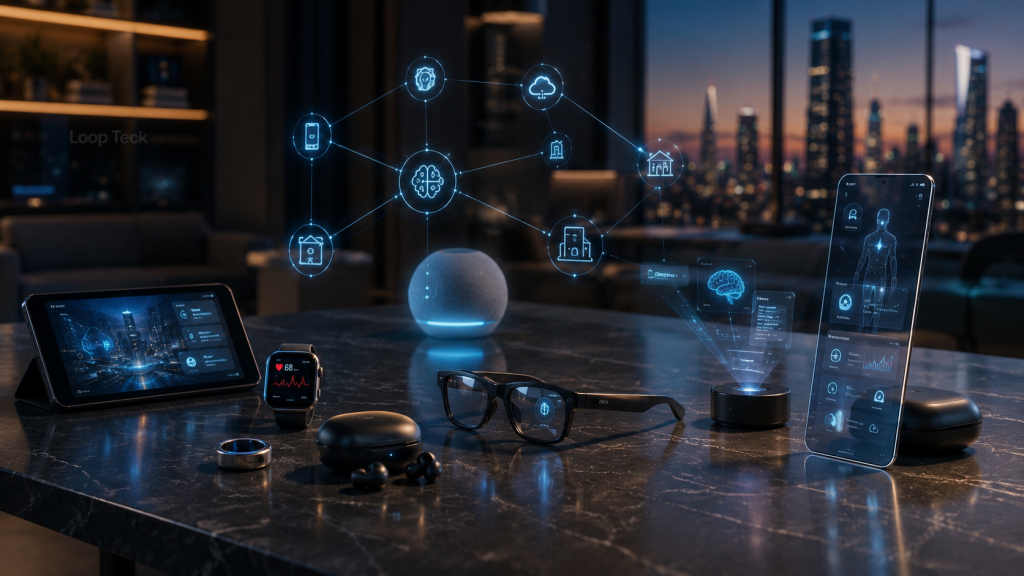
Instead of relying on a single smartphone, users could interact with a connected ecosystem that includes lightweight smart glasses, AI-powered earbuds, health-focused wearables, intelligent home devices, and personal AI agents working seamlessly together.
The smartphone may still exist.
It simply won’t be the star of the show anymore.
The Next Revolution Won’t Fit in Your Pocket
Every major technology shift begins quietly.
The personal computer didn’t replace typewriters overnight. The internet didn’t instantly transform commerce. Smartphones took years to become indispensable.
The next transformation is unfolding in much the same way.
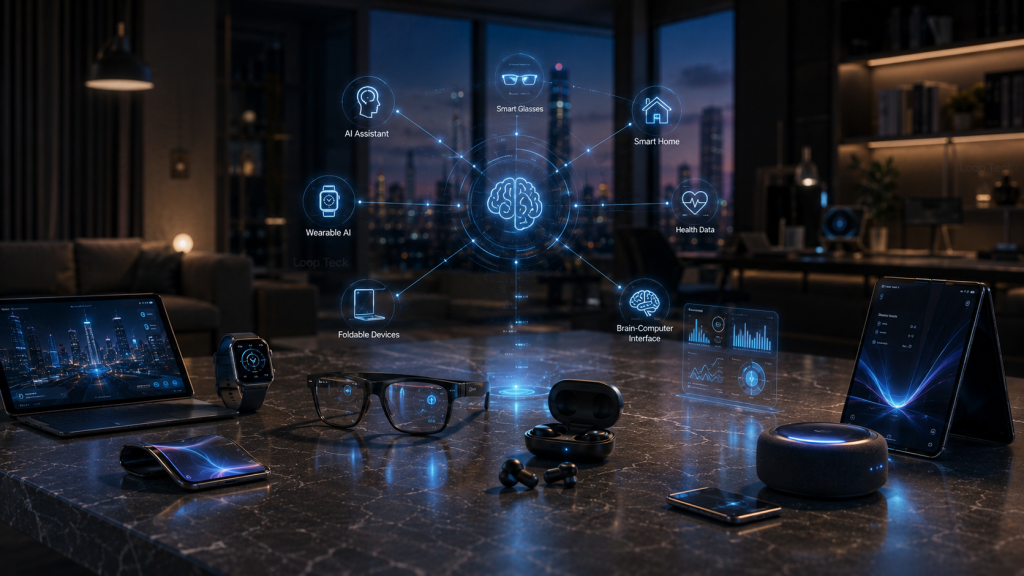
AI-first devices are changing how software works. Ambient computing is making technology less intrusive. Smart glasses are bringing digital information into the real world. Wearable AI is turning passive gadgets into proactive assistants. Foldable and rollable devices are redefining hardware itself, while brain-computer interfaces hint at a future where interacting with machines may require little more than thought.
None of these technologies alone will kill the smartphone.
Together, however, they point toward something much larger.
The future of personal computing isn’t about replacing one gadget with another. It’s about creating an ecosystem where technology becomes more intelligent, more contextual, and increasingly invisible.
The smartphone transformed the world once.
Its successor may not even look like a phone.
And when that transition finally reaches mainstream adoption, we’ll likely realize that the smartphone didn’t disappear at all—it simply evolved into the foundation of a much bigger digital experience.


Loop Teck
Future Technology • AI • Smartphones • Innovation