


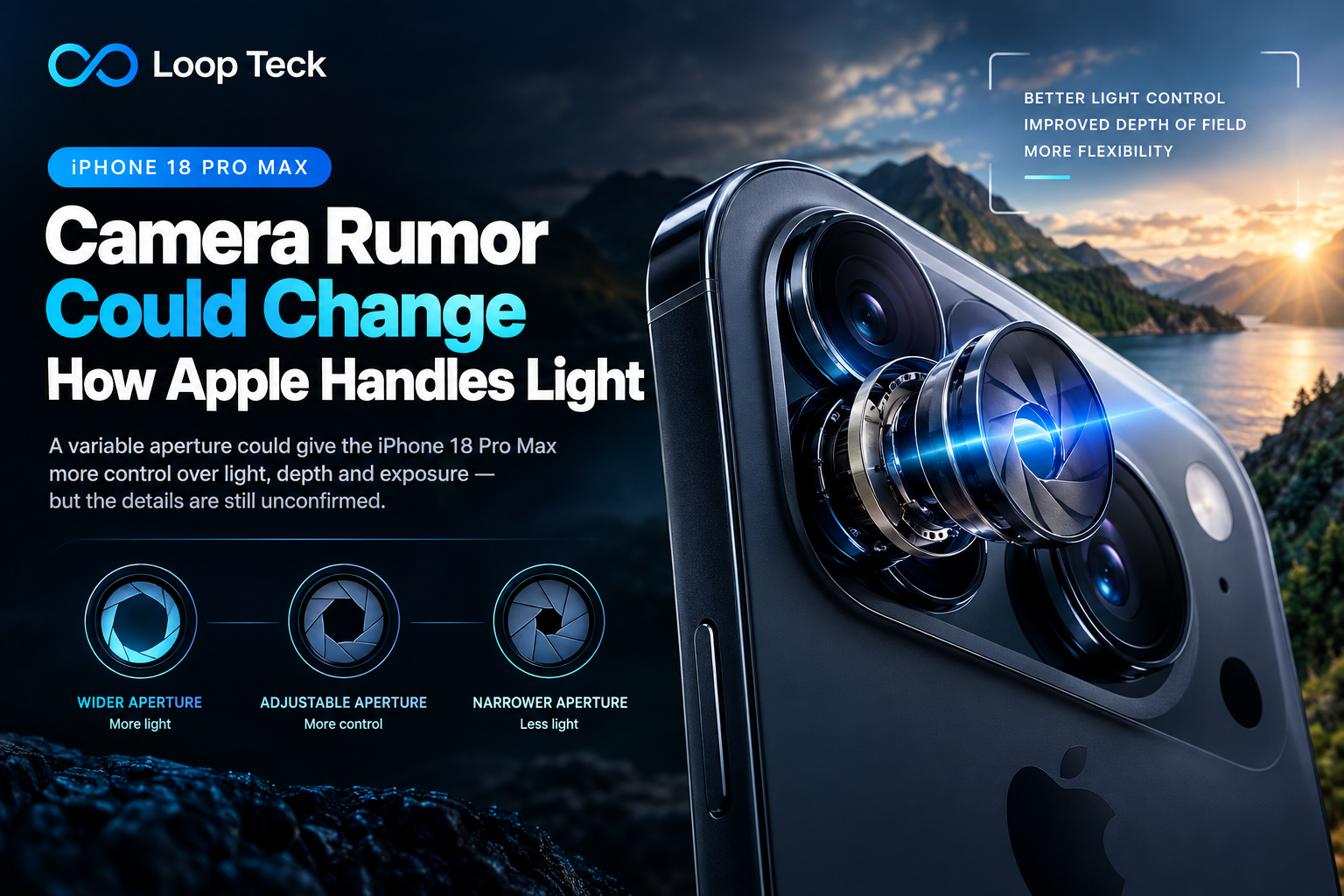
The iPhone 18 Pro Max camera could introduce a change Apple has avoided on its flagship phones for years: a lens with a variable aperture. If the current reports prove accurate, the camera would gain a physical way to control how much light enters the lens instead of relying entirely on fixed optics, shutter speed, ISO, and computational processing.
That may sound like a small hardware adjustment. It isn’t necessarily.
A variable aperture could give Apple’s camera system more flexibility in bright conditions, low light, photography, and video. But the rumor also comes with an important limitation: Apple has not confirmed the hardware, the final aperture range remains unknown, and reports do not yet agree on exactly which iPhone 18 models will receive it.
The technology is interesting. The final implementation will matter more.
The iPhone 18 Pro Max Camera May Get a Mechanical Aperture
What Could a Variable Aperture Change?
Explore the rumored iPhone 18 Pro Max camera technology. Adjust the simulated aperture and see how physical light control could work.
Variable Aperture Explained
A variable aperture changes the physical opening inside a lens. That gives a camera another way to control incoming light.
A variable aperture could give the camera hardware another way to manage incoming light.
The hardware would work alongside exposure controls, image processing and computational photography.
This visualization explains the reported concept. It does not represent confirmed Apple hardware.
Current reports suggest Apple is exploring a mechanical, or variable, aperture for the main camera system.
MacRumors previously reported that the feature could be exclusive to the larger iPhone 18 Pro Max. More recent reporting from 9to5Mac, citing expectations from Mark Gurman, suggests the technology could reach the Pro Max and possibly the smaller iPhone 18 Pro as well.
That distinction remains unsettled.
Apple has not announced the iPhone 18 lineup or confirmed its camera hardware. Until the company publishes final specifications, the exact model split should be treated as reported information rather than a confirmed feature list.
According to the available reports, the variable aperture would be associated with Apple’s 48-megapixel Fusion camera.
The key difference is physical control.
Instead of using a lens with one fixed opening, a variable aperture can adjust the size of that opening. A wider aperture allows more light to reach the sensor. A narrower aperture restricts the amount of incoming light.
Traditional cameras have used this principle for decades. On a smartphone, however, the challenge is not simply adding the mechanism. It is making the system useful inside a camera that is designed to make most decisions automatically.
How the iPhone 18 Pro Max Variable Aperture Camera Could Work
An aperture is the opening inside a lens that controls how much light reaches the camera sensor.
A wider opening can be useful in darker environments because it allows more light into the camera. It can also contribute to a shallower depth of field, making a subject appear more separated from the background.
A narrower opening does the opposite.
It reduces the amount of incoming light and can increase the amount of the scene that appears to be in focus.
That could be useful when photographing landscapes, architecture, or groups of people positioned at different distances from the camera.
The important detail is that smartphone cameras already adjust exposure without a variable aperture. Apple’s current approach can rely on shutter speed, ISO, image stabilization, sensor technology, and computational photography.
A variable aperture would add another physical control to that system.
It would not replace Apple’s software processing. It would give the software another option.
The Biggest Benefit May Not Be What Most People Expect
The most obvious assumption is that a variable aperture would simply make the iPhone better in low light.
That is only part of the picture.
The feature could also be useful in bright outdoor conditions, particularly when shooting video.
When there is too much light, a camera often needs to compensate by changing other settings. A narrower physical aperture could reduce the amount of light entering the lens before the camera has to make more aggressive adjustments elsewhere.
For video creators, that could potentially make it easier to maintain a preferred shutter setting in daylight.
The practical result would depend on Apple’s implementation.
The rumored hardware alone does not guarantee better footage. Image stabilization, sensor performance, lens quality, autofocus, and Apple’s image processing would still influence the final result.
Still, the addition of a physical aperture would give the camera system another tool.
Why the Camera Change Could Matter for Photography
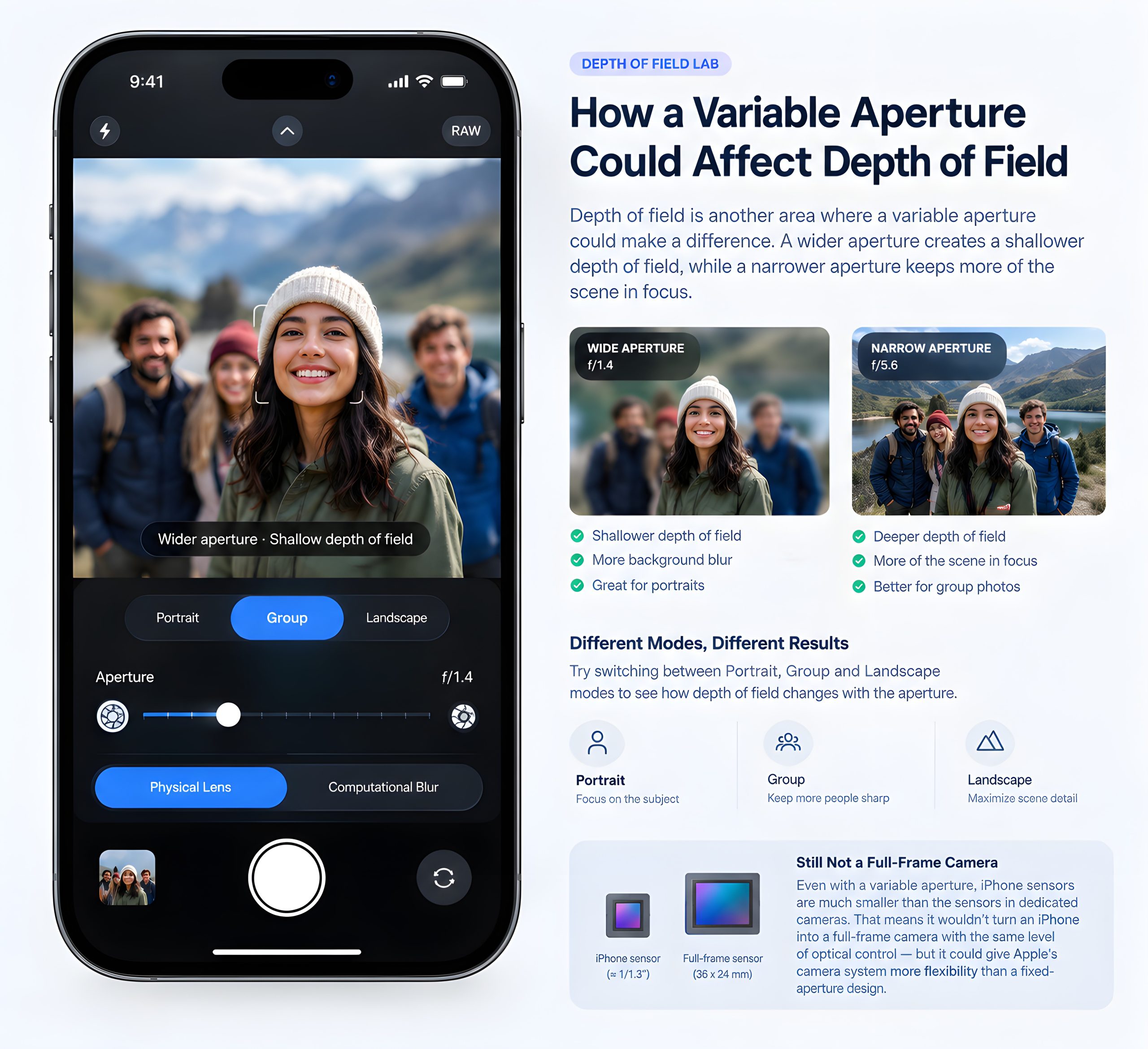
Depth of field is another area where a variable aperture could make a difference.
Modern iPhones already create background blur through Portrait mode and computational processing. Those systems can produce convincing results, but software-generated blur is not identical to the optical behavior of a physical lens.
A wider aperture can create shallower depth of field naturally.
A narrower aperture can also help keep more of a scene in focus.
That could matter when taking group photos.
Imagine several people standing at different distances from the camera. A wider aperture may make it harder to keep everyone equally sharp, depending on the distance and the size of the camera sensor. A narrower aperture could provide more depth of field.
Again, there are limits.
Smartphone sensors are much smaller than the sensors found in many dedicated cameras. That means a variable aperture on the iPhone would not suddenly turn it into a full-frame camera with the same level of optical control.
But it could give Apple’s camera system more flexibility than a fixed-aperture design.
Apple Would Still Need to Make the System Simple
There is a reason smartphone cameras automate so much.
Most people do not want to stop and adjust aperture settings before taking a photo of their family, pet, dinner, or vacation.
That means Apple’s software could be just as important as the mechanical hardware.
The company could allow the camera system to select an aperture automatically based on available light and the type of scene. A wider opening could be used when the camera needs more light. A narrower setting could be selected when the system wants greater depth of field or needs to manage bright conditions.
Apple could also provide manual controls for users who want them.
However, no final camera interface or aperture control system has been published.
Any discussion of exactly how Apple would expose those controls remains an inference based on how modern smartphone cameras are typically designed.
That is the complication behind the rumor. Building a mechanical aperture is one thing. Integrating it into Apple’s highly automated camera experience is another.
The iPhone 18 Pro Max Camera Would Still Depend on More Than Aperture
A variable aperture would be only one part of the imaging system.
The final image would still depend on several components working together:
- Camera sensor size
- Lens quality
- Image stabilization
- Autofocus performance
- Computational photography
- Image processing
- Video processing
- Software tuning
A better aperture mechanism does not automatically mean every photo will look better.
In some situations, the difference could be subtle. In others, the additional control could give Apple’s software more flexibility when handling difficult lighting or scenes that require a larger depth of field.
That is why the rumored aperture range is important.
Neither of the reports referenced in the source material provides a confirmed range for the lens. Without that information, it is difficult to determine how much practical control the system could offer.
A small adjustment range and a wide adjustment range would produce very different possibilities.
For now, that part of the story remains unknown.
Will Both iPhone 18 Pro Models Get the Feature?
This is one of the biggest unanswered questions.
Earlier reporting suggested the larger iPhone 18 Pro Max could receive the variable aperture lens as an exclusive feature. Newer coverage has raised the possibility that the smaller iPhone 18 Pro could also get it.
If Apple limits the hardware to the Pro Max, the company would create a more meaningful camera distinction between its two premium models.
If both Pro models receive it, the difference between them could depend more heavily on screen size, battery capacity, and other hardware features.
There is not enough confirmed information yet to determine which direction Apple will take.
That uncertainty matters for buyers who prefer the smaller Pro model but do not want to sacrifice a major camera feature.
Until Apple announces the hardware, the model split remains one of the most important details to watch.
What This Rumor Could Mean for the Next iPhone Upgrade
The iPhone 18 Pro Max camera rumor is not interesting simply because it adds another specification to a future iPhone.
It points toward a possible shift in Apple’s camera strategy.
For years, smartphone photography has increasingly relied on software to overcome the physical limits of small sensors and lenses. Apple has been a major part of that trend, using computational photography to combine multiple frames, manage exposure, improve detail, and create effects that would otherwise require more manual control.
A variable aperture would not replace that approach.
It could expand it.
Apple could combine physical light control with the computational processing already built into the iPhone camera system. The result, if implemented well, could give the phone more flexibility without forcing ordinary users to learn camera terminology or manually adjust settings.
That is the potential.
The reality will depend on the final hardware.
What Happens Before Apple's iPhone Announcement
More details may emerge before Apple’s expected September 9 event, according to the reports referenced in the source material.
For now, several important questions remain unanswered:
- Will the variable aperture be exclusive to the iPhone 18 Pro Max?
- Will the smaller iPhone 18 Pro receive the same camera hardware?
- What aperture range will the lens support?
- Will Apple offer manual aperture controls?
- How much will the feature affect photography and video?
- Will the difference be noticeable in everyday use?
Until Apple confirms the specifications, the variable aperture should be treated as a well-sourced camera rumor rather than a confirmed upgrade.
Still, the underlying idea is worth watching.
The next major step in smartphone photography may not come from another software mode or a higher megapixel number. If these reports are accurate, Apple could be adding a physical camera control that gives its computational photography system more information — and more options — before the software processing even begins.
iPhone 18 Pro Max Camera FAQ
Everything the current reports suggest about Apple's rumored variable-aperture camera — what it could change, what remains unknown, and what buyers should actually watch.
A variable aperture is a physical opening inside a camera lens that can change size. A wider opening allows more light to reach the sensor, while a narrower opening restricts incoming light.
Current reports suggest Apple may be exploring a mechanical variable aperture for the main camera system of the iPhone 18 Pro lineup.
The rumored change would add physical light control to a camera system that already relies heavily on software and computational photography.
Aperture controls the size of the opening through which light reaches the camera sensor.
A wider aperture lets more light through. A narrower aperture reduces the incoming light. On a smartphone, that would add another physical exposure control to shutter speed, ISO, stabilization, sensor technology, and computational photography.
Wider opening = more incoming light. Narrower opening = less incoming light.
Potentially, but low-light performance is only one possible benefit.
A wider aperture allows more light to reach the sensor. That could give Apple's camera system another option when dealing with darker scenes.
However, the final result would still depend on sensor performance, lens quality, stabilization, autofocus, image processing, and computational photography.
The rumored aperture alone does not guarantee better low-light photos.
It could be particularly useful in bright outdoor conditions when recording video.
When there is too much light, a narrower physical aperture could reduce the amount of light entering the lens before the camera needs to make more aggressive adjustments elsewhere.
For video creators, that could potentially make it easier to maintain a preferred shutter setting in daylight.
The practical effect would depend heavily on Apple's final implementation.
A wider aperture can contribute to a shallower depth of field, making the subject appear more separated from the background.
A narrower aperture can increase the amount of the scene that appears to be in focus.
That could be useful for landscapes, architecture, or group photographs where people are positioned at different distances from the camera.
Modern iPhones can already create background blur through Portrait mode and computational processing. Physical aperture behavior would be different from software-generated blur.
Available reports associate the rumored variable aperture with Apple's main 48-megapixel Fusion camera.
The article's source material does not establish a confirmed aperture specification or final hardware configuration.
Main 48MP Fusion camera — variable aperture is reported, but Apple has not confirmed the final specification.
This is one of the biggest unanswered questions.
Earlier reporting suggested the larger iPhone 18 Pro Max could receive the variable aperture as an exclusive feature. More recent coverage has raised the possibility that the smaller iPhone 18 Pro could receive it as well.
There is currently not enough confirmed information to determine which direction Apple will take.
The article's referenced reports do not provide a confirmed aperture range for the rumored lens.
That matters because the size of the adjustment range would determine how much practical control the system actually provides.
A small adjustment range and a wide adjustment range would create very different possibilities for exposure and depth of field.
It is possible Apple could provide manual controls for users who want them, but no final camera interface or aperture-control system has been published.
Apple could also allow the camera system to choose an aperture automatically based on lighting and scene conditions.
Any specific description of Apple's final interface remains an inference rather than a confirmed feature.
No. The article describes the variable aperture as another physical control rather than a replacement for Apple's software processing.
The camera system would still depend on image stabilization, autofocus, sensor performance, computational photography, image processing, video processing, and software tuning.
Physical aperture control could give Apple's existing computational photography system another option to work with.
It is worth watching, especially if camera flexibility is important to you.
But it would be premature to make an upgrade decision based solely on the rumor. Apple has not confirmed the hardware, the aperture range remains unknown, and the model split has not been settled.
The practical value will depend on how Apple implements the mechanism and how noticeable the difference is in everyday photography and video.
The article says more details may emerge before Apple's expected September 9 event, based on the reports referenced in the source material.
Until Apple announces the hardware and publishes final specifications, the variable aperture should be treated as a well-sourced camera rumor rather than a confirmed upgrade.
Model availability, aperture range, manual controls, and the real-world impact on photography and video.
No matching questions
Try another search term or switch to a different category.
The most important thing to remember
The variable-aperture concept is technically interesting, but the final hardware implementation matters more than the rumor itself. Apple has not confirmed the feature, its aperture range, or the final model availability.


Loop Teck
✓Technology, AI, smartphones & the future of innovation.