
Introduction
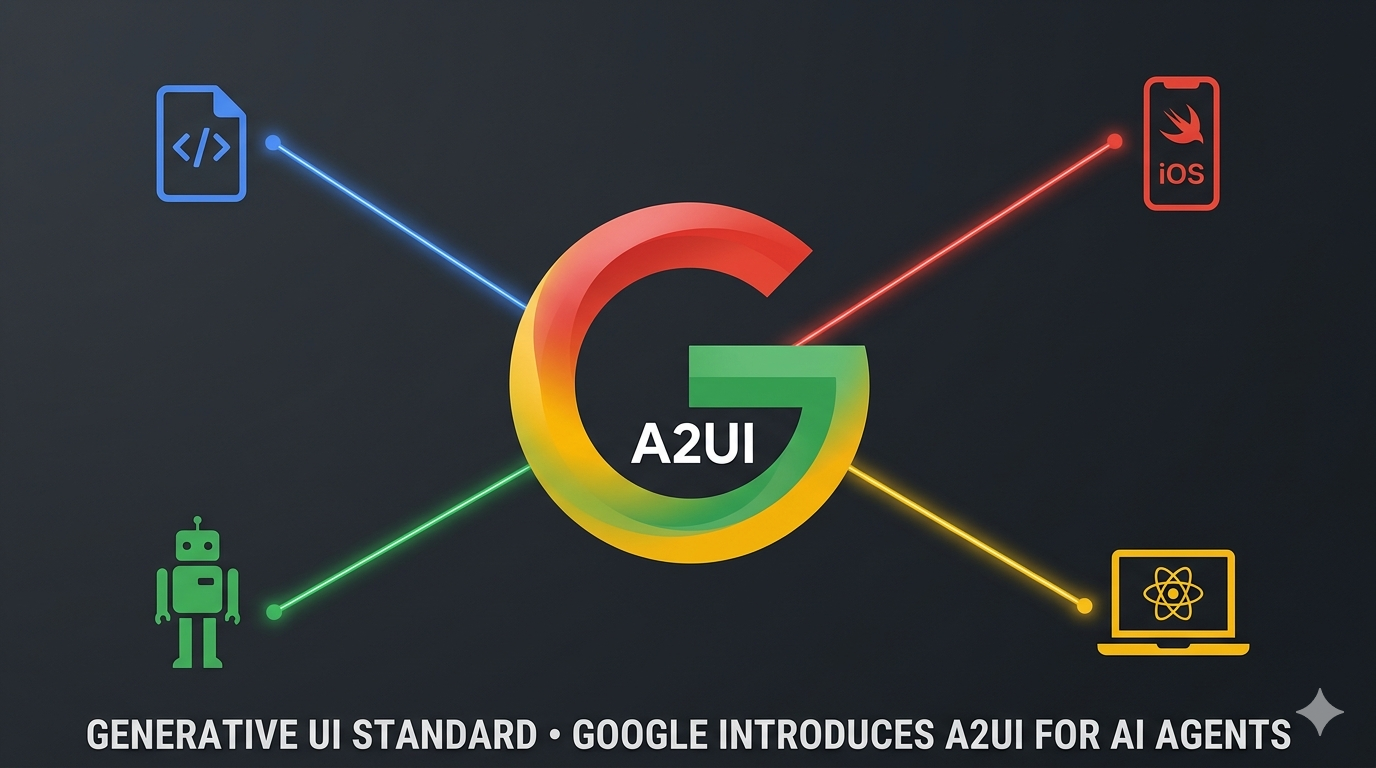
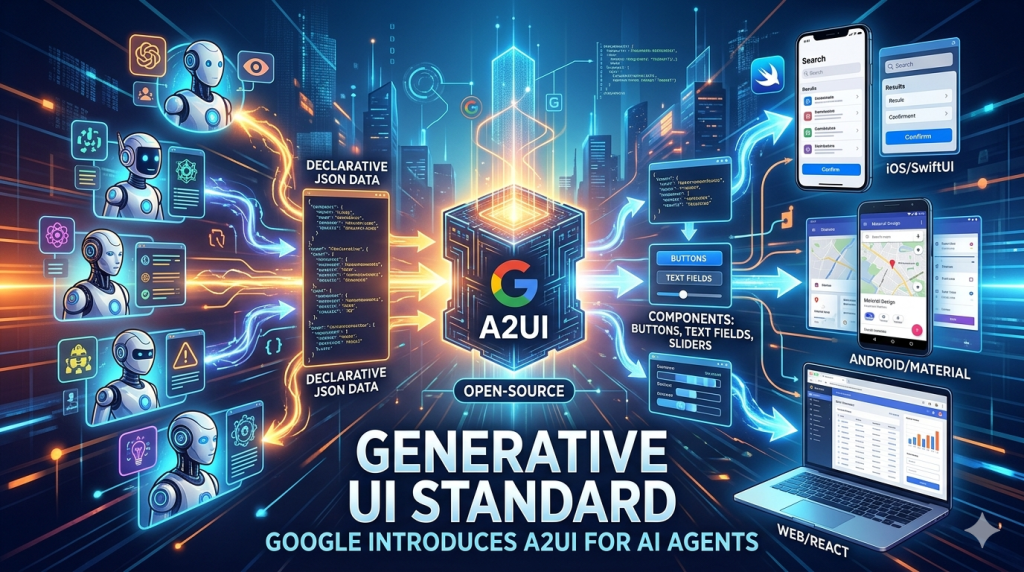
The Generative UI standard is reshaping how developers build modern applications. Recently, Google introduced A2UI version 0.9, a powerful approach that allows AI agents to create user interfaces dynamically. As a result, developers can now generate UI elements in real time instead of relying on static designs.
What Is the Generative UI Standard?
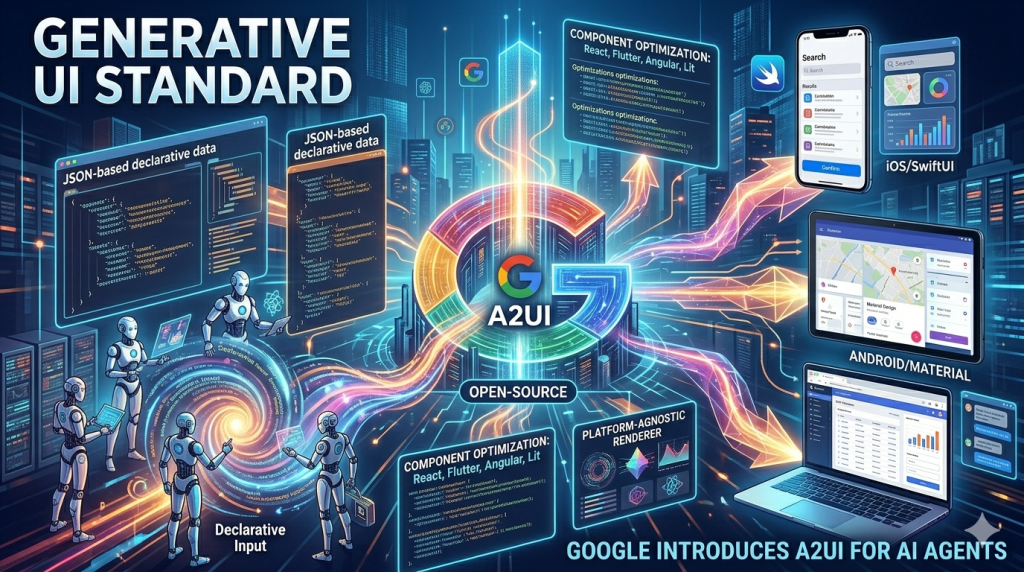
The Generative UI standard enables AI systems to construct interface components automatically. Instead of coding every element manually, developers can let AI assemble layouts using existing components.
Moreover, this system works across platforms. It supports web, mobile, and other environments without forcing developers into a single framework. That flexibility makes it highly scalable.
Key Features of A2UI 0.9
Google’s latest update introduces several important capabilities:
- Framework-agnostic design: Works with React, Flutter, Angular, and Lit
- Shared web core library: Ensures consistent UI generation
- Dynamic UI rendering: AI builds interfaces in real time
- Improved error handling: Enhances stability and debugging
- Client-server synchronization: Keeps data aligned seamlessly
In addition, developers benefit from a new Agent SDK. It simplifies development using Python, while Go and Kotlin support will arrive soon.
Why This Matters for Developers
The Generative UI standard changes how applications evolve. Instead of static interfaces, apps can now adapt based on user behavior.
For example, an AI agent could redesign a dashboard depending on user preferences. Consequently, this reduces development time while improving user experience.
Furthermore, integration is expanding rapidly. The ecosystem already supports tools like AG2, A2A 1.0, and Vercel’s JSON renderer. Because of this, developers can adopt the standard without rebuilding their entire stack.
Real-World Use Cases
Early implementations show strong potential:
- A personal health companion that adapts UI based on health data
- A life goal simulator that changes layout depending on user input
These examples highlight how AI-generated interfaces can deliver personalized experiences.
Future Impact of Generative UI
Looking ahead, the Generative UI standard could redefine application design. As AI becomes more capable, interfaces will become more adaptive and intelligent.
At the same time, developers will shift focus from layout coding to logic and experience design. This shift will likely accelerate innovation across industries.
Conclusion
Google’s A2UI release marks a major step forward. The Generative UI standard enables AI-driven interface creation, reduces manual work, and opens new possibilities for dynamic applications. As adoption grows, it may become a core foundation for next-generation software.