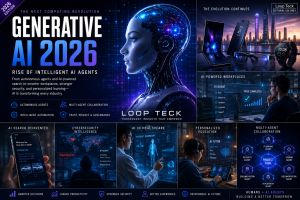


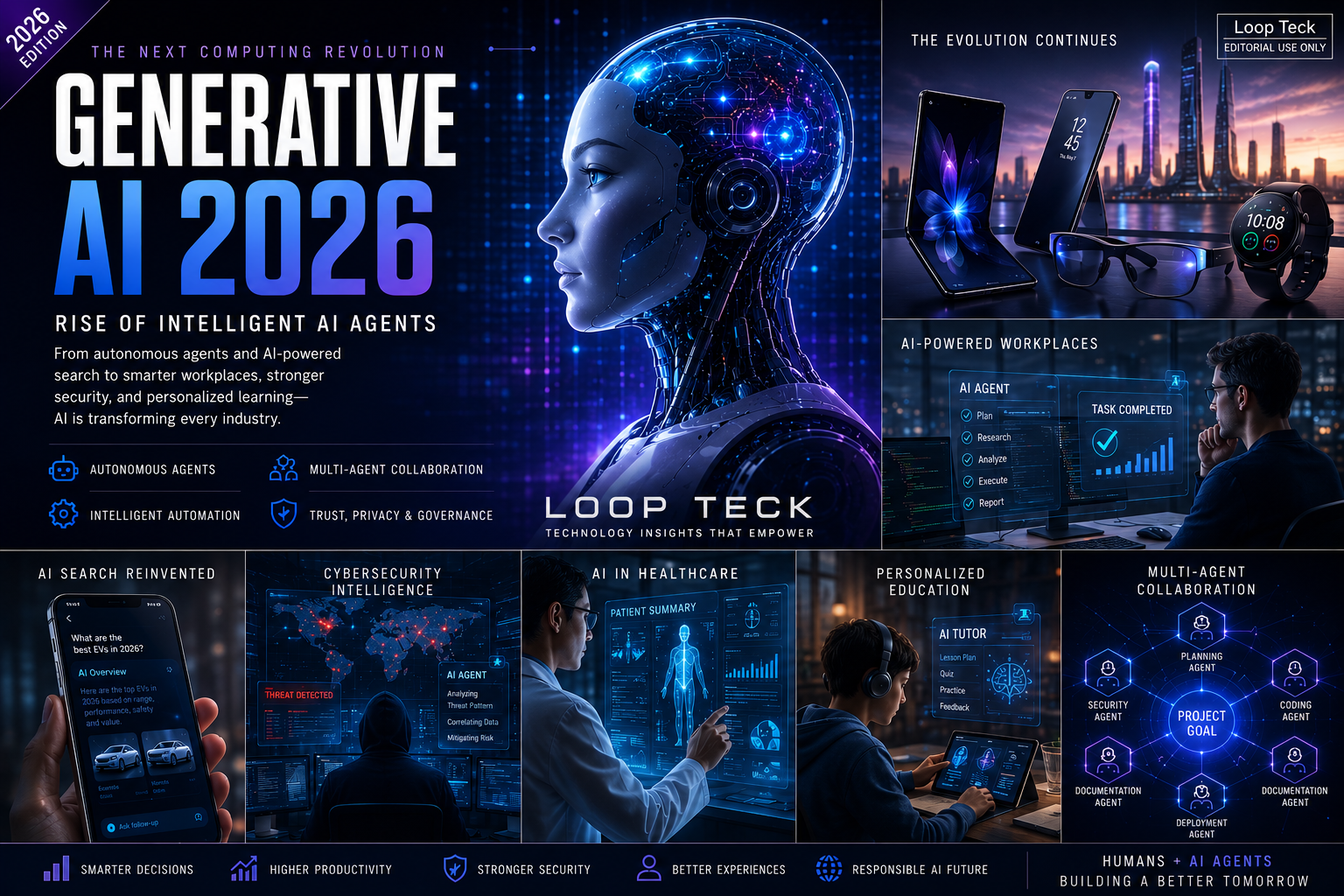
Artificial intelligence is no longer just answering questions or generating images—it is beginning to make decisions, complete complex workflows, and collaborate with people in ways that were difficult to imagine only a few years ago. Generative AI 2026 marks a significant turning point as increasingly capable AI agents evolve from simple assistants into software that can plan, reason, and execute multi-step tasks with minimal human intervention. For businesses, developers, and everyday users alike, the shift is changing expectations around productivity, digital experiences, and the future of work. Rather than replacing every job overnight, this new generation of AI is redefining how people interact with technology across nearly every industry.
Throughout 2026, major technology companies have accelerated investments in autonomous AI systems, signaling that the competition is no longer centered on building the smartest chatbot. Instead, the race has shifted toward creating intelligent agents capable of understanding goals, using external tools, accessing trusted data, and completing real-world tasks from start to finish. That evolution is already influencing software development, enterprise automation, online search, customer service, cybersecurity, healthcare, and education.
The implications extend far beyond Silicon Valley. Organizations are redesigning workflows around AI-first experiences, while consumers increasingly expect applications to anticipate needs instead of simply responding to commands. As the technology matures, the distinction between traditional software and intelligent assistants continues to blur, setting the stage for one of the most significant shifts in modern computing since the rise of cloud services and smartphones.
Generative AI 2026 Is Entering a New Era of Intelligent Automation
The first wave of generative AI demonstrated that large language models could summarize documents, answer questions, write code, and create realistic images within seconds. Those capabilities sparked widespread adoption, but they also revealed an important limitation: most AI systems still depended on continuous human guidance.
That limitation is rapidly disappearing.
Today’s AI platforms increasingly combine advanced reasoning models with memory, planning capabilities, external APIs, web access, and software integrations. Instead of responding to isolated prompts, they can now break down objectives into multiple steps, retrieve relevant information, make decisions based on changing conditions, and complete workflows with minimal supervision.
This evolution has introduced what many industry leaders describe as the next major phase of artificial intelligence: intelligent AI agents.
Unlike traditional chatbots, these systems are designed to pursue goals rather than simply answer questions. A modern AI agent can analyze incoming emails, schedule meetings, prepare reports, monitor cybersecurity alerts, generate software code, summarize research, and even coordinate with other AI systems to complete broader business processes.
The shift represents a fundamental change in how people use technology. Rather than opening multiple applications and manually performing repetitive tasks, users increasingly delegate complete objectives to AI-powered systems that operate across different software environments.
For enterprises, this transition promises greater efficiency and faster decision-making. For consumers, it signals a future where digital assistants become proactive collaborators instead of passive tools.
How AI Agents Are Redefining Generative AI 2026
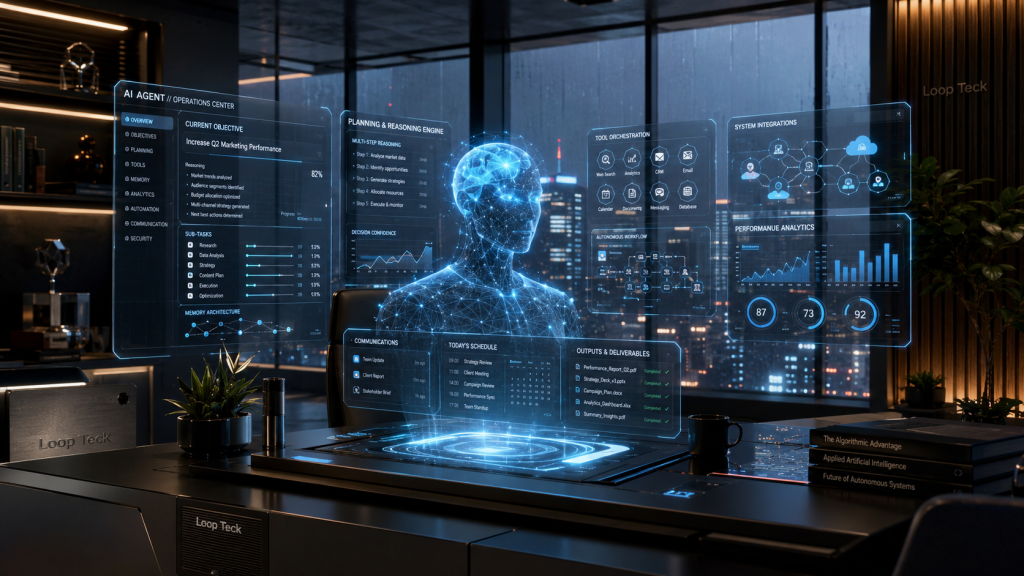
The rapid evolution of Generative AI 2026 isn’t simply about creating more powerful language models. The real breakthrough lies in how AI agents combine reasoning, memory, planning, and tool usage to complete tasks with increasing levels of autonomy. Instead of functioning as advanced autocomplete systems, today’s AI platforms are beginning to operate more like digital coworkers capable of understanding objectives, adapting to changing conditions, and taking action across multiple applications.
For businesses evaluating AI adoption, this distinction matters. The conversation has shifted from “Can AI generate content?” to “Can AI accomplish meaningful work without constant supervision?”
AI Agents Go Beyond Traditional Chatbots
The first generation of conversational AI focused primarily on responding to prompts. Users asked questions, and the model generated answers based on its training and available context. While impressive, those systems typically forgot previous interactions, lacked persistent goals, and couldn’t interact with external software without additional integrations.
Modern AI agents operate very differently.
A single agent can receive a broad objective—such as preparing a weekly sales report—and independently break it into smaller actions. It may gather data from cloud storage, analyze spreadsheets, identify unusual trends, generate charts, draft executive summaries, and prepare an email for review. Rather than waiting for instructions after each step, the agent continuously evaluates progress and determines what should happen next.
That ability to plan and execute multi-stage workflows is becoming one of the defining characteristics of the latest AI systems.
The Core Technologies Powering AI Agents
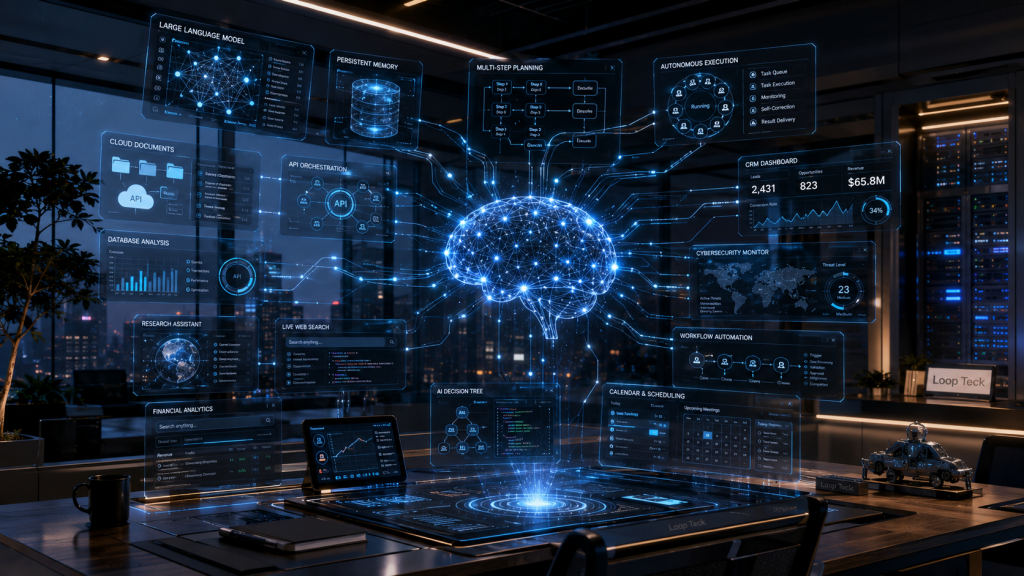
Several technological advances have converged to make today’s AI agents significantly more capable than earlier conversational models.
Large Language Models Still Form the Foundation
Modern large language models remain the reasoning engine behind many AI agents. These models understand natural language, interpret instructions, summarize information, write software code, translate languages, and answer complex questions with increasing accuracy.
However, language generation alone is no longer enough.
Long-Term Memory Improves Context
Persistent memory allows AI agents to retain important information across sessions instead of treating every conversation as entirely new.
For example, an AI assistant supporting a marketing team can remember preferred writing styles, ongoing campaigns, brand guidelines, editorial calendars, and previous feedback. This continuity reduces repetitive prompting and creates a more personalized experience over time.
Planning and Multi-Step Reasoning
One of the most significant developments in Generative AI 2026 is structured reasoning.
Rather than producing an immediate response, AI agents can evaluate several possible approaches before deciding how to proceed. They decompose large objectives into manageable subtasks, prioritize dependencies, and revise plans if new information becomes available.
This planning capability makes AI more useful for software engineering, financial analysis, research, project management, and enterprise operations where a single prompt rarely solves the entire problem.
Tool Integration Expands Real-World Capabilities
Depending on available permissions, an agent may:
- Search the web for current information
- Analyze spreadsheets and databases
- Access cloud documents
- Generate software code
- Query APIs
- Schedule meetings
- Create presentations
- Monitor cybersecurity dashboards
- Interact with customer relationship management (CRM) platforms
- Automate repetitive office workflows
These integrations transform AI from a conversational interface into an operational platform capable of executing meaningful business tasks.
Why Generative AI 2026 Is Becoming More Autonomous
Autonomy has become one of the defining themes of the AI industry.
Rather than asking users to guide every decision, modern AI agents increasingly evaluate situations independently while keeping humans involved for oversight and approval where necessary.
Consider a software development workflow.
Instead of merely generating code snippets, an AI agent can analyze project requirements, recommend an architecture, write source code, run automated tests, identify bugs, generate documentation, and prepare deployment suggestions before a developer performs the final review.
A similar transformation is taking place across customer support, cybersecurity, legal research, financial reporting, healthcare administration, and digital marketing.
The result is not fully autonomous decision-making in every scenario, but a growing partnership between human expertise and AI-driven execution. Organizations adopting this model are discovering that productivity gains often come from eliminating repetitive operational work rather than replacing strategic thinking.
The Rise of Multi-Agent Systems
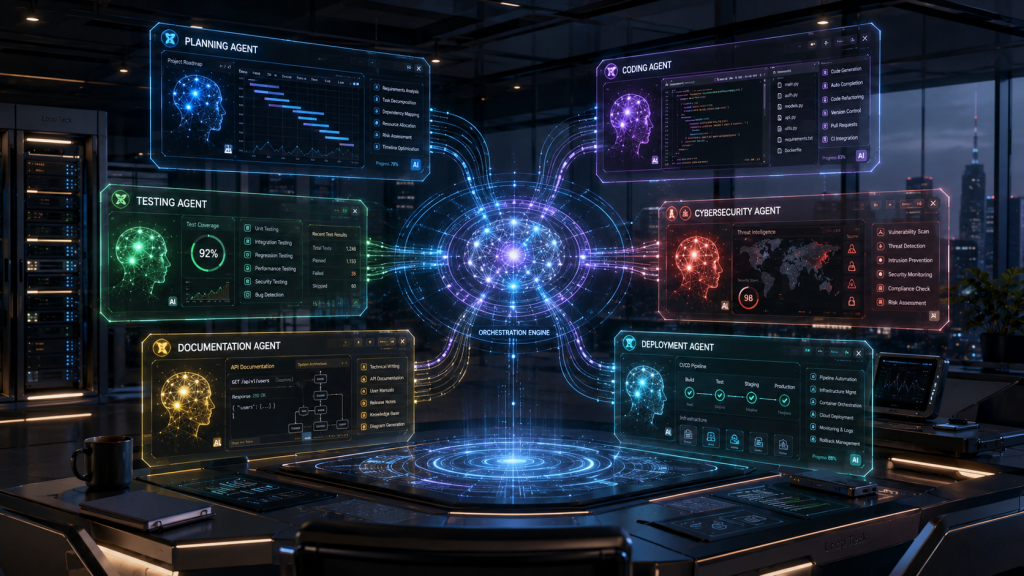
Perhaps the next major milestone in AI agents is collaboration.
Instead of relying on a single model to handle every responsibility, developers are increasingly building multi-agent systems where specialized AI agents cooperate on larger objectives.
A complex software project, for example, might involve:
- A planning agent that defines project requirements.
- A coding agent that writes application logic.
- A testing agent that validates functionality.
- A cybersecurity agent that scans for vulnerabilities.
- A documentation agent that prepares technical manuals.
- A deployment agent that manages release pipelines.
Each agent performs a focused role while coordinating with others to complete an end-to-end workflow.
This architecture more closely resembles how human teams operate, allowing organizations to scale AI-assisted work without depending on a single all-purpose model.
How Generative AI 2026 Is Transforming Work Across Every Industry
The rise of Generative AI 2026 is no longer limited to research labs or technology companies. AI agents are becoming part of everyday workflows across industries, helping organizations automate repetitive work, improve decision-making, and deliver faster services. What began as experimental productivity tools has evolved into enterprise platforms capable of supporting thousands of employees simultaneously.
The impact is already visible in software development, healthcare, finance, cybersecurity, education, retail, manufacturing, and customer support. While adoption levels vary, the direction is increasingly clear: AI is becoming another layer of business infrastructure, much like cloud computing did over the past decade.
Generative AI 2026 Is Reshaping Software Development
Software engineering has become one of the earliest beneficiaries of AI agents.
Modern development environments increasingly integrate AI throughout the software lifecycle rather than limiting it to code completion. Developers now use AI to brainstorm application architecture, generate documentation, explain unfamiliar codebases, identify security vulnerabilities, optimize performance, and automate testing.
Instead of replacing programmers, AI is reducing the time spent on repetitive engineering tasks.
A typical development workflow may now look like this:
- An AI agent reviews product requirements.
- It generates an implementation plan.
- Another agent writes initial code.
- Automated testing agents validate functionality.
- Security-focused AI scans for vulnerabilities.
- Documentation is generated automatically before deployment.
Human developers remain responsible for architecture, business logic, compliance, and final quality assurance, but much of the repetitive work is increasingly automated.
This collaborative model allows engineering teams to spend more time solving complex problems instead of handling routine maintenance.
AI Agents Are Changing How People Search for Information
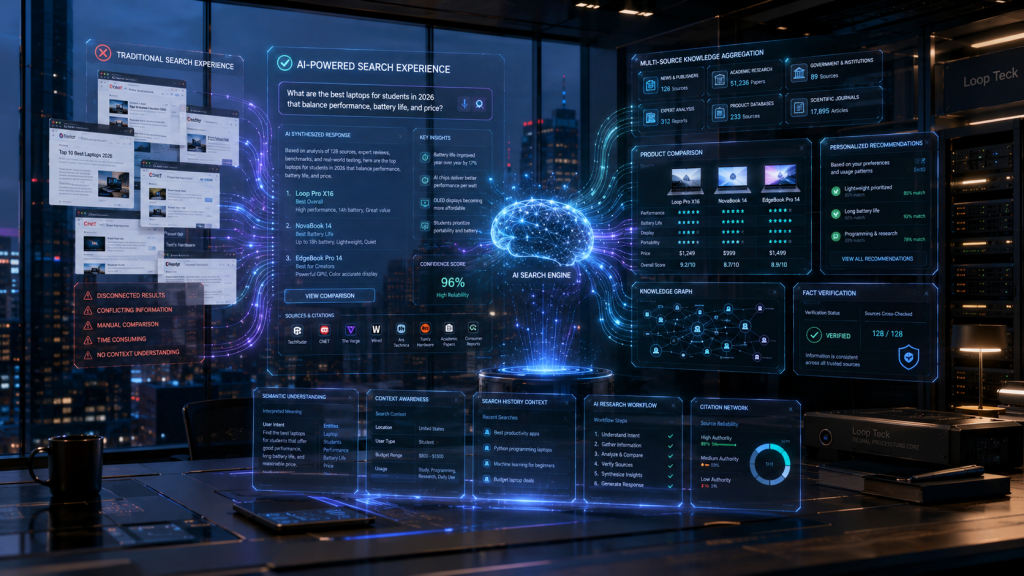
Online search is undergoing one of its biggest transformations since the early days of search engines.
Traditional search requires users to compare multiple websites, evaluate conflicting information, and piece together answers manually. AI-powered search systems are introducing a different experience by synthesizing information into direct, conversational responses while still providing links to authoritative sources.
Instead of asking several separate questions, users can now request comprehensive explanations, compare products, summarize research papers, or receive personalized recommendations within a single conversation.
This shift is influencing both consumers and publishers.
For content creators, visibility increasingly depends on producing trustworthy, well-structured, and authoritative content rather than simply targeting isolated keywords. Comprehensive reporting, expert analysis, and original insights are becoming more valuable as AI systems prioritize reliable information.
For users, search is becoming more interactive, contextual, and task-oriented.
AI Search Is Becoming More Action-Oriented
One of the defining characteristics of AI agents is their ability to move beyond providing information.
Rather than simply answering a travel question, an AI assistant may compare flight options, organize an itinerary, estimate travel expenses, prepare a packing checklist, and draft calendar events—all from a single request.
This progression from information retrieval to task execution represents one of the most significant shifts in digital experiences.
Search is evolving into assistance.
Generative AI 2026 Is Reinventing Enterprise Productivity
Large organizations are increasingly embedding AI into everyday operations.
Employees spend a significant portion of their workday on repetitive activities such as searching for documents, preparing reports, answering emails, organizing meetings, and updating spreadsheets. AI agents can automate many of these processes while maintaining consistency and reducing manual effort.
Common enterprise applications now include:
- Automated meeting summaries
- Intelligent document analysis
- Contract review
- Financial reporting
- Customer support automation
- Knowledge management
- Workflow orchestration
- Sales forecasting
- HR onboarding
- Compliance monitoring
Rather than introducing entirely new workflows, organizations are integrating AI into software employees already use, making adoption more practical and less disruptive.
How Generative AI 2026 Is Strengthening Cybersecurity
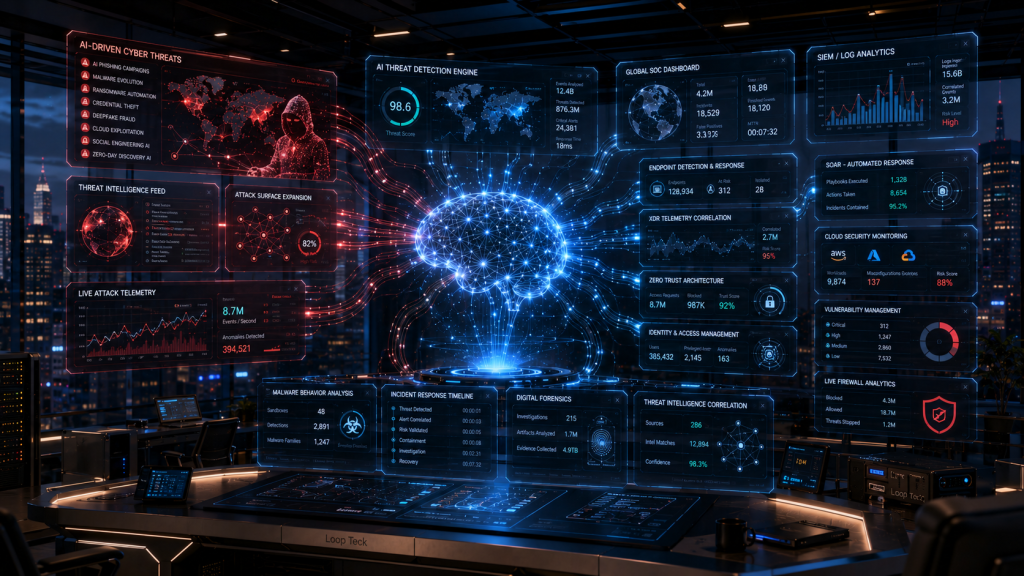
Cybersecurity has become another major area where AI agents are delivering measurable value.
Security teams face millions of alerts every day, making it increasingly difficult to identify genuine threats quickly. AI helps reduce this burden by analyzing enormous volumes of telemetry, identifying suspicious behavior, and prioritizing incidents based on potential risk.
Modern AI-powered security platforms can:
- Detect unusual network activity
- Identify phishing attempts
- Analyze malware behavior
- Correlate security events across multiple systems
- Recommend incident response actions
- Monitor cloud infrastructure continuously
These capabilities allow analysts to focus on investigating high-priority threats instead of manually filtering routine alerts.
However, cybersecurity professionals also face a growing challenge: attackers are adopting AI as well.
Threat actors now use artificial intelligence to automate phishing campaigns, generate convincing fraudulent content, discover software vulnerabilities, and accelerate social engineering attacks. As a result, organizations increasingly view AI as both a defensive necessity and an emerging security risk.
Healthcare Is Entering an AI-Assisted Era
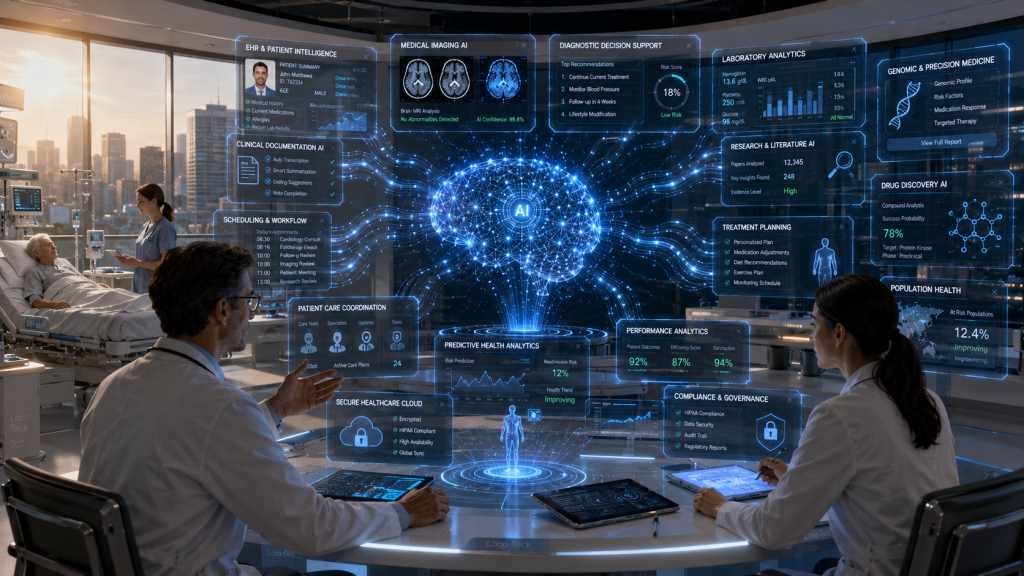
Healthcare providers are adopting AI to improve efficiency rather than replace clinical expertise.
Hospitals and medical organizations use AI agents to summarize patient records, organize clinical documentation, support administrative workflows, and assist with scheduling. Researchers also rely on AI to analyze scientific literature, identify patterns in medical datasets, and accelerate drug discovery efforts.
Importantly, healthcare organizations continue to emphasize that AI should augment—not replace—the judgment of licensed medical professionals. Clinical decisions still require human oversight, especially in high-risk scenarios where accuracy and accountability are essential.
As regulatory frameworks mature, AI is expected to play an even larger supporting role in diagnostics, personalized treatment planning, and operational efficiency.
Education Is Becoming More Personalized
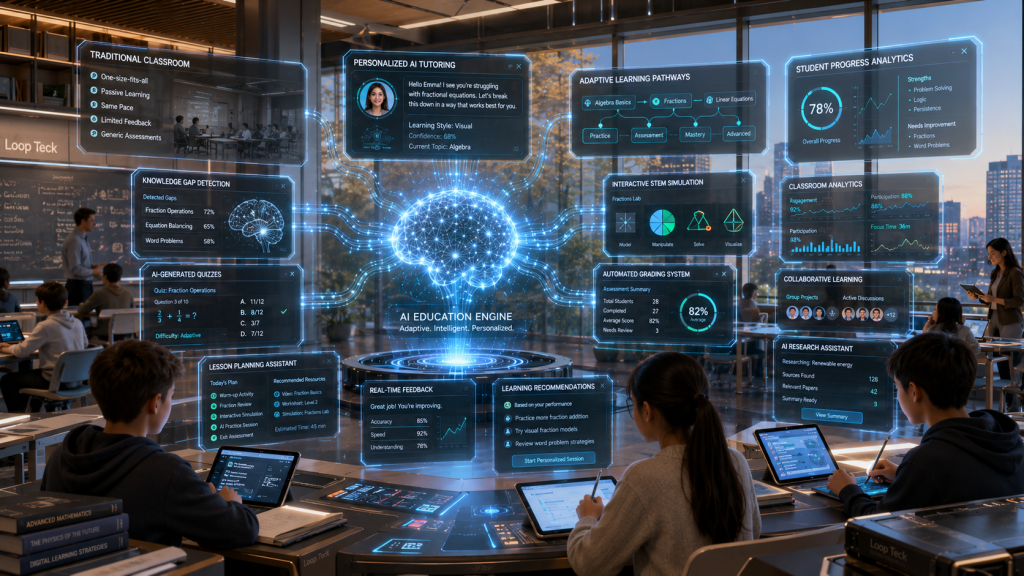
Educational institutions are exploring AI-powered learning environments that adapt to individual students instead of delivering identical lessons to everyone.
AI tutors can explain difficult concepts in multiple ways, generate customized practice exercises, identify learning gaps, and provide immediate feedback. Teachers, meanwhile, use AI to prepare lesson plans, create quizzes, summarize classroom performance, and automate administrative tasks.
The goal is not to replace educators but to give them more time for mentoring, critical thinking, and student engagement.
As AI becomes more capable, personalized learning may become one of the technology’s most significant long-term contributions to education.
The transformation driven by Generative AI 2026 is unfolding across nearly every sector of the economy. Organizations are no longer asking whether AI can contribute to their operations—they are evaluating where it can deliver the greatest value while balancing governance, security, and human oversight.
The Challenges Facing Generative AI 2026
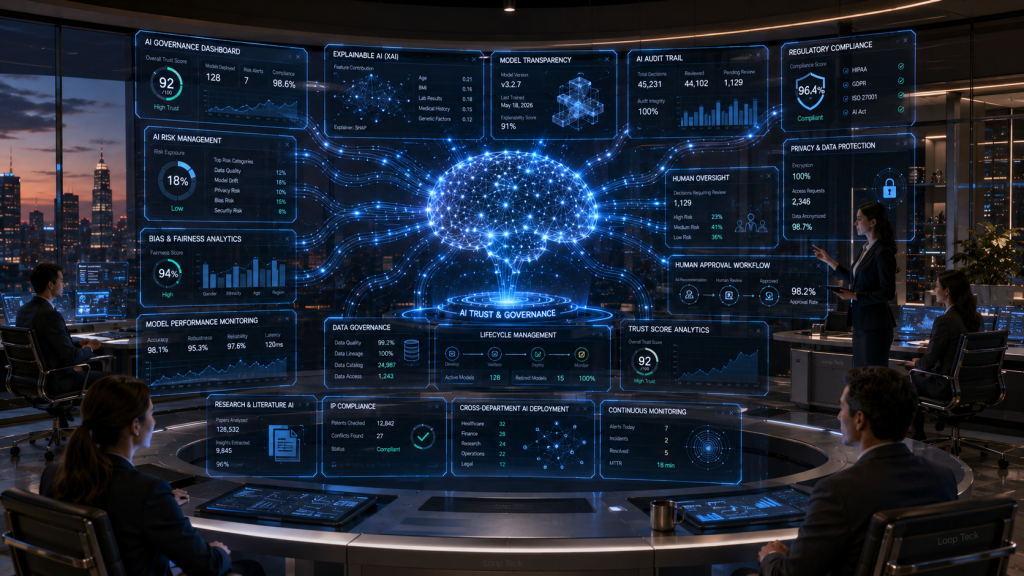
As impressive as today’s AI systems have become, Generative AI 2026 is entering a phase where success depends as much on trust as on technical capability. Businesses are eager to automate more work, but widespread adoption also raises difficult questions about accuracy, transparency, privacy, intellectual property, and accountability.
The next chapter of AI won’t be defined solely by smarter models. It will be shaped by how responsibly organizations deploy them.
AI Agents Still Make Mistakes
One of the biggest misconceptions surrounding AI agents is that autonomy guarantees reliability.
It doesn’t.
Even the most advanced AI models can misunderstand instructions, generate incorrect information, overlook important context, or confidently present inaccurate conclusions. These issues—often referred to as hallucinations—remain one of the industry’s most significant technical challenges.
For low-risk tasks such as brainstorming ideas or drafting content, occasional mistakes may be manageable. In fields like healthcare, finance, cybersecurity, or legal services, however, even small inaccuracies can have serious consequences.
That’s why leading organizations continue to emphasize human oversight rather than fully autonomous decision-making. AI is increasingly viewed as a collaborator that accelerates work, not a replacement for professional judgment.
Data Privacy Will Define Enterprise AI Adoption
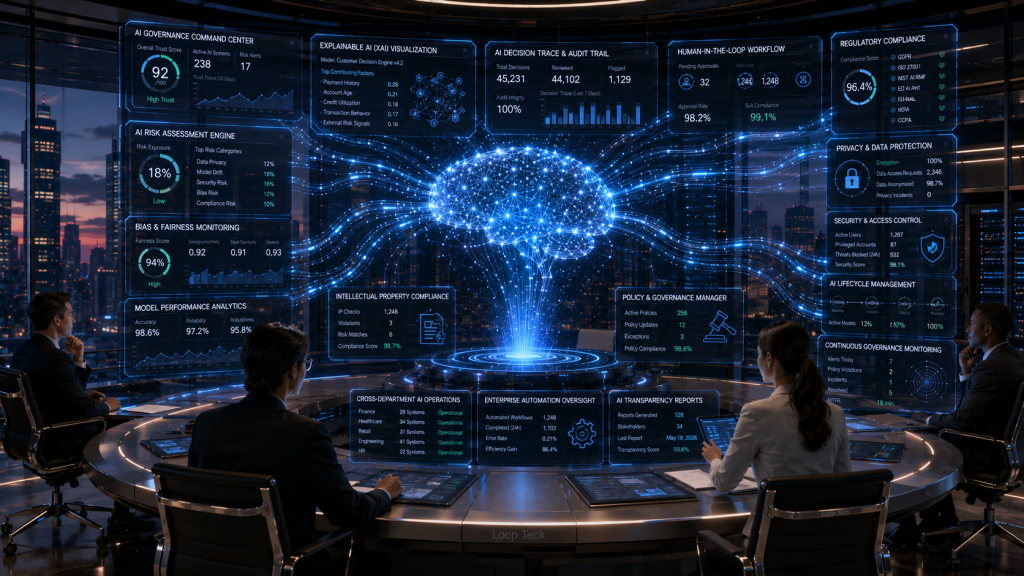
As companies integrate AI into internal operations, protecting sensitive information has become a top priority.
Many AI systems process customer records, financial documents, proprietary research, software code, and confidential business communications. Without proper safeguards, organizations risk exposing valuable data through insecure workflows or poorly configured AI deployments.
To reduce these risks, enterprises are investing in:
- Private AI environments
- Encrypted data processing
- Zero Trust security architectures
- Identity and access management
- Role-based permissions
- Comprehensive audit logging
- AI governance frameworks
These measures help ensure that employees can benefit from AI-powered productivity while maintaining compliance with industry regulations and internal security policies.
For many organizations, governance is now just as important as model performance.
Regulation Is Becoming a Global Priority
Governments around the world are paying closer attention to artificial intelligence as its influence expands across the economy.
Rather than regulating innovation itself, policymakers are increasingly focused on ensuring that AI systems are developed and deployed responsibly.
Key areas receiving greater regulatory attention include:
- Transparency in AI-generated content
- Consumer protection
- Copyright and intellectual property
- Algorithmic accountability
- Bias mitigation
- Data privacy
- National security
- Critical infrastructure protection
Technology companies are responding by investing more heavily in responsible AI research, safety testing, and model evaluation before releasing new products.
The regulatory landscape will likely continue evolving as AI capabilities advance.
The Future of AI Agents Looks Increasingly Collaborative
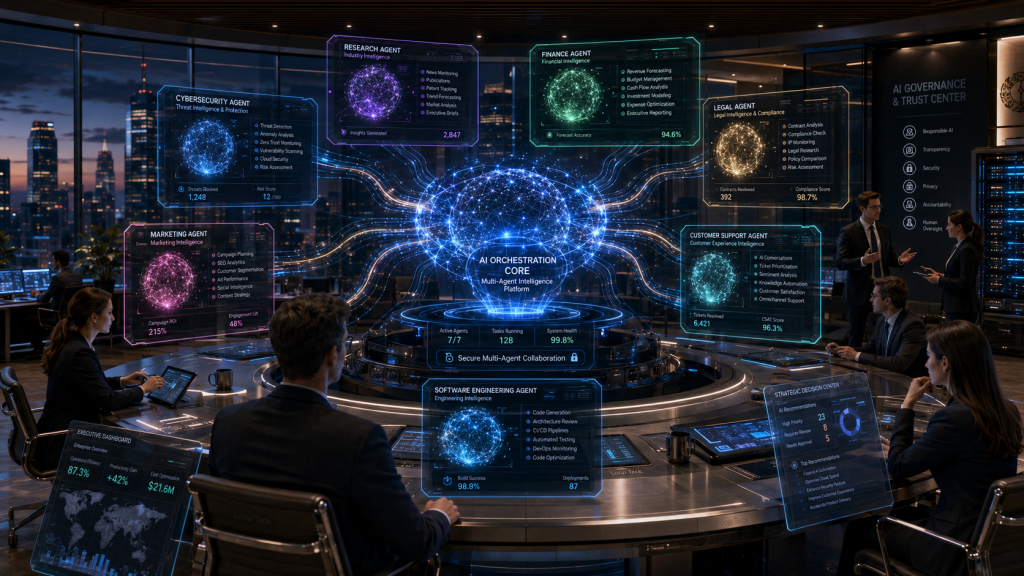
The next generation of AI agents is expected to become more specialized rather than simply larger.
Instead of relying on one general-purpose assistant for every task, organizations are increasingly deploying multiple AI agents that collaborate with each other.
A future workplace could include:
- A research agent monitoring industry news.
- A finance agent tracking budgets and forecasts.
- A cybersecurity agent identifying emerging threats.
- A legal agent reviewing contracts.
- A marketing agent planning campaigns.
- A customer support agent handling routine inquiries.
- A software engineering agent assisting developers.
These systems would exchange information securely while employees supervise strategy, approve critical decisions, and resolve exceptions requiring human expertise.
Rather than replacing knowledge workers, AI is more likely to eliminate repetitive administrative work, allowing professionals to focus on creativity, analysis, leadership, and innovation.
Generative AI 2026 Is Accelerating the Next Computing Revolution
Throughout technology history, certain innovations have fundamentally changed how people interact with computers.
Personal computers brought computing into homes and offices.
The internet connected billions of people worldwide.
Smartphones placed powerful computers in everyone’s pocket.
Cloud computing transformed how software is built and delivered.
Now, Generative AI 2026 is emerging as the next major platform shift.
Applications are becoming conversational instead of menu-driven.
Software is becoming proactive rather than reactive.
Search engines are evolving into intelligent assistants.
Digital tools are increasingly capable of understanding goals instead of waiting for explicit commands.
This transition is still in its early stages, but the direction is becoming increasingly difficult to ignore.
Conclusion: Why Generative AI 2026 Matters More Than Ever
The rapid advancement of Generative AI 2026 represents far more than another technology trend. It signals a broader transformation in how people work, learn, communicate, and interact with software.
AI agents are moving beyond simple conversations to become capable collaborators that can reason, plan, and execute increasingly sophisticated tasks. Their growing role in software development, enterprise operations, cybersecurity, healthcare, education, and digital search demonstrates how quickly artificial intelligence is becoming embedded in everyday life.
At the same time, the industry’s future will depend on more than raw computing power. Accuracy, transparency, privacy, governance, and responsible deployment will determine whether AI earns lasting public trust.
For businesses, the opportunity lies in adopting AI strategically rather than chasing every new feature. For professionals, the priority is learning how to work effectively alongside intelligent systems. And for consumers, the coming years will likely redefine expectations of what software can accomplish.
The AI era is no longer approaching—it has arrived. The organizations and individuals that understand how to use these technologies responsibly and effectively will be best positioned to benefit from the next wave of digital innovation.
Generative AI 2026:
The Rise of Intelligent AI Agents
Discover how Generative AI 2026 is reshaping work, software, search, cybersecurity, healthcare, and education as intelligent AI agents become more autonomous, collaborative, and capable of handling complex real-world tasks.
Generative AI 2026 refers to the current generation of artificial intelligence systems that can create text, images, code, audio, video, and other digital content while also performing increasingly sophisticated reasoning and automation tasks. Unlike earlier AI tools, many modern platforms combine advanced language models with planning, memory, and external tool integration, allowing them to complete complex workflows rather than simply respond to prompts.
Traditional chatbots primarily answer questions or generate responses based on user input. AI agents go a step further by planning tasks, remembering context, using external software, accessing data sources, and completing multi-step objectives with limited human supervision. This makes them significantly more useful for enterprise automation, software development, research, and productivity.
The adoption of Generative AI in 2026 is expanding rapidly across multiple industries, including software development, healthcare, financial services, cybersecurity, manufacturing, retail, education, customer support, marketing, and cloud computing. Organizations in these sectors are using AI to automate repetitive work, improve operational efficiency, accelerate decision-making, and enhance customer experiences.
Current evidence suggests that AI agents are more likely to automate repetitive and time-consuming tasks than replace entire professions. While some job responsibilities will change, human expertise remains essential for strategic decision-making, creativity, leadership, ethical judgment, and quality assurance. Many organizations are adopting AI as a collaborative productivity tool rather than a substitute for skilled professionals.
Generative AI can provide substantial productivity benefits when implemented responsibly. However, organizations should consider factors such as data privacy, cybersecurity, regulatory compliance, model accuracy, and human oversight. Businesses handling sensitive information often deploy private AI environments and governance frameworks to ensure secure and responsible use.
The next generation of AI agents is expected to become more autonomous, collaborative, and specialized. Future systems will likely coordinate with one another to complete complex business processes, integrate more deeply with enterprise software, and assist professionals across a wide range of industries. Rather than replacing people, AI agents are expected to augment human capabilities and streamline routine workflows.
Yes. Small businesses are increasingly adopting Generative AI in 2026 to automate customer support, generate marketing content, analyze business data, manage administrative tasks, improve sales processes, and enhance productivity. Cloud-based AI services have made advanced capabilities more accessible without requiring significant infrastructure investments.
Many industry experts view Generative AI 2026 as a transformative computing platform comparable to the rise of cloud computing or smartphones. Instead of requiring users to manually operate software, AI-powered systems increasingly understand objectives, perform complex tasks, and deliver intelligent assistance across multiple applications, fundamentally changing how people interact with technology.


Loop Teck
Future Technology • AI • Smartphones • Innovation