

AI Layoffs or AI Washing? Sam Altman Warns Companies May Be Blaming AI
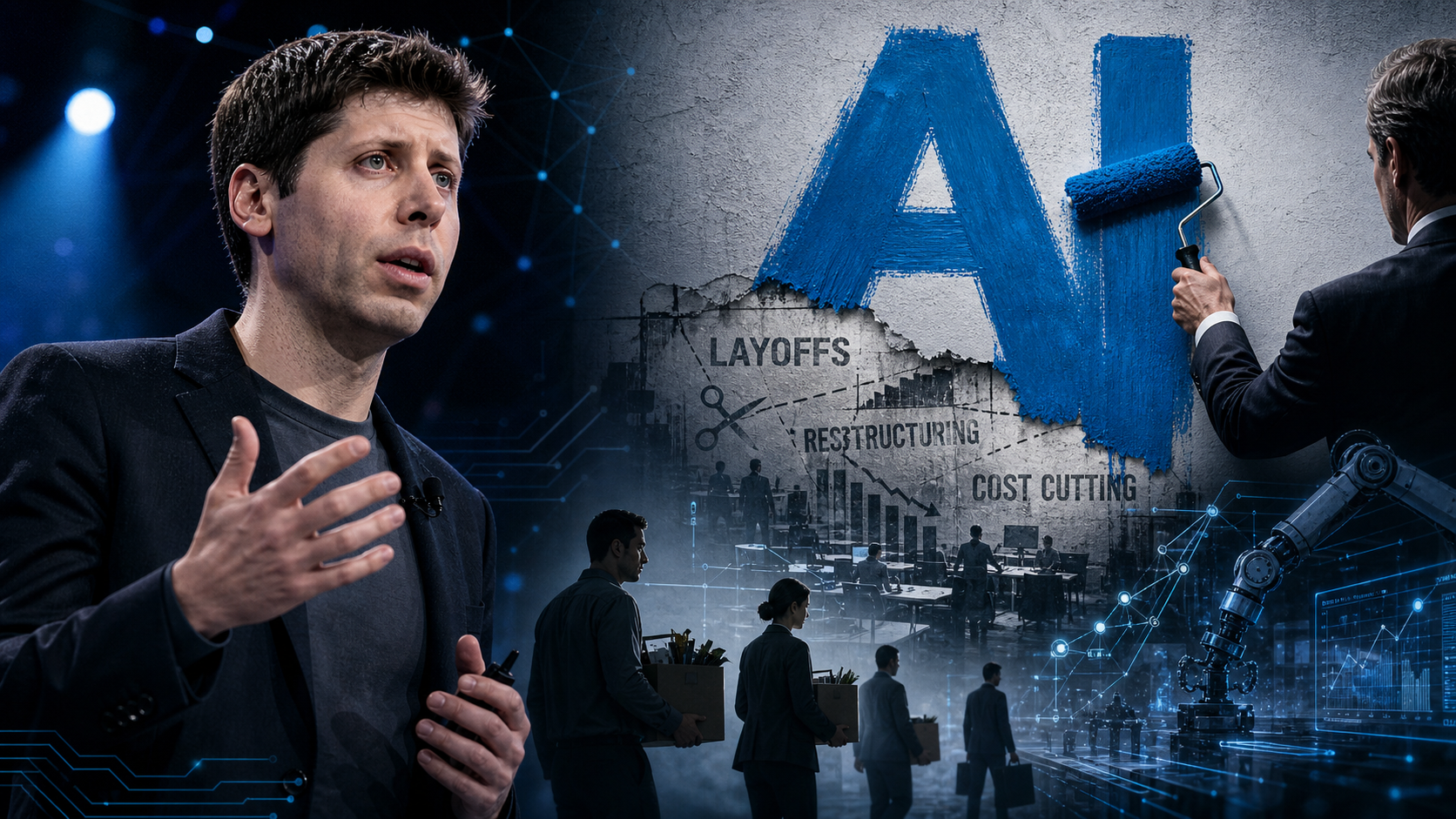
Artificial intelligence is changing how companies work. However, not every corporate job cut blamed on AI tells the full story. OpenAI CEO Sam Altman recently said some companies may be “AI washing” layoffs. In simple terms, that means they blame artificial intelligence for workforce reductions that may have happened anyway.
The debate around AI layoffs has become louder as executives, workers, and economists try to understand what is really happening. Some leaders warn that AI will replace many office roles. Others say the data does not yet show a massive labor-market shock.
So, is AI already taking jobs at scale? Or are some companies using AI as a convenient excuse for cost-cutting?
What Does AI Washing Mean?
AI washing happens when a company presents itself as more AI-driven than it really is. In the context of layoffs, it means a business may say it is cutting workers because AI can now do the job. But in reality, the company may be responding to weaker profits, high costs, restructuring, or investor pressure.
Altman said some companies are blaming AI for layoffs they would have made regardless. At the same time, he did not dismiss the real impact of automation. He also expects AI to displace some kinds of work in the coming years.
That distinction matters. If a company truly automates a role, workers need retraining and support. But if AI becomes a public-relations shield for ordinary cost-cutting, employees and investors may receive a misleading story.
Why AI Layoffs Are Getting So Much Attention

The phrase AI layoffs has become common because companies are investing heavily in automation, chatbots, coding tools, and AI agents. These tools can already summarize documents, write code, answer customer questions, analyze data, and support marketing teams.
However, replacing a full employee is more complex than automating a task. A worker does not only complete one function. They also handle exceptions, communicate with teams, understand customers, make judgment calls, and take responsibility when things go wrong.
That is why the current labor data looks mixed. Yale Budget Lab reported in April 2026 that measures of AI exposure, automation, and augmentation currently show no clear relationship with changes in employment or unemployment. The report also says better data is needed to fully understand AI’s labor-market impact.
In other words, AI may be changing work faster than it is eliminating entire jobs.
What the Data Says So Far
Some reports suggest that businesses are preparing for major changes. The World Economic Forum’s Future of Jobs Report 2025 found that 40% of employers expect to reduce their workforce where AI can automate tasks. At the same time, many employers also plan to hire people with AI skills and invest in reskilling.
That creates a complicated picture. Companies may cut some roles while creating others. Entry-level office jobs, customer support, basic coding, admin work, and repetitive data tasks may face more pressure. Meanwhile, demand may rise for AI operators, cybersecurity workers, data specialists, automation consultants, and employees who can manage AI systems.
TechCrunch also reported that AI was cited as the stated reason for more than 50,000 layoffs in 2025, while noting that analysts have warned many companies may not yet have mature AI systems ready to fully replace those workers.
So, the concern is real. Still, the evidence does not support every dramatic claim.
The Problem With Blaming Everything on AI
When companies blame job cuts on AI, they may appear innovative instead of financially pressured. That can help them tell a cleaner story to investors. It can also make layoffs sound inevitable, as if technology forced the decision.
But workers deserve a more honest explanation.
If a company cuts jobs because of weak demand, shrinking margins, poor planning, or restructuring, it should say so. If AI genuinely performs the work better, faster, and cheaper, the company should explain which tasks changed and how.
Otherwise, AI layoffs become a vague label. That label can hide the real reasons behind workforce decisions.
Is AI Really Replacing Workers?
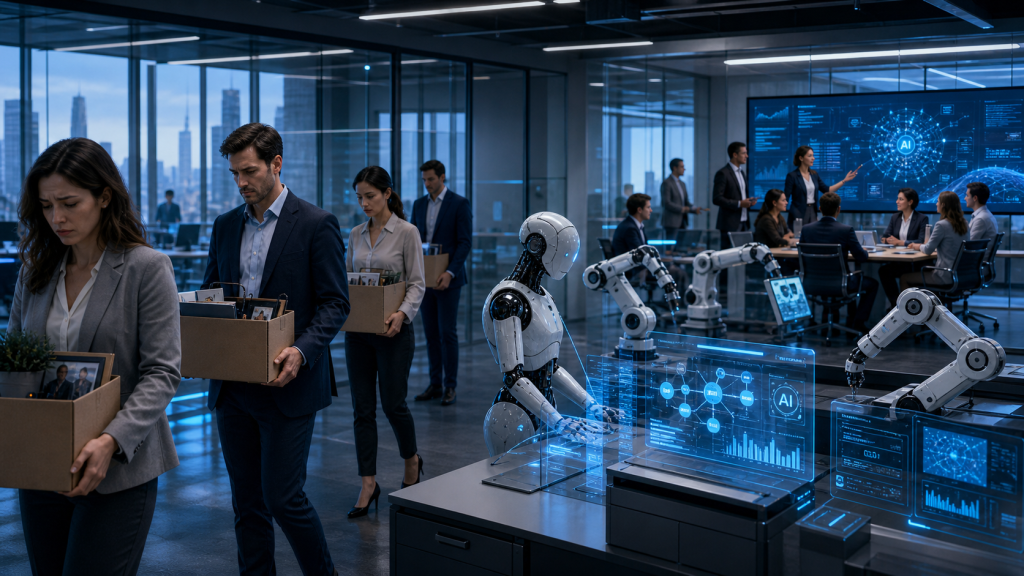
Yes, in some areas, AI is already reducing the need for certain tasks. Customer service, content production, software testing, research assistance, and back-office workflows are seeing real automation. However, that does not mean every layoff connected to AI is caused by AI.
A better way to understand the shift is this: AI is replacing tasks before it replaces entire jobs.
For example, a marketing employee may use AI to draft campaign ideas faster. A developer may use AI to debug code. A legal assistant may use AI to summarize documents. These tools can increase productivity. But human review still matters because AI can make mistakes, miss context, or produce unreliable output.
Therefore, companies that use AI well may not simply cut people. They may redesign jobs around new tools.
What Workers Should Watch For
Employees should pay attention to how their company talks about automation. If leaders mention AI often but cannot explain the tools, workflows, savings, or productivity gains, that may be a sign of AI washing.
Workers should also look for practical signals. Is the company training teams on AI tools? Are workflows actually changing? Are managers measuring productivity differently? Are new AI-related roles opening? Or is AI only mentioned when layoffs happen?
Those questions can reveal whether a company is building a real AI strategy or using the trend as a convenient explanation.
The Bottom Line
The debate over AI layoffs is not simple. Sam Altman is right to point out that some companies may be using AI as a cover for cuts they already wanted to make. However, it would also be wrong to ignore the real disruption ahead.
AI will likely change many jobs before it destroys them. Some roles will shrink. Others will evolve. New jobs will also appear as businesses need people who can manage, audit, secure, and improve AI systems.
For now, the smartest view is balanced. AI is powerful, but it is not the full explanation for every layoff. Some companies are automating work. Others may simply be dressing up old-fashioned cost-cutting in futuristic language.
Frequently Asked Questions
Will AI take my job?
AI may change your job, but it does not automatically mean it will replace you. In most cases, AI replaces repetitive tasks before it replaces an entire role. If your work depends on judgment, communication, creativity, leadership, or hands-on problem-solving, AI is more likely to become a tool than a direct replacement.
Which jobs are safe from AI automation?
No job is 100% safe from change, but some jobs are harder to automate. Roles that need human trust, emotional intelligence, physical work, strategy, creativity, or complex decision-making are more protected. Healthcare workers, skilled trades, teachers, cybersecurity professionals, managers, and creative strategists may stay in strong demand.
What are the best jobs that won’t be automated?
Some of the best jobs less likely to be fully automated include cybersecurity analyst, nurse, electrician, plumber, teacher, therapist, project manager, AI specialist, software engineer, and business consultant. These roles require human judgment, real-world problem-solving, and responsibility that AI cannot fully handle on its own.
Which jobs are most at risk from AI?
Jobs with repetitive digital tasks face the highest risk. This includes basic data entry, simple customer support, routine content writing, transcription, scheduling, and some entry-level office work. However, many of these jobs may not disappear completely. Instead, workers may need to use AI tools to work faster and stay competitive.
How can I protect my career from AI automation?
The best way to protect your career is to learn how to work with AI instead of ignoring it. Build skills in communication, critical thinking, problem-solving, cybersecurity, data analysis, and AI tool usage. Also, focus on work that needs human judgment, trust, and creativity.
Will AI create new jobs?
Yes, AI will likely create new jobs while changing or reducing some existing ones. Companies will need people who can manage AI systems, check AI errors, protect data, train teams, improve workflows, and make responsible business decisions. The biggest opportunity may go to workers who combine industry knowledge with AI skills.
Are AI layoffs real or exaggerated?
AI layoffs are real in some cases, but they may also be exaggerated. Some companies are genuinely using AI to automate work. However, others may blame AI for layoffs that are actually caused by cost-cutting, restructuring, or weak business performance. That is why the term AI washing has become important.
What is the difference between AI layoffs and AI washing?
AI layoffs happen when artificial intelligence genuinely reduces the need for certain workers or tasks. AI washing happens when a company uses AI as an excuse for layoffs, even when the real reason may be financial pressure, restructuring, or investor demands. The difference comes down to whether AI truly caused the job cuts.
Should workers be worried about AI?
Workers should be aware, but not panic. AI will change many careers, especially office and digital jobs. However, people who learn new tools, improve practical skills, and adapt early will have better opportunities. The goal is not to compete against AI, but to become the person who knows how to use it well.