Physical AI Robots Are Transforming the Real World at CES 2026
Physical AI robots are no longer a futuristic concept limited to research labs. At CES 2026, leading technology companies are demonstrating how artificial intelligence is entering the physical world through robotics, automation, and smart machines.
Unlike traditional AI that focuses on data processing or content generation, physical AI combines sensors, computer vision, and adaptive learning. As a result, machines can now perceive their surroundings and act independently. This shift represents a major evolution in how humans interact with intelligent systems.
What Are Physical AI Robots?
Image By Loop Teck
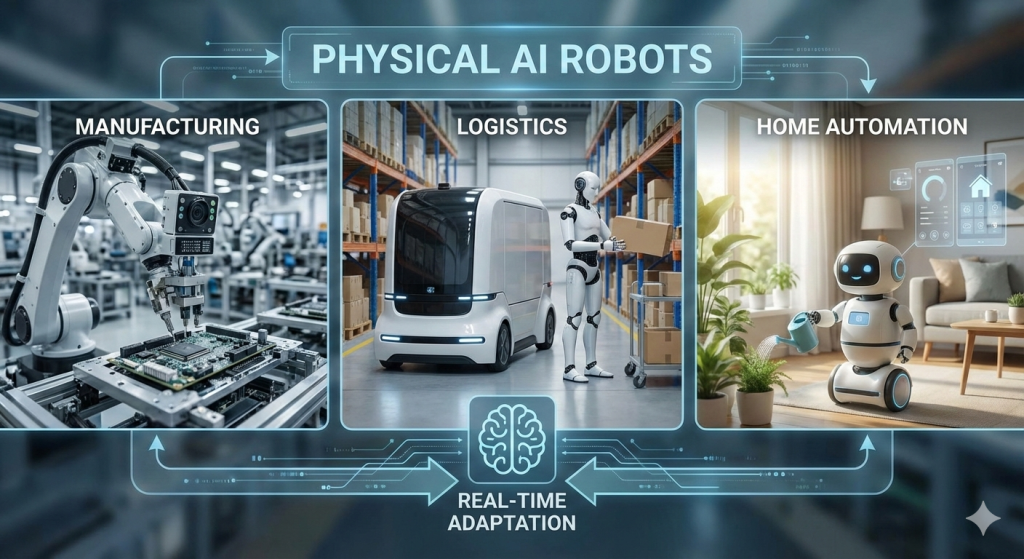
Physical AI robots integrate artificial intelligence directly into machines such as humanoid robots, autonomous vehicles, and industrial systems. These robots rely on real-time environmental data to make decisions and perform tasks with precision.
Because of this capability, physical AI robots can adapt to changing conditions instead of following rigid instructions. Consequently, industries such as manufacturing, logistics, and home automation are seeing rapid innovation.
Hyundai’s Atlas Robot Pushes AI Beyond the Lab
Image By: Hyundai Worldwide
At CES 2026, Hyundai Motor Group is showcasing its AI robotics vision with the next-generation Atlas humanoid robot, developed by Boston Dynamics. This fully electric robot replaces hydraulic systems with advanced electric actuators, enabling smoother and more accurate movement.
More importantly, Atlas uses reinforcement learning. Through repeated trial and error, the robot improves its movements over time. This learning-based control system clearly separates physical AI robots from traditional pre-programmed machines.
Hyundai also plans to expand its AI ecosystem through a software-defined factory model, connecting robotics, logistics, and intelligent manufacturing systems.
LG Introduces a Home-Focused Physical AI Robot
Image By Loop Teck
LG Electronics is entering the consumer space with CLOiD, a humanoid home robot designed for everyday living. Equipped with two arms and five-fingered hands, CLOiD can handle basic household tasks while also acting as a personal AI assistant.
In addition, CLOiD connects with smart home devices to manage schedules and automate routines. This approach reflects LG’s long-term vision of reducing manual household effort through physical AI robots.
Industrial Applications Gain Momentum
Doosan Robotics is highlighting industrial use cases with its Scan & Go system. By combining robotic arms and autonomous mobile robots, the system can inspect and process large structures using advanced 3D vision.
Meanwhile, Samsung Electronics is emphasizing AI-powered appliances, including smart refrigerators with real-time tracking and personalized recommendations. These products show how physical AI robots and embedded AI systems are becoming part of daily life.
Why Physical AI Robots Matter
Physical AI robots represent the next phase of artificial intelligence. They move beyond screens and software to deliver real-world impact. As CES 2026 demonstrates, this technology is set to redefine homes, factories, and industries worldwide.